
← Back

Fort of Exilles

10050 Exilles TO, Italia ★★★★☆ 214 views
Miriam Silovic
Exilles
🏆 AI Trip Planner 2026

Get the free app

Discover the best of Exilles with Secret World — the AI trip planner with 1M+ destinations. Get personalized itineraries, hidden gems and local tips. Free on iOS & Android.

🧠 AI Itineraries 🎒 Trip Toolkit 🎮 KnowWhere Game 🎧 Audio Guides 📹 Videos
Scan to download iOS / Android
Scan for AppGallery Huawei users

About Fort of Exilles

Fort of Exilles - Exilles | Secret World Trip Planner

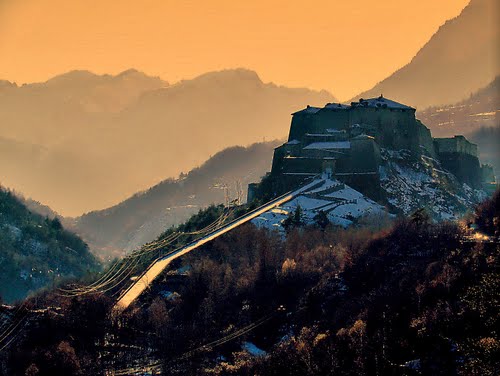
Its origins are still uncertain, but around 1155 it already existed when the counts of Albon exercised strategic, military and mercantile control over the Montgenèvre road, and Exilles represented the extreme eastern border of the principality.
Fort of Exilles - Exilles | Secret World Trip Planner

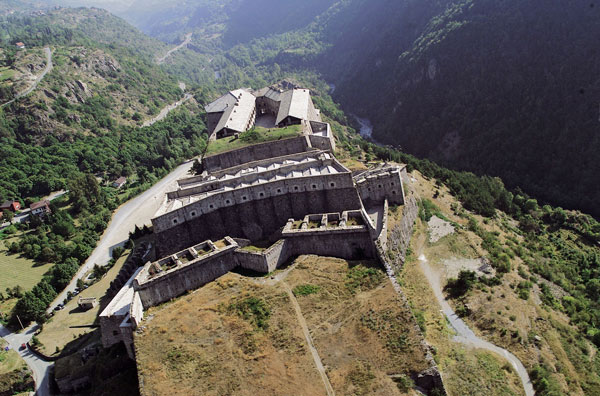
In 1339, it already had a complex structure: it is a rare example of a "road castle", with a defensive construction articulated in several walled circuits to defend the inner nucleus and an external barrier, an effective control of the important road axis that from Piedmont led to Provence through Montgenèvre.

In the 16th century, the castle was long disputed by the opposing Catholic and Reformed factions who wanted to control the Dauphiné on this side of the Alps. At the beginning of the seventeenth century, the fort changed its structure from an old castle to a bastioned fortress, where between 1681 and 1687 it hosted the mysterious and famous character known as the "Iron Mask".
Fort of Exilles - Exilles | Secret World Trip Planner

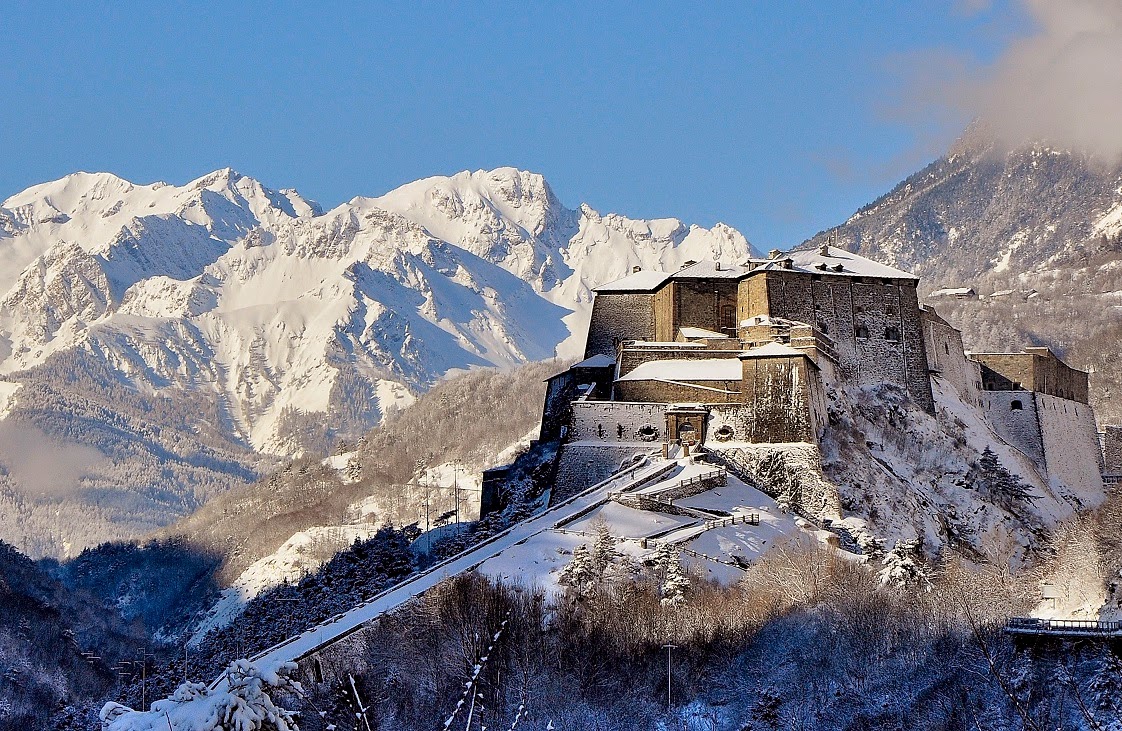
In the first years of the 18th century, the fortified fortress of Exilles, under the direction of Bertola and De Willencourt, underwent imposing renovation and modernization works including the overturning of the defensive front towards France. The Treaty of Utrecht in 1713 transferred the royal dignity from the King of France to the House of Savoy, thus making it necessary to overturn the defensive front.

Razed to the ground by the French following the Treaty of Paris, May 15, 1796, the fort was rebuilt in its present form between 1818 and 1829 by the King of Sardinia, who returned to his territories.

Vittorio Emanuele I entrusted its reconstruction to the architects Giovanni Antonio Rana and Francesco Olivero who, between 1821 and 1829, completed the structure.

The fort was disarmed in 1915 and definitely lost any military function on September 8, 1943 when it was finally abandoned by the military.

In 1978, the Piedmont Region acquired the property from the military, with the commitment to provide for the restoration and functional recovery of the monument. It was then developed and started the project of conservative restoration, internal and external, aimed at defining an overall structure of the Fort.

In April 1996 an agreement was signed between the Piedmont Region and the CAI-Turin National Mountain Museum for the joint enhancement, management and promotion of the Fort of Exilles. In June 2015 a cooperation agreement was signed between the Piedmont Region and the Municipality of Exilles for the management of the Fort during the summer season 2015. The Fort of Exilles was opened to the public on July 8, 2000, inside the Fort there are two museum areas, characterized by particularly innovative arrangements.

🗺 AI Trip Planner 2026

Plan your visit to Exilles

Suggested itinerary near Fort of Exilles

MAJ+
500.000+ travelers worldwide
  1. 🌅
    Morning
    Fort of Exilles
    📍 Exilles
  2. ☀️
    Afternoon
    Benedictine Abbey of Novalesa
    📍 11 km · Exilles
  3. 🌆
    Evening
    Fort of Fenestrelle
    📍 12.7 km · Exilles

Buy Unique Travel Experiences

Powered by Viator

See more on Viator.com

Explore nearby · Exilles

Frequently Asked Questions

Fort of Exilles is a rare example of a 'road castle' that dates back to around 1155, originally built by the counts of Albon to control the strategically important Montgenèvre road connecting Piedmont to Provence. The fort evolved from a medieval castle with multiple walled circuits into a bastioned fortress in the 17th century, playing a crucial role in Alpine defense and trade control for centuries.
Yes, between 1681 and 1687, the mysterious and famous character known as the 'Iron Mask' was held at Fort of Exilles during its time as a bastioned fortress. This famous prisoner made the fort one of the most intriguing historical sites in the Alps.
After being razed to the ground by the French following the Treaty of Paris in 1796, the fort was rebuilt between 1818 and 1829 by the King of Sardinia who had regained his territories. Architects Giovanni Antonio Rana and Francesco Olivero oversaw its complete reconstruction between 1821 and 1829, restoring it to its present form.
The fort was officially disarmed in 1915 and completely abandoned by the military on September 8, 1943. Since 1978, the Piedmont Region has owned and managed the property, undertaking restoration and functional recovery efforts to preserve it as a historical monument.
In the early 18th century, the fort underwent major renovation and modernization works under the direction of Bertola and De Willencourt, including the significant overturning of its defensive front to face France rather than Italy. This change became necessary after the Treaty of Utrecht in 1713 transferred the royal dignity to the House of Savoy, requiring the fortress to protect against French threats instead.
Secret World Hidden places, real stories — plan your trip
Get the app
