
← Back

Fountain of Books

Via degli Staderari, 00186 Roma RM, Italia ★★★★☆ 169 views
Marika Leone
Roma
🏆 AI Trip Planner 2026

Get the free app

Discover the best of Roma with Secret World — the AI trip planner with 1M+ destinations. Get personalized itineraries, hidden gems and local tips. Free on iOS & Android.

🧠 AI Itineraries 🎒 Trip Toolkit 🎮 KnowWhere Game 🎧 Audio Guides 📹 Videos
Download on the App Store Get it on Google Play
Scan to download Scan to download
Fountain of Books - Roma | Secret World Trip Planner

Nestled in the heart of Rome, the Fountain of Books (Fontana dei Libri) offers a delightful blend of history, artistry, and local culture that is often overlooked by visitors. Situated on via degli Staderari, this unique fountain serves as a tribute to the literary heritage of the city, specifically honoring the nearby Sapienza University, one of the oldest universities in the world.

Fountain of Books - Roma | Secret World Trip Planner

### History and Origins

The fountain's location on via degli Staderari is steeped in history. This street’s name harks back to the ancient craftsmen who manufactured stadia (measuring rods) and scales, trades once prevalent in this vibrant district. Previously known as via dell'Università, the street retains its academic significance, as it runs parallel to the university campus.

Fountain of Books - Roma | Secret World Trip Planner

Constructed in 1927 by architect Pietro Lombardi, the fountain was part of a larger initiative by the Municipality of Rome to revive the essence of ancient trades and symbols that had faded over time. The design reflects a commitment to celebrating Rome’s rich academic and cultural past, making it a fitting homage to the nearby university and the city’s long-standing relationship with knowledge and learning.

### Art and Architecture

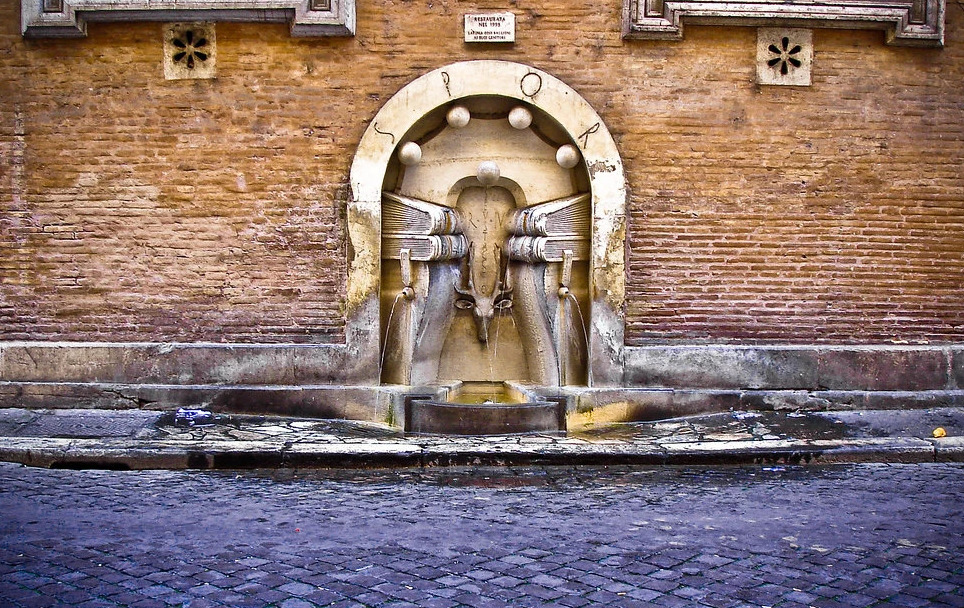
The Fountain of Books is a striking example of Italian Renaissance architecture, characterized by its elegant lines and classical motifs. The fountain is crafted from travertine, a traditional material used in many Roman structures. It features a round arch that frames a niche, creating a focal point that draws the eye.

At the heart of the design, a deer head represents St. Eustace, the patron saint of hunters and a symbol of spiritual enlightenment. This motif is flanked by four ancient books, two on either side, resting on side shelves—each tome representing the pursuit of knowledge. Water flows gracefully from four spouts shaped like bookmarks, a clever nod to the academic nature of the area. The water collects in a semicircular basin below, providing a serene oasis amidst the urban bustle.

### Local Culture and Traditions

The cultural significance of the Fountain of Books extends beyond its architectural beauty. It embodies the spirit of Sapienza University, which has been a center for intellectual discourse since its founding in 1303. The university attracts students and academics from around the globe, making the surrounding streets a melting pot of ideas and cultures.

Local traditions often celebrate the academic achievements of students, with events such as graduation ceremonies and scholarly festivals taking place near the fountain. The fountain itself acts as a meeting point where students gather, study, and engage in lively discussions, embodying the vibrant student life that characterizes the area.

### Gastronomy

When visiting the Fountain of Books, indulging in local cuisine is a must. The area is home to numerous trattorias and cafes that offer traditional Roman dishes. Be sure to try Cacio e Pepe, a simple yet flavorful pasta dish made with Pecorino Romano cheese and black pepper, or Carciofi alla Romana, Roman-style artichokes seasoned with herbs and olive oil.

For dessert, the nearby gelaterias serve an array of gelato flavors, perfect for a refreshing treat after exploring the fountain. Pair your gelato with a classic Italian espresso, and you’ll experience the true taste of Rome.

### Lesser-Known Curiosities

While many tourists flock to the major attractions, the Fountain of Books holds its own set of hidden gems. One intriguing aspect is the symbolism of the deer head; it represents not just St. Eustace but also the importance of nature in Roman mythology and literature.

Another lesser-known fact is the fountain’s connection to the literary community. Authors and poets have often gathered in the vicinity, drawing inspiration from the nearby university and the tranquil ambiance of the fountain. It is said that on quiet evenings, one can still hear whispers of old literary debates echoing through the streets.

### Practical Visitor Information

The best time to visit the Fountain of Books is during the spring and fall when the weather is pleasantly mild, making it ideal for leisurely strolls. Early mornings or late afternoons are particularly enchanting, as the sunlight casts a warm glow on the fountain’s travertine surfaces.

While visiting, take a moment to sit on one of the nearby benches and soak in the atmosphere. Look closely at the intricate details of the fountain, and don’t forget to bring your camera—this charming spot is a perfect backdrop for photos.

To fully appreciate the historical and cultural significance of the Fountain of Books, consider exploring the nearby streets that lead to Sapienza University. Discover the rich tapestry of life that surrounds this beautiful fountain, and let it inspire your own journey through Rome.

For a personalized itinerary that includes this hidden gem and more, consider using the Secret World app to plan your visit to Roma.

🗺 AI Trip Planner

Plan your visit to Roma

Suggested itinerary near Fountain of Books

MAJ+
500.000+ travelers worldwide
  1. 🌅
    Morning
    Fountain of Books
    📍 Roma
  2. ☀️
    Afternoon
    Sant'Ivo alla Sapienza
    📍 0.1 km da Roma
  3. 🌆
    Evening
    St. Ivo alla Sapienza
    📍 0.1 km da Roma

Buy Unique Travel Experiences

Powered by Viator

See more on Viator.com

Explore nearby · Roma
