
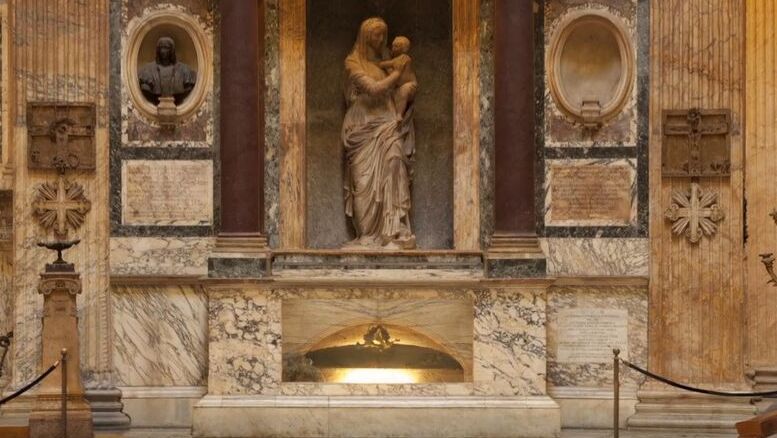

Nestled within the heart of Rome, the Pantheon stands as a monumental testament to the city's architectural prowess and historical depth. Among its storied walls lies a sacred space that honors one of the Renaissance's most revered artists – Raphael Sanzio. His tomb, a serene yet powerful presence, captures the essence of both his life's work and the cultural tapestry of Italy.
The Pantheon itself, an architectural marvel, traces its origins back to 27 BC when it was commissioned by Marcus Agrippa. Originally a temple dedicated to all Roman gods, it was rebuilt by Emperor Hadrian around 126 AD, showcasing the Roman Empire's engineering ingenuity. The building's iconic dome, with its central oculus, stands as a testament to ancient Rome's architectural innovation, and it remains the world's largest unreinforced concrete dome.
Raphael's tomb within this storied edifice is a blend of art and reverence. Lorenzetto's Madonna del Sasso, standing sentinel over the tomb, symbolizes the artist's connection to divinity and nature. The epitaph penned by Pietro Bembo poignantly encapsulates Raphael's impact on the world and nature itself. This space, shared with Maria Bibbiena, his betrothed, and marked by Giuseppe Fabris' 19th-century bust, is a harmonization of love, loss, and artistic legacy.
Beyond its architectural grandeur, the Pantheon and Raphael's tomb hold a special place in Rome's cultural heart. Each year, on April 6th, the anniversary of Raphael's death, admirers gather to pay homage, celebrating his contributions to art and culture. The Pantheon itself transforms during this time, echoing with the reverence of those who come to honor the master painter.
In the surrounding streets of Rome, the city's vibrant gastronomy offers a feast for the senses. Visitors can indulge in Roman classics such as Cacio e Pepe and Saltimbocca alla Romana, dishes that tell the story of Rome through their rich flavors and traditional preparations. Accompany these with a glass of Frascati, a crisp local white wine, to complete the Roman culinary experience.
Amidst the throngs of tourists, there are hidden gems waiting to be discovered. Few know that Raphael's final resting place was a personal request, as he admired the Pantheon for its perfection in classical architecture. Furthermore, the Pantheon's oculus, lighting the tomb with natural illumination, was a source of inspiration for many Renaissance artists who followed in Raphael's footsteps.
For those planning a visit, the Pantheon is open to the public throughout the year, but the best time to experience its magic is in the early morning or late afternoon when the crowds are sparse, and the light plays softly on the marble. As you explore, take a moment to absorb the artistry and history that surrounds you, and if you can, join the solemn April gathering to truly connect with the legacy of Raphael.
To make the most of your Roman adventure, consider using the Secret World app to craft a personalized itinerary that explores the city's hidden treasures and cultural riches.


