
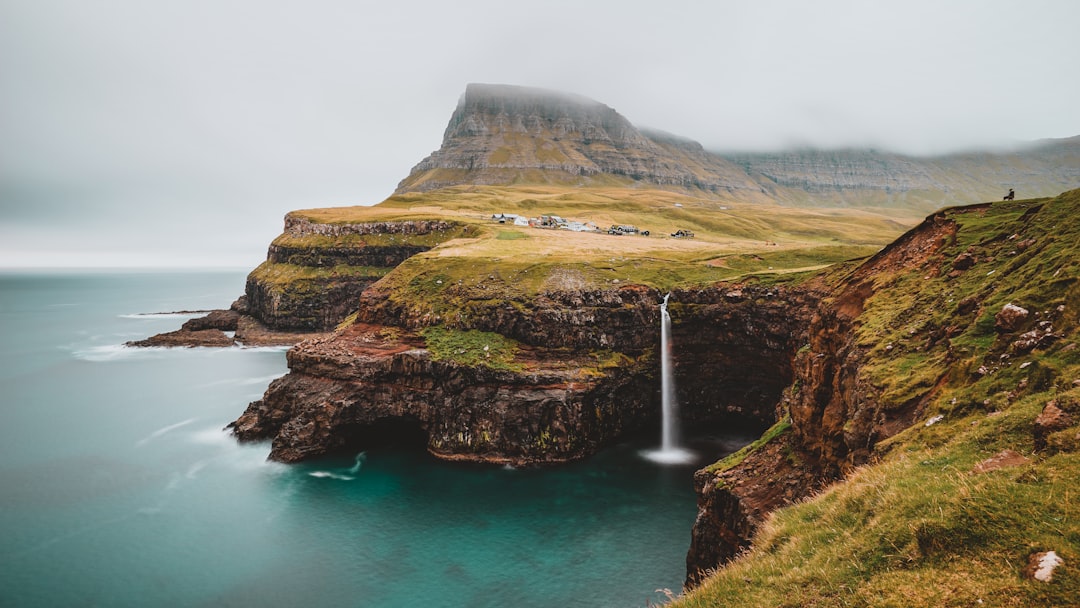

A waterfall that plunges directly into the North Atlantic Ocean, while the sun sets, tinting the black basalt cliffs amber: this is what awaits you in Gásadalur, a village on the island of Vágar in the Faroe Islands. The village has just a handful of inhabitants — fewer than twenty permanent residents according to the most recent censuses — and has remained isolated from the rest of the island for centuries, accessible only on foot via a steep mountain path. Only in 2004 was a road tunnel excavated that connected it to the rest of Vágar, forever transforming the daily life of this remote corner of the Atlantic.
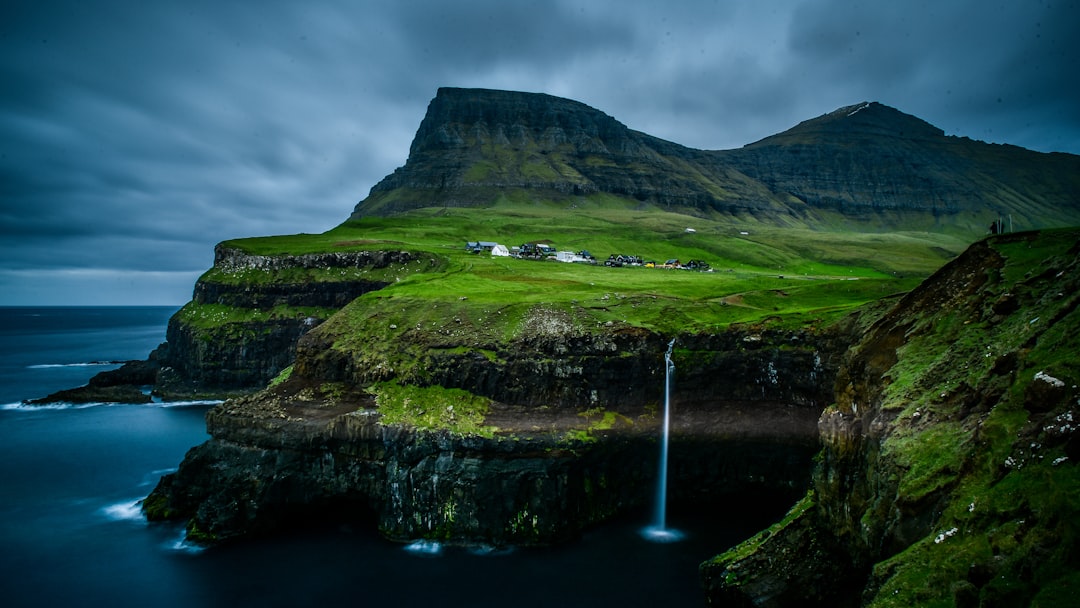
The viewpoint to admire the sunset is just a few minutes' walk from the center of the village, along a path that runs alongside the green grass-covered roofs of the traditional houses. From here, you can see the waterfall of Múlafossur — this is its official name — which cascades from a cliff about 30 meters high directly into the sea, with no beach or rock interrupting the fall. As the afternoon light declines to the west, the entire scene transforms into something difficult to describe with ordinary words.
Múlafossur: a waterfall like no other in Europe

What makes Múlafossur extraordinary is not only its height but its geometrically perfect position: the water descends from a grassy plateau, crosses the edge of the cliff, and disappears into the open ocean. There is no estuary, there is no bay, there is no visible seabed — only the Atlantic void. On days of strong wind, which is far from rare in the Faroe Islands, the jet of water is literally pushed backward upward, creating a visual effect that seems to defy gravity.
The surrounding cliffs are composed of layers of volcanic basalt, rock formed millions of years ago through successive eruptions. These horizontal layers, visible to the naked eye from the viewpoint, tell the geological story of the archipelago in a direct and readable way even for those who are not geologists. The contrast between the black of the rock, the green of the grass, and the gray-silver of the ocean is a sight that changes appearance every hour of the day.

The sunset: when the sky and the ocean merge
The Faroe Islands are located at about 62 degrees north latitude, a position that offers late and prolonged sunsets in summer. Between May and July, the sun can set even after 10:00 PM, and the slanting light of those hours transforms the landscape into something almost unreal. The orange and red hues reflect both on the ocean water and on the waterfall itself, which at those moments seems illuminated from within.

In autumn and winter, the sunset arrives earlier, often already in the late afternoon, but the quality of the light becomes even more dramatic: low clouds, oblique rays, and the Atlantic fog create atmospheres that many photographers consider superior to those in summer. The advice from landscape photography enthusiasts is to arrive at least an hour before sunset, to observe how the light gradually changes and to choose the best shooting point along the edge of the plateau.
How to get there and what to expect on site
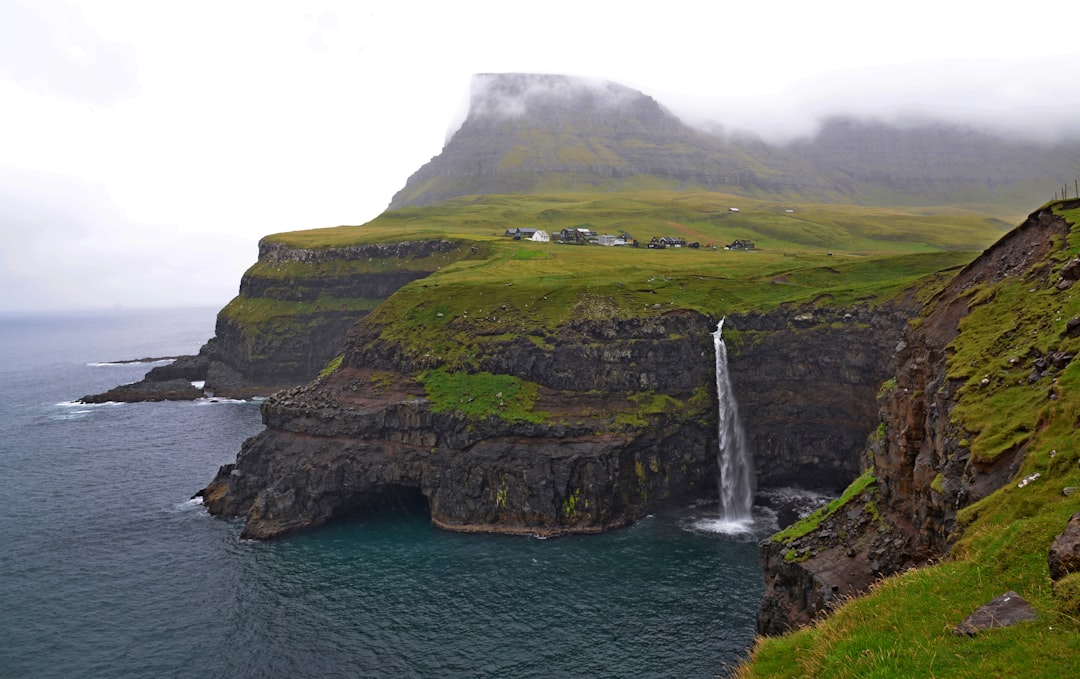
Gásadalur can be reached from Vágar airport — the only airport in the Faroe Islands — by driving about 15 kilometers through the tunnel opened in 2004. The journey takes less than twenty minutes. There are no regular bus services that reach the village, so it is practically essential to rent a car in Vágar or Sørvágur, the nearest town. Parking in Gásadalur is limited and fills up quickly on summer days: arriving in the early afternoon ensures both a parking spot and the time needed to explore calmly before sunset.
The path to the viewpoint of the waterfall is short — less than ten minutes on foot from the center of the village — but requires suitable shoes, as the grassy terrain can be slippery after rain, which is frequent in this archipelago. There are no fences or safety barriers along the edge of the cliff: caution is necessary, especially in strong winds. Entry is free and no reservation is required.
Why Gásadalur Remains a Place Outside of Mass Tourism
The Faroe Islands as a whole attract a relatively small number of visitors compared to other Northern European destinations, and Gásadalur is one of the least frequented spots even within the archipelago. The absence of accommodation facilities in the village itself — there are no hotels or restaurants — means that most tourists arrive, stop for the sunset, and leave. Those who choose to stay in Sørvágur or the surrounding area can instead enjoy the place in the morning hours, when the light is different and visitors are almost absent.
Gásadalur does not offer services, souvenirs, or attractions built for tourism. It only offers basalt, grass, falling water, and an uninterrupted Atlantic horizon. For those seeking a sunset that is unlike any other, this small village in the Faroe Islands is hard to match.


