
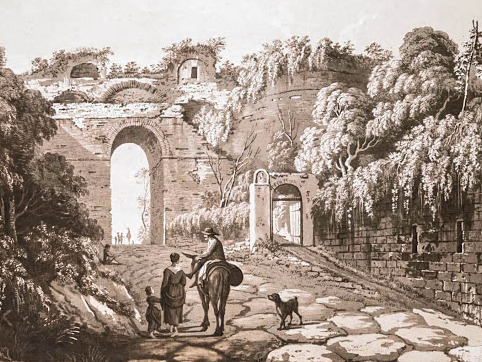

As you traverse the road from modern Pozzuoli to the ancient acropolis of Cuma, you are greeted by the monumental Arco Felice, a striking testament to Roman engineering and history. This impressive arch, standing at a towering 20 meters high and stretching 6 meters long, was constructed around 95 AD under the reign of Emperor Titus Flavius Domitian. Originally designed to facilitate the passage of the Via Domitiana through Mount Grillo, it represents a key element in the extensive network of roads that defined the Roman Empire.
The arch is not just an architectural marvel; it is a portal into the past. The Domitian Way, which it supported, was the swiftest route connecting Naples and Rome, branching off from the famous Appian Way. This strategic road began in Sinuessa, wound along the scenic Phlegrean coast, and ultimately led to Pozzuoli and Naples. It also provided access to the historical sites of Cumae and Miseno, enhancing trade and military movement across the region.
Architecturally, the Arco Felice is a prime example of Roman triumphal architecture. Its robust structure showcases the elegance and ingenuity of Roman engineering. The arch features a semi-circular archway flanked by pilasters, adorned with intricate reliefs that speak to the artistic prowess of the time. While many visitors may not notice the details at first glance, the craftsmanship reveals the artistic significance tied to the glory of the Roman Empire. Each stone seems to whisper stories of soldiers and merchants who once traversed beneath its shadow.

Local culture thrives in the shadows of this ancient monument. The area surrounding the arch is rich in traditions, with many festivals celebrating the region's history and agricultural heritage. One notable event is the Festa di San Gennaro, held in September, where locals gather to honor the patron saint of Naples with food, music, and vibrant processions. This festival not only brings together the community but also highlights the importance of local customs deeply rooted in the history of the region.
As you explore this culturally rich area, don't miss out on the local gastronomy. The cuisine here reflects a blend of ancient practices and modern tastes. Seafood reigns supreme, given the proximity to the coast, with dishes such as spaghetti alle vongole (spaghetti with clams) being a must-try. The fertile land of the Phlegrean Fields also contributes to the region’s culinary identity, offering fresh produce that features prominently in local recipes. Pair your meal with a glass of Falerno del Massico, a wine that has been cherished since Roman times, and you’ll find yourself savoring a slice of history with every bite.
For those seeking lesser-known curiosities, the Arco Felice hides intriguing details that many tourists overlook. Notably, the arch was once part of a grander scheme to expand and fortify the road networks of the empire, enabling easier movement of troops and trade goods. Additionally, the structure has survived numerous earthquakes and the ravages of time, standing resilient as a symbol of Roman durability. It is said that whispers of the past can still be heard in the quiet moments spent beneath its arch, where ancient legions once marched.
When planning your visit, the best time to explore the Arco Felice is during the late spring or early autumn months, when the weather is mild and conducive for outdoor exploration. Consider arriving early in the day to fully appreciate the arch without the crowds, allowing for a more intimate experience. As you wander through the area, look for nearby trails that lead to Cuma, where you can delve deeper into the ancient ruins and enrich your understanding of this historic landscape.
The Arco Felice is more than just an arch; it is a gateway to understanding the intricate tapestry of history, culture, and gastronomy that defines this part of Italy. To truly immerse yourself in the experience, consider using the Secret World app to craft a personalized itinerary that highlights the gems of this remarkable region.


