
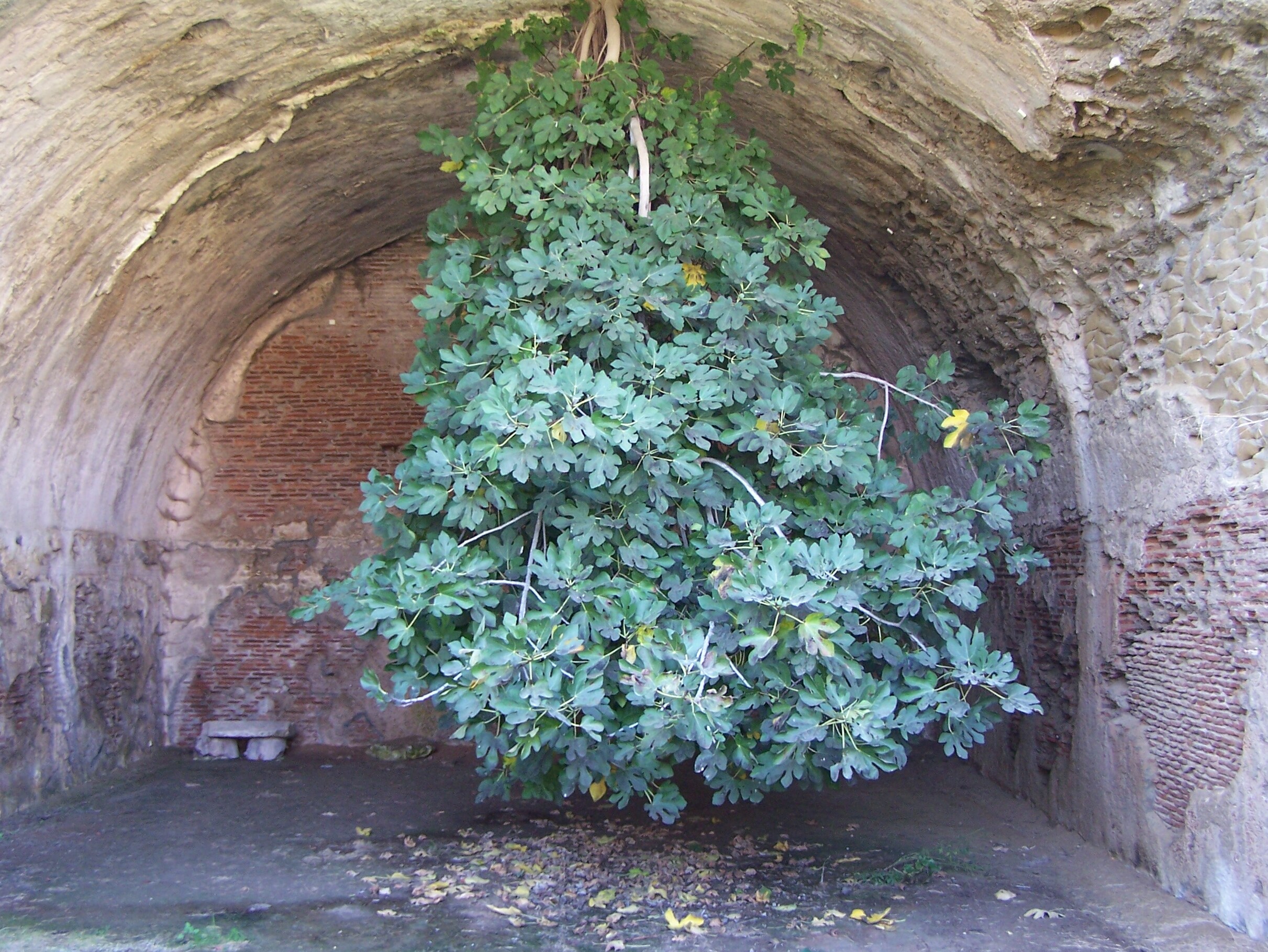

In the heart of the Campi Flegrei, a region steeped in myth and legend just a stone's throw from Naples, lies a botanical anomaly that defies the ordinary. Within the sprawling Archaeological Park of Cuma, a place renowned for its ancient ruins and mythical allure, stands an extraordinary fig tree that grows upside down. This rare spectacle, rooted in history and mystery, draws intrigued visitors seeking to glimpse a marvel of nature that seems to echo the enigmatic past of its surroundings.
The Cumae Archaeological Park is a treasure trove of ancient wonders. Established by the Greeks in the 8th century BC, Cuma was the first Greek colony on the Italian mainland and became a major cultural and religious center. It was here that the Cumaean Sibyl, a priestess presiding over the Apollonian oracle, delivered cryptic prophecies that influenced the course of Roman history. As you wander through the ruins, the whispers of antiquity seem to linger in the air, turning every corner into a page from history.
A remarkable aspect of Cuma is not just its historical significance but its harmonious blend of natural and man-made beauty. The architecture here is a testament to the blend of Greek and Roman styles. The Temple of Apollo, with its commanding views over the Gulf of Pozzuoli, showcases the classical simplicity and grandeur that defined ancient architecture. Meanwhile, the Crypta Neapolitana, an ancient tunnel carved into the hillside, reveals the engineering prowess of the Romans, a civilization that shaped the world with its innovations.
Beyond its historical and architectural allure, Cuma is a vibrant hub of local culture and traditions. The people of Bacoli, the modern town encompassing Cuma, celebrate their heritage through seasonal festivals such as the Festa di San Sossio, dedicated to the town's patron saint. This event, rich with processions and local music, offers a glimpse into the communal spirit and fervor that characterize this region.
No visit to this part of Italy would be complete without indulging in the local gastronomy. Bacoli offers a mouthwatering array of traditional dishes, heavily influenced by the bounty of the sea and fertile lands. Spaghetti alle vongole (spaghetti with clams) is a must-try, embodying the simple yet exquisite flavors of the Mediterranean. Pair it with a glass of Falanghina, a white wine cultivated on the volcanic soils of Campi Flegrei, and you have a meal that captures the essence of the region.
Among the lesser-known curiosities of Cuma is the legend surrounding the upside-down fig tree itself. Locals often refer to it as the “Ficus Ruminalis,” echoing the ancient tree under which Rome's founders were said to be suckled by a she-wolf. While the origins of this particular tree’s curious growth remain a subject of speculation, it's rumored to have been inverted during a landslide, yet miraculously continued to thrive. This peculiar natural phenomenon serves as a metaphor for the resilience and adaptability of nature, mirroring the enduring legacy of Cuma itself.
For those planning a visit, the best time to explore Cuma is during the spring and autumn months when the weather is pleasantly mild, and the landscape is awash with color. Keep an eye out for lesser-trodden paths that may reveal hidden alcoves and unexpected vistas. Early morning visits are ideal for those looking to experience the park in peaceful solitude, as the rising sun casts a golden hue over the ancient stones and verdant hillsides.
Navigating the park requires comfortable footwear due to uneven terrain, especially when venturing to see the enigmatic tree. A guided tour can enrich your experience, offering insights into the historical and botanical wonders of the area. As you stand before the upside-down fig tree, allow yourself to ponder the mysteries it embodies—a connection between the earth and the heavens, rooted in the rich tapestry of Cuma's past.
In Cuma, every stone and tree tells a story, weaving a narrative that spans centuries. The remarkable upside-down tree is a reminder of nature's unpredictability and the enduring allure of places where history, myth, and reality intertwine seamlessly.


