
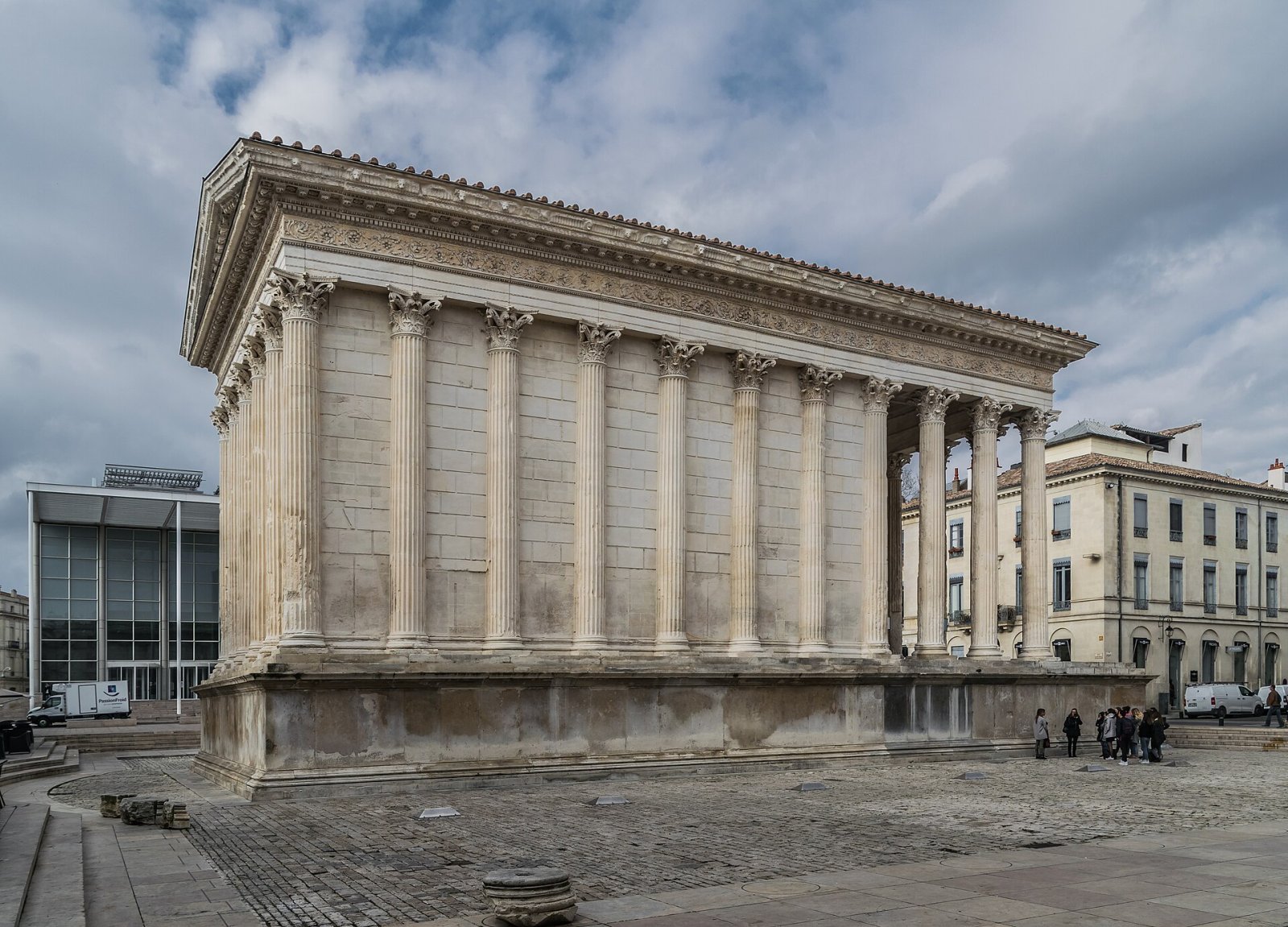

In the heart of Nîmes, one of the most fascinating cities in the Occitanie region, stands the Maison Carrée, an ancient Roman temple that represents one of the best examples of classical architecture in France. This monument, built in the 1st century AD, is famous for its extraordinary preservation, making it a unique example in its kind, even surpassing the famous temples of Rome in integrity and beauty.
The Maison Carrée, dedicated to the Roman emperors, is not only a symbol of the greatness of the Roman Empire but also an important landmark for European architectural history. Its elegance and perfect structure continue to enchant visitors and scholars, making Nîmes a must-visit destination for history and culture lovers.
History and Origins
The Maison Carrée was built during the reign of Emperor Augustus and represents an example of a Roman temple of the peripteral type, characterized by columns surrounding the building. Its original function was to honor members of the imperial family, reflecting the power and religiosity of the time. This structure, with its Corinthian style and harmonious proportions, has been a model for many other constructions over the centuries.
Throughout its history, the Maison Carrée has undergone various transformations. After the fall of the Roman Empire, the temple was converted into a church in the Middle Ages, and later became a storage facility and a theater. Only in the 19th century, thanks to careful restoration work, did it regain its role as a historical monument, attracting the attention of architects and archaeologists from around the world.
Elements to Observe
One of the most fascinating aspects of the Maison Carrée is undoubtedly its façade, adorned with majestic columns and refined architectural details. The tall and slender columns are made of local limestone and rise to support a decorated pediment. Inside, visitors can admire natural lighting that highlights the details of the structure, creating a suggestive atmosphere.
No less interesting are the archaeological remains surrounding the monument, which tell the story of daily life in ancient Nîmes. Strolling around, one can discover other Roman wonders, such as the amphitheater and the Temple of Diana, which, along with the Maison Carrée, form an archaeological complex of invaluable value.
Why It Is Interesting Today
Today, the Maison Carrée is not just a monument to admire, but also a vibrant cultural center. It hosts events, exhibitions, and screenings that make it a meeting place between the past and the present. Its historical importance is recognized worldwide, so much so that it has been included among UNESCO World Heritage sites.
Moreover, the Maison Carrée represents an ideal starting point for exploring Nîmes and its wonders. The city, with its rich history and vibrant culture, offers visitors a unique experience where the past blends with modern life. Discovering Nîmes is an opportunity to immerse oneself in a millennia-old history, and the Maison Carrée is undoubtedly its beating heart.
Practical Information for Visitors
To visit the Maison Carrée, it is advisable to check the opening hours and any restrictions due to special events. Access is generally easy, and the monument is located in a central area of Nîmes, easily reachable on foot. Don’t forget to bring a camera to capture this splendid example of Roman architecture.
Finally, for those who wish to deepen their visit, it is useful to download the Secret World app, which offers detailed information and tips on how to best explore the city and its hidden treasures.


