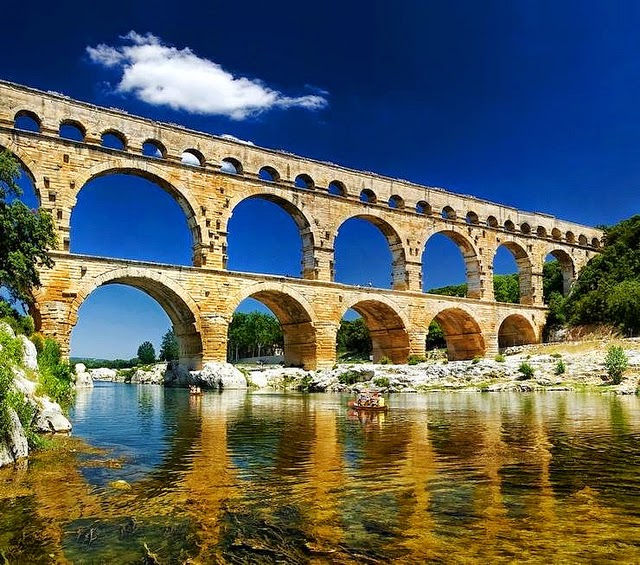

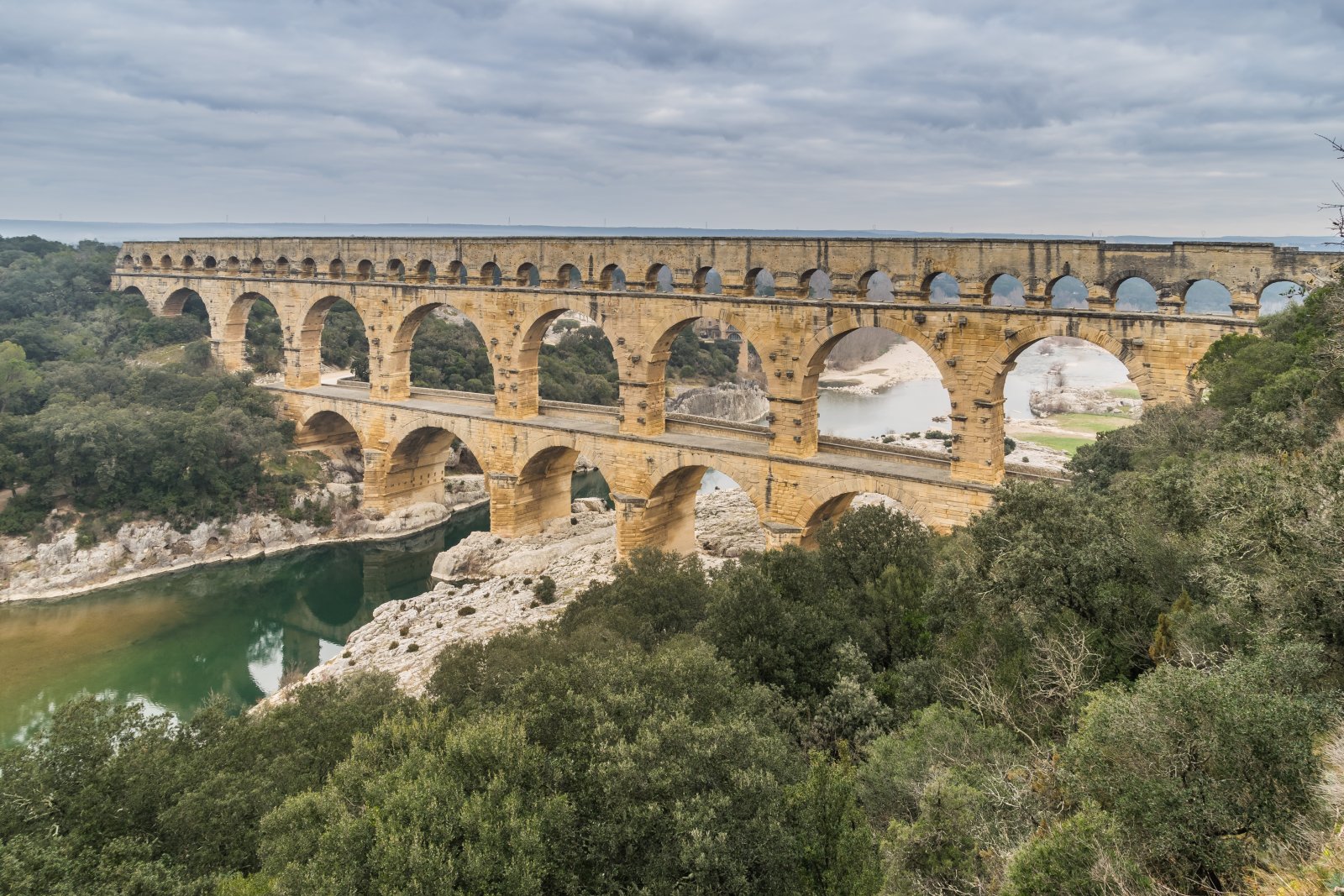
The Pont du Gard is a remarkable testament to Roman engineering, standing majestic over the Gardon River in Vers-Pont-du-Gard, France. As part of the ancient Nîmes aqueduct, this bridge was constructed in the 1st century AD to transport water from the spring at Uzès to the Roman colony of Nemausus (modern-day Nîmes). Recognized as a UNESCO World Heritage Site in 1985, the Pont du Gard is not only the highest of all Roman aqueduct bridges but also one of the best preserved, standing as a symbol of Roman ingenuity and architectural prowess.
### History and Origins The story of the Pont du Gard begins in a time when the Roman Empire was at its zenith, showcasing its engineering skills across its vast territories. The construction of this aqueduct spanned approximately 15 years, completed around 50 AD under the reign of Emperor Claudius. This monumental structure, which rises to a height of 48.8 meters (160 feet), was originally built to facilitate the transport of approximately 20,000 cubic meters of water daily over a distance of 50 kilometers (31 miles). The aqueduct not only served the practical purpose of supplying water but also showcased Roman dominance in technology and infrastructure.
### Art and Architecture The architectural style of the Pont du Gard is quintessentially Roman, characterized by its three tiers of arches that elegantly blend functionality with beauty. The bridge is built from local limestone, expertly crafted to create a structure that has withstood the test of time. The top tier, featuring smaller arches, was designed to convey water through a channel, while the lower tiers provided the necessary support and stability. This harmonious blend of engineering and aesthetics not only illustrates the technical achievements of the Romans but also stands as a work of art that has inspired countless architects and artists over the centuries.
### Local Culture and Traditions Vers-Pont-du-Gard is steeped in culture, with the Pont du Gard at its heart. The region celebrates its Roman heritage through various festivals, including the annual Fête de l'Eau (Festival of Water), which highlights the historical significance of the aqueduct and the importance of water in local life. Visitors can engage with local customs, such as traditional music and dance performances that echo the rhythms of ancient times. Moreover, the surrounding landscape offers picturesque trails for hiking and cycling, immersing visitors in the stunning natural beauty that complements the historical site.
### Gastronomy A visit to Vers-Pont-du-Gard would be incomplete without indulging in the local cuisine. The region is known for its Mediterranean flavors, featuring dishes such as brandade de morue (a creamy cod dish) and tapenade, a savory spread made from olives. Pair these delightful meals with a glass of Côtes du Rhône wine, renowned for its rich flavors and aromatic profiles. Several local restaurants offer a taste of authentic Provençal dishes, making it a perfect culinary journey for food lovers.
### Lesser-known Curiosities While the grandeur of the Pont du Gard is well-known, many tourists overlook fascinating details that enrich its history. For instance, the aqueduct was not solely a water conduit; it also served as a vital transport route for goods and people. Furthermore, during the Middle Ages, the bridge was used for various purposes, including a toll bridge. Interestingly, the structure has survived numerous floods and natural disasters, proving the resilience of Roman engineering. The surrounding area is also home to a variety of wildlife, making it a unique spot for nature enthusiasts.
### Practical Visitor Information The best time to visit the Pont du Gard is during the spring (April to June) and early autumn (September to October) when the weather is mild, and the crowds are thinner. For an unforgettable experience, consider arriving early in the morning or late in the afternoon to enjoy the stunning views as the sun casts golden hues on the stones. It’s essential to wear comfortable shoes, as the terrain can be uneven, and don’t forget to bring your camera for those breathtaking photo opportunities. Look for the Visitor Centre nearby, which offers educational exhibits about the aqueduct’s history and its significance in Roman engineering.
In conclusion, the Pont du Gard is not just a bridge; it is a historical marvel that embodies the spirit of the Roman Empire. From its remarkable architectural design to the rich local culture and gastronomy, this site offers a unique glimpse into the past.
For a personalized itinerary that allows you to explore the wonders of Vers-Pont-du-Gard at your own pace, consider using the Secret World app.
