


The smell arrives before the sight. Walking towards the medina of Marrakesh, still a hundred meters from the first shops, the nose encounters a dense mixture of ground cumin, dried rose, and fresh leather that permeates the air like a physical presence. It is a welcome without ceremonies, brutal and beautiful, that prepares one for the ordered chaos of the medieval souks.
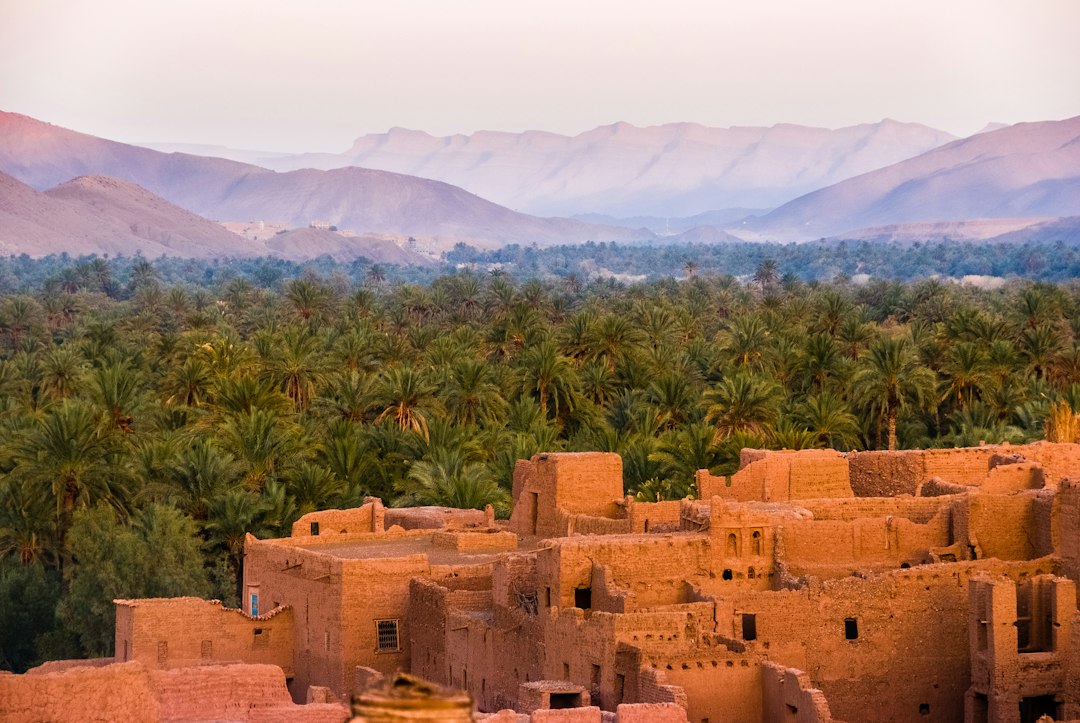
The medina of Marrakesh has been listed as a UNESCO World Heritage Site since 1985, a recognition that certifies its exceptional value as an example of an almost intact medieval Islamic city. Its red pisé walls — the same clay that gives the city the nickname of Red City — stretch for about 19 kilometers and enclose a labyrinth of alleys, derbs, and squares that cartographers have stopped trying to represent accurately.
The beating heart: Jemaa el-Fna and its surroundings
Everything converges on Jemaa el-Fna Square, the gravitational center of the medina. In the morning it is relatively quiet: a few fresh orange juice vendors with their colorful carts, Berber women offering temporary henna. But in the late afternoon, the square transforms into something difficult to describe without having experienced it: Gnawa musicians with their metallic castanets called qraqeb, snake charmers, oral storytellers reciting in darija in front of circles of local listeners. UNESCO declared the cultural space of Jemaa el-Fna an Intangible Cultural Heritage of Humanity in 2001, one of the first times this recognition was applied to a living tradition rather than a physical monument.
From the edges of the square, the main axes of the souks head north. It takes just fifty steps to lose your sense of direction: the alleys narrow to allow the passage of only one person, the walls rise, and the sky becomes a strip of light above the heads. It is here that the labyrinth stops being a metaphor and becomes a bodily experience.

The Leather Souk: The Chouara Tannery
Among the most visually powerful experiences of the medina is the view of the tanneries, of which the Chouara tannery in the dyers' quarter is the oldest and largest. It is estimated to have been active for over a thousand years, although the current structures date back to later periods. The circular stone basins where the hides are treated with dried pigeon, lime, and oak bark form a color palette that changes with the seasons and dye batches: ochre, emerald green, burgundy red, cobalt blue.

The leather shops surrounding the tannery offer visitors access to the upper terraces — often for free or in exchange for a small tip — from which one can overlook the entire basin. The merchants hand over a sprig of fresh mint before leading customers up: the smell of the processing hides is intense, and the mint serves as a natural filter. It is a practical gesture that says more than any tourist sign.
Spices, fabrics, and lanterns: the specialized souks

The medina of Marrakech has preserved the medieval structure of the souks organized by merchandise category. The Souk des Épices concentrates dozens of stalls where cumin, ras el hanout, saffron, and powdered argan form geometric pyramids of colors ranging from pale yellow to bright orange. The merchants weigh on balance scales and negotiate the price with a ritual that requires time and patience.
A little further on, the Souk des Babouches displays hundreds of traditional leather slippers — the babouche, indeed — arranged in chromatically ordered rows that resemble artistic installations. In the fabric souks, local artisans still work on hand looms producing cotton and silk fabrics. The lanterns made of perforated metal, typical of Moroccan craftsmanship, are concentrated in the Souk des Ferronniers: hanging in clusters, they filter sunlight into geometric patterns on the pavement.
Practical tips for visiting the medina
The best time to enter the souks is early in the morning, between 9 and 11, when the merchants are still setting up their shops, the light is softer, and the tourist crowd has not yet reached the density of the afternoon. Avoid Friday at noon near the main mosques, when the alleys fill with worshippers exiting prayer and circulation becomes difficult.
Do not rely on navigation apps inside the medina: the narrow alleys and compact buildings make GPS signals unreliable. It is better to orient yourself with physical landmarks — a decorated portal, the color of a wall, the sound of a hammer on metal — and accept getting lost as part of the experience. To exit the medina, asking for directions to Jemaa el-Fna almost always works: it is the universal reference that all residents know. Allow at least three hours for an initial exploration of the main souks, knowing that the medina requires more visits to be even partially understood.


