
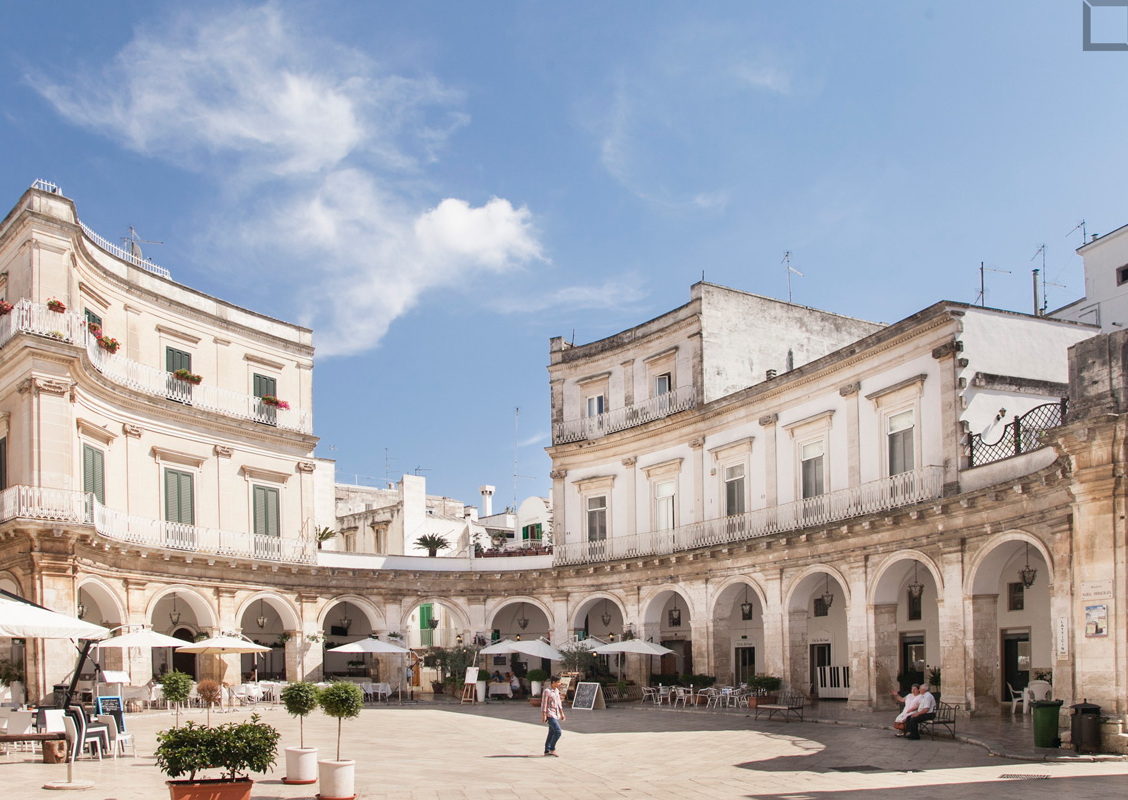

Nestled in the picturesque region of Puglia, Martina Franca enchants visitors with its stunning architecture and rich history. At the heart of this charming town lies Piazza Maria Immacolata, affectionately known as the Porticos. This large, semi-elliptical space, designed by architect Davide Conversano in 1854, serves as a vibrant gathering place that showcases the area’s baroque heritage and neoclassical elegance.
The origins of Martina Franca date back to the Middle Ages, specifically around the 11th century, when it was established as a fortified village. Over the centuries, it grew through the influence of various rulers, including the Normans and the Swabians, who recognized its strategic location. The town flourished during the Renaissance, becoming a cultural and commercial hub. The Porticos themselves were created to accommodate the local market, reflecting the town’s bustling economy and community spirit.
Architecturally, the Porticos are a stunning example of neoclassical design, characterized by a series of thirteen arches that create an inviting atmosphere. The space is often described as the elegant living room of the baroque city, positioned perfectly between the religious fervor of Piazza Plebiscito and the refined beauty of Via Cavour. While the structure boasts a harmonious symmetry, it remains an incomplete project, with the two facades at each end revealing a timeline of construction. The right side showcases the work of the 19th century, while the left was built in the 20th century, highlighting the evolution of architectural styles in the town.
The artistic significance of the Porticos extends beyond its architecture. Visitors can admire the intricate detailing of the arches and the bustling life that unfolds beneath them. Historically, this space was a commercial forum where local vendors displayed their wares, creating a vibrant marketplace atmosphere that continues to thrive today. The absence of a central fountain, which once graced the square, serves as a reminder of the area's dynamic past and the changes it has undergone.
Local culture plays a vital role in the life of Martina Franca. The town is renowned for its annual festivals, particularly the Festival della Valle d'Itria, celebrating opera and classical music. This event draws artists and enthusiasts from around the world, transforming the town into a stage for exceptional performances. The baroque architecture provides a stunning backdrop for these cultural events, blending history and art seamlessly.
Gastronomy in Martina Franca is equally vibrant, reflecting the flavors of Puglia. The town is famous for its capocollo di Martina Franca, a cured meat that has earned the prestigious PGI (Protected Geographical Indication) status. This delicacy, made from the pork shoulder and seasoned with local spices, is a must-try for visitors. Pair it with a glass of Primitivo di Manduria, a robust red wine that perfectly complements the region's hearty dishes. Other local specialties include orecchiette, a traditional pasta shape often served with broccoli rabe, and cartellate, sweet pastries typically enjoyed during festive seasons.
For those willing to dig deeper, Martina Franca has its share of lesser-known curiosities. One interesting fact is that the town is home to a unique blend of baroque and rococo architectural styles, with numerous churches and palaces showcasing this artistic fusion. Hidden gems abound, such as the Palazzo Ducale, which boasts stunning frescoes and an exquisite interior. Additionally, the old town features narrow, winding streets that are perfect for wandering and discovering local artisans, quaint shops, and cozy cafes.
The best time to visit the Porticos and Martina Franca is during the spring and fall, when the weather is mild, and the town is less crowded. Early mornings or late afternoons are ideal for exploring the square, allowing visitors to soak in the ambiance while enjoying a leisurely stroll. Don’t forget to look for local artisans selling handmade goods, as these unique souvenirs reflect the rich cultural heritage of the area.
If you’re planning a trip to Martina Franca, consider using the Secret World app to create a personalized AI itinerary that highlights the best of this enchanting town.


