
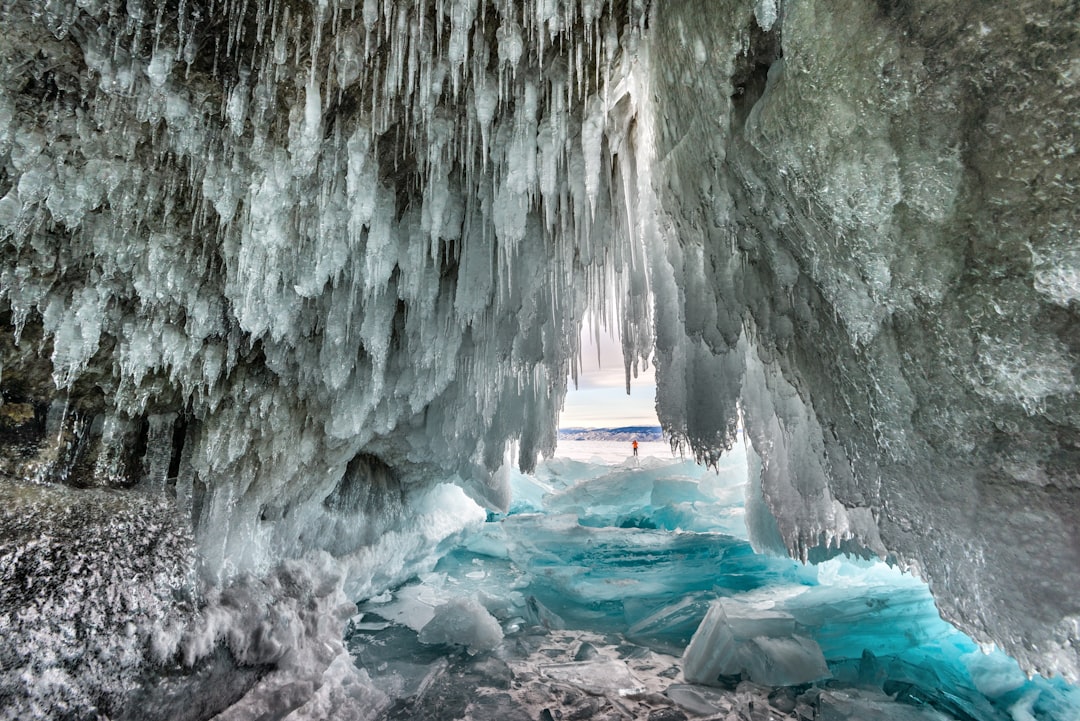

At zero degrees Celsius all year round, even in the height of the Japanese summer, the columns of natural ice in the Narusawa Cave remain still in the darkness of a lava tunnel. This underground cavity extends for about 156 meters in length and was created by an eruption of Mount Fuji that occurred in 864 AD, known as the Jogan eruption. The lava flowing north cooled from the outside in, leaving a hollow conduit — a lava tube — that in the subsequent centuries trapped the cold of winter and has not released it since.

Narusawa is a small village in Yamanashi Prefecture, located on the northern slope of Fuji, a few kilometers from Lake Saiko. The cave is located within a protected area called Aokigahara Jukai, the famous forest of twisted trees that grew on the lava flow of 864. Entering the underground here means crossing two layers of history: the volcanic, written in the dark and porous rock, and the human, which transformed this tunnel into a place for ice preservation even in feudal times.
What to see inside the cave

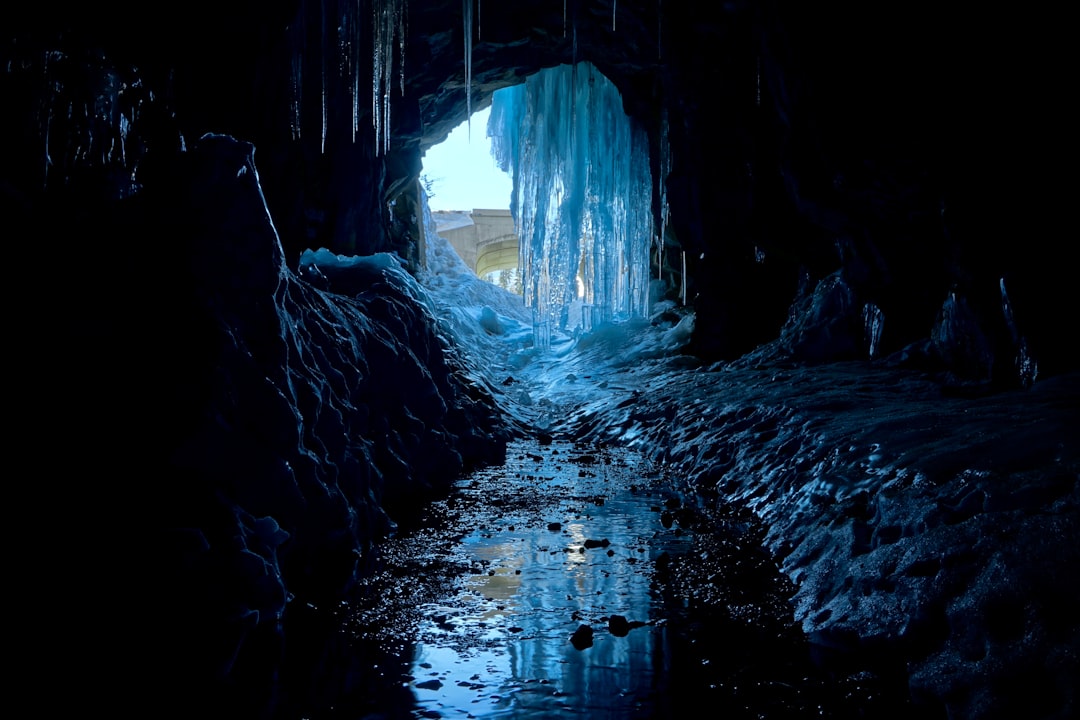
As soon as you descend the metal steps leading to the entrance, the temperature drops sharply. Humidity condenses on your face, footsteps echo on the basalt rock, and the walls become increasingly narrow. The most spectacular feature of the cave is the presence of natural ice columns and slabs that form every winter due to infiltrating water and remain intact throughout the year thanks to the constant temperature. In certain areas, the ice on the floor is thick enough to reflect the light from the lamps installed along the path.
The walls show the typical texture of lava tubes: rough surfaces, solidified bubbles, vertical fractures. In some sections, the ceiling lowers to just a few decimeters above your head, forcing you to bend down. This is not a place designed for postcard visual comfort, but for direct contact with volcanic geology. Informational signs along the path explain the formation of the lava tube and the history of the Jogan eruption, which destroyed a pre-existing lake called Senoumi.

History and volcanic context
The eruption of 864 AD is documented in historical Japanese sources of the time and is considered one of the most significant in the history of Mount Fuji. The Aokigahara lava flow covered an area of about 30 square kilometers, burying agricultural land and settlements. The lava tube that today forms the Narusawa Cave was created during that phase, when the outer crust of the lava solidified while the internal material continued to flow, emptying the conduit.

For centuries, the cave was used as a natural ice storage: before the era of artificial refrigeration, the ice extracted here was transported to nearby cities. This practical function helped preserve the cavity, which today is protected as a site of natural geological interest. The proximity to the Fugaku Wind Cave — another lava cavity in the same area — allows for combining the two visits in one day.
How to organize the visit
The cave is easily reachable from Tokyo in about two hours by public transport: from Shinjuku station, take a direct bus to Lake Kawaguchiko, then continue with a local bus to Narusawa. Alternatively, many visitors rent a car in Kawaguchiko to explore the entire area more freely. The entrance ticket is around 350 yen, a very reasonable amount that includes access to the illuminated path.
The most important practical advice is to bring a jacket or a sweatshirt even in the middle of summer: the difference between the 35 degrees outside and the zero degrees inside is violent and unexpected for those who are unprepared. Non-slip shoes are useful because the floor can be wet. The visit lasts on average 20-30 minutes. The best time is spring or autumn, when the crowd is smaller compared to the peak summer months and the descent into the cave offers an even more marked thermal contrast compared to the fresh outside air.
The atmosphere and the surrounding landscape
Exiting the cave after the visit is a small experience of sensory disorientation: the light, the warmth, the sounds of the forest all come back together. The surrounding area deserves a few minutes of attention: the Aokigahara trees grow directly on the lava rock, with roots that twist and intertwine into the cracks in spectacular ways. The ground is uneven, covered in moss, and at certain points, cold air currents can be felt rising from the fissures in the basalt.
Those who want to delve deeper into the geological context can visit the Aokigahara Information Center nearby, where informative panels explain the volcanic history of the region and the relationship between Fuji and the surrounding landscape. The Narusawa cave is not a spectacle built for tourism: it is a cavity that has existed for over a thousand years and continues, silently, to freeze time within it.


