
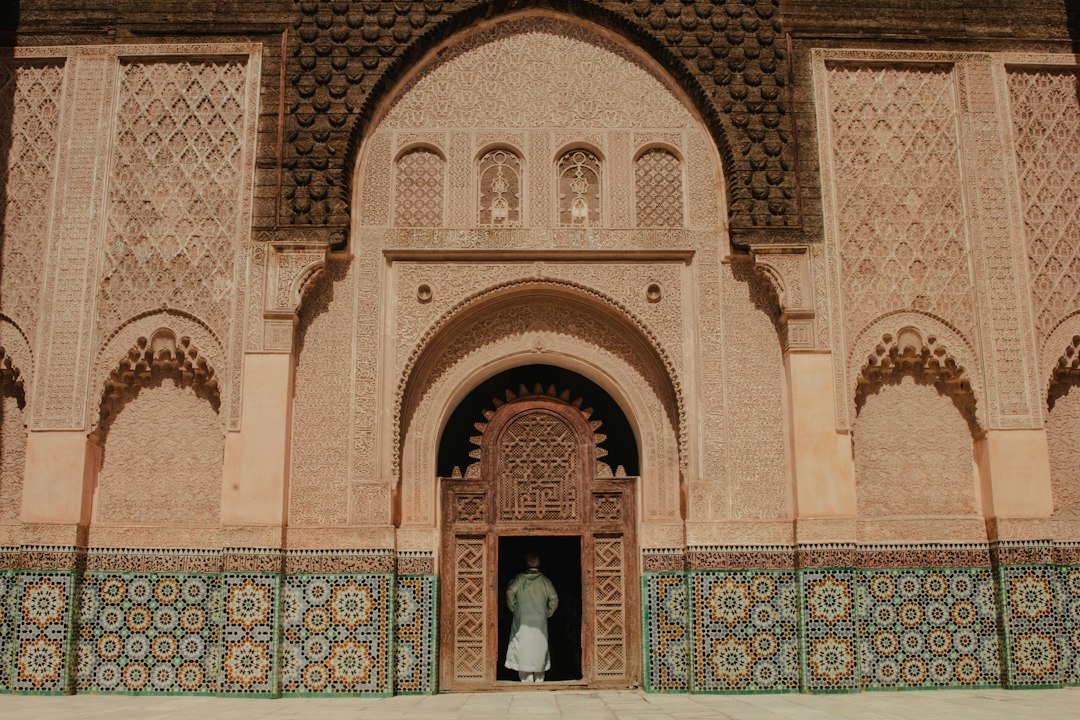

The carved cedar ceilings of El Bahia Palace are not easily forgotten. Each panel is decorated with geometric and floral motifs created by Moroccan artisans from the late 19th century, and observing them from within the main halls, one immediately understands why this building represents one of the most complete examples of Andalusian-Moroccan architecture. The palace is located in the medina district of Marrakech, not far from the Mellah, the old Jewish quarter of the city.
El Bahia was built in the second half of the 1800s at the behest of Si Moussa, the grand vizier of the Sultan of Morocco, and was later expanded by his son Ba Ahmed, who himself became grand vizier at the end of the century. It is Ba Ahmed who is remembered as the main patron of the complex in its current form: the expansion works took place between 1894 and around 1900, involving artisans from Fes, a city traditionally associated with the highest expressions of Moroccan craftsmanship.
The structure of the palace and its main spaces
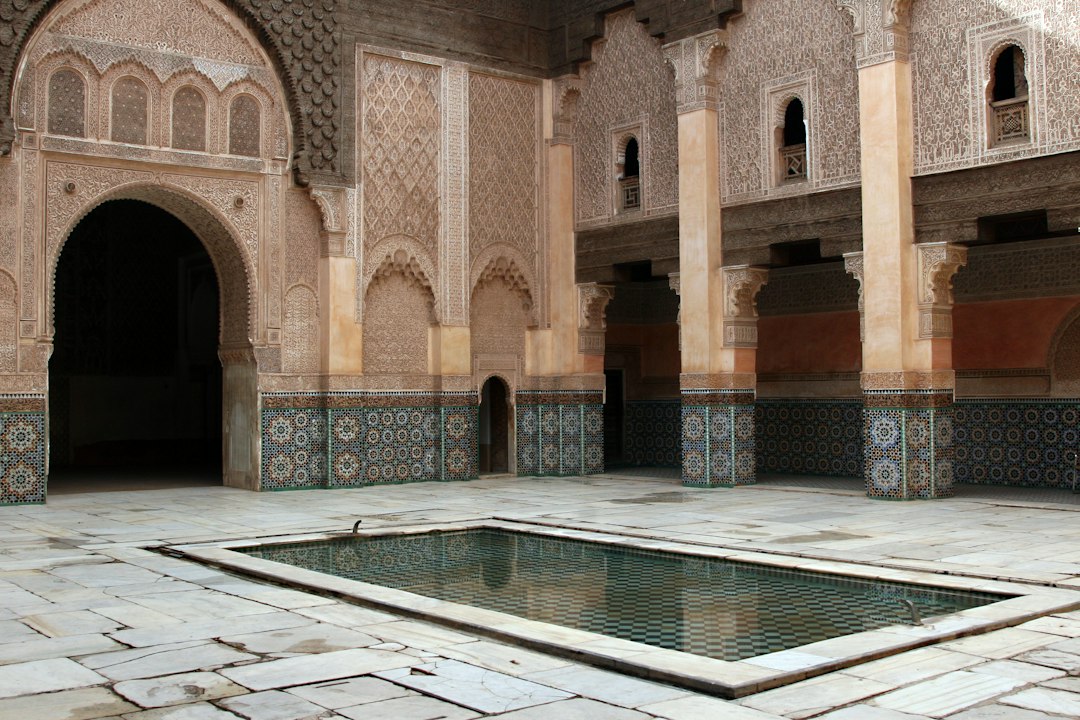
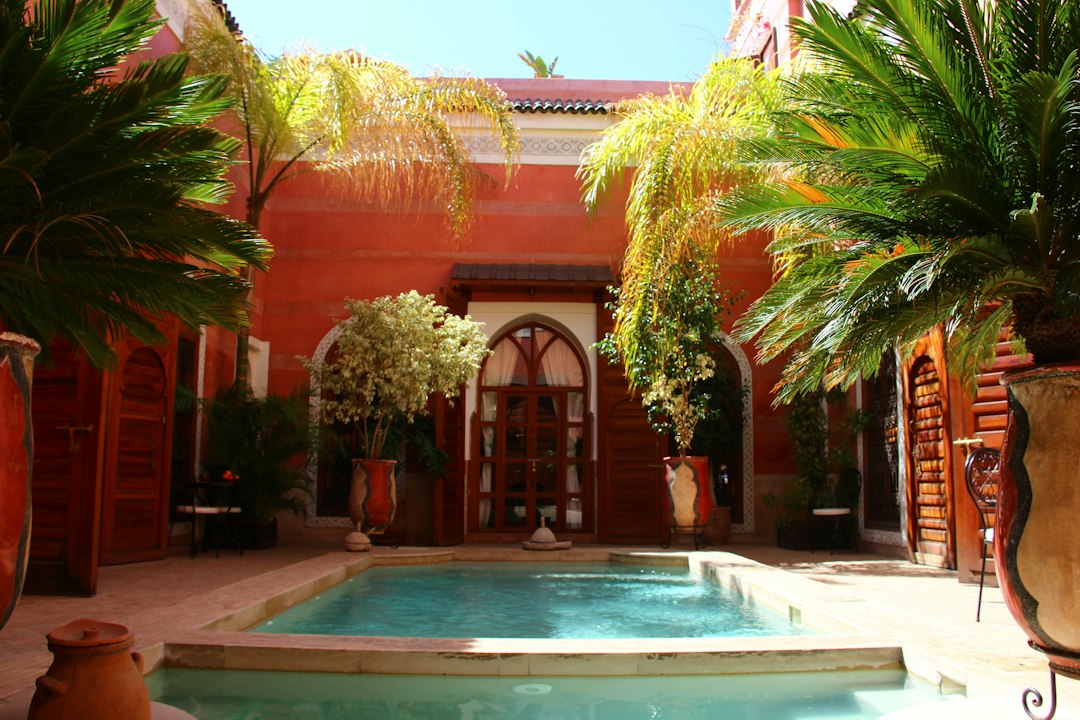
The complex occupies about 8,000 square meters and includes over 150 rooms, although only a part of them is accessible to visitors. The layout follows the classic model of the Arab-Andalusian house, organized around internal courtyards — the riads — with gardens, fountains, and pavements in zellige, the characteristic hand-cut glazed ceramic tiles assembled in geometric compositions. The predominant colors are white, cobalt blue, and green, arranged in horizontal bands that visually separate the different decorative areas of the walls.
The large central courtyard, surrounded by porticoes with horseshoe arches, is one of the most photographed spaces of the palace. The white marble columns support richly decorated arches with carved stuccos, while the floor is entirely covered in multicolored zellige. In some rooms, it is still possible to observe the original drapes and furnishings of the time, which give a concrete idea of how the Moroccan elite lived at the end of the nineteenth century.
The decorative details: stuccoes, wood, and ceramics
Three materials dominate the aesthetics of El Bahia: carved cedar, plaster stuccoes, and zellige ceramics. The cedar ceilings are perhaps the most impressive element: crafted using the technique of hand carving, they feature star patterns, arabesques, and calligraphic inscriptions. The wood, treated with natural oils, has maintained a warm tone over the decades that contrasts with the white of the underlying stuccoes.
The stuccoes that cover the walls up to about half height are another strong point of the palace. Made with finely worked plaster, they display stylized plant motifs — leaves, flowers, tendrils — that repeat with variations along the entire perimeter of the rooms. This decorative technique, called gebs in Moroccan Arabic, requires years of apprenticeship and is now practiced by an increasingly smaller number of specialized artisans.
History and Subsequent Uses of the Building
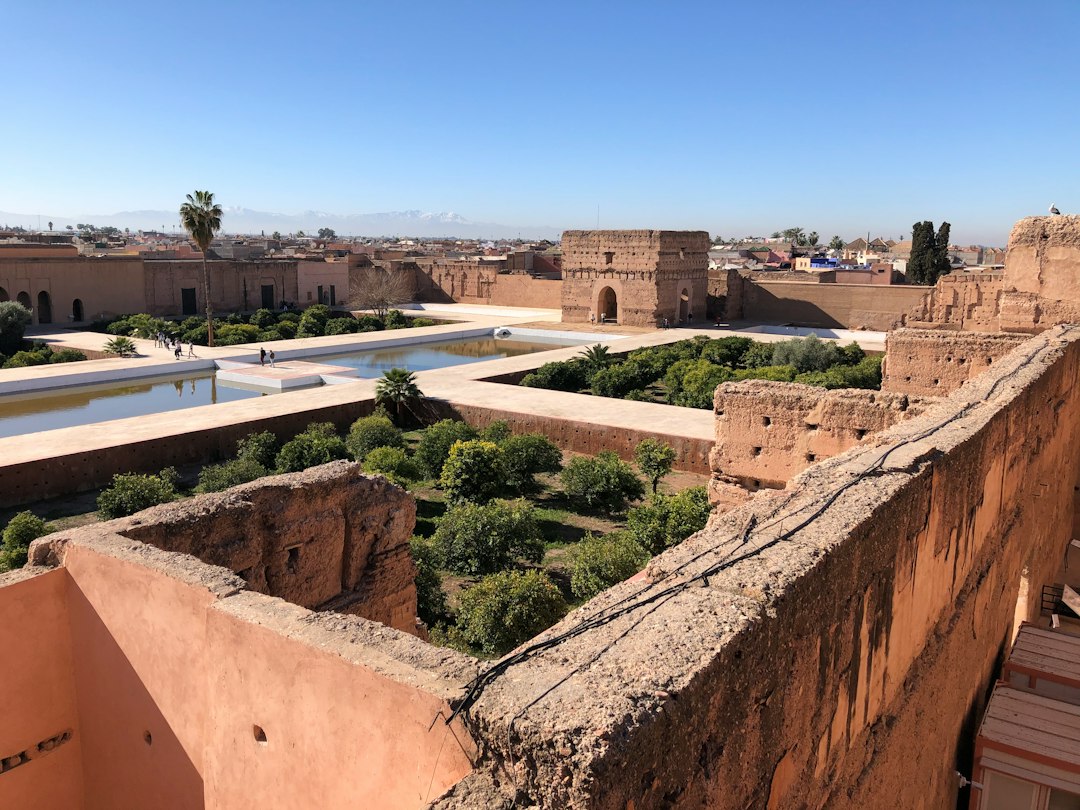
Upon the death of Ba Ahmed in 1900, the palace was looted by servants and court officials before the sultan could take possession of it. It later became the residence of the French Protectorate and, after Morocco's independence in 1956, was occasionally used by the royal family as a residence during visits to Marrakech. Even today, the palace is owned by the Moroccan state and some of its sections remain reserved for official guests.
This layering of uses has helped preserve much of the original decorations, although some rooms show obvious signs of restorations carried out during the twentieth century. The comparison between the better-preserved areas and those that have undergone more invasive interventions is itself instructive for those interested in traditional craftsmanship techniques.
Practical Information for the Visit
El Bahia is located in the Riad Zitoun el Jedid neighborhood, reachable on foot from Jemaa el-Fna square in about 15-20 minutes through the alleys of the medina. The entrance ticket costs around 70 dirham for foreign visitors, an amount subject to variations that should be checked on site. The palace is open every day, with a break in the middle of the day; the exact hours change seasonally, so it is advisable to check before leaving.
The best time to visit is early in the morning when natural light enters obliquely into the courtyards and organized groups have not yet filled the spaces. Bringing a small flashlight or using that of a smartphone can be helpful to observe the details of the ceilings in the less illuminated rooms. The average visit time is about 45-60 minutes, but those who want to study the decorative details carefully can easily take twice as long.


