
← Back

Piazza del Popolo

P.za del Popolo, 48121 Ravenna RA, Italia ★★★★☆ 348 views
Stella Obama
Ravenna
🏆 AI Trip Planner 2026

Get the free app

Discover the best of Ravenna with Secret World — the AI trip planner with 1M+ destinations. Get personalized itineraries, hidden gems and local tips. Free on iOS & Android.

🧠 AI Itineraries 🎒 Trip Toolkit 🎮 KnowWhere Game 🎧 Audio Guides 📹 Videos
Scan to download iOS / Android
Scan for AppGallery Huawei users

About Piazza del Popolo

Piazza del Popolo - Ravenna | Secret World Trip Planner

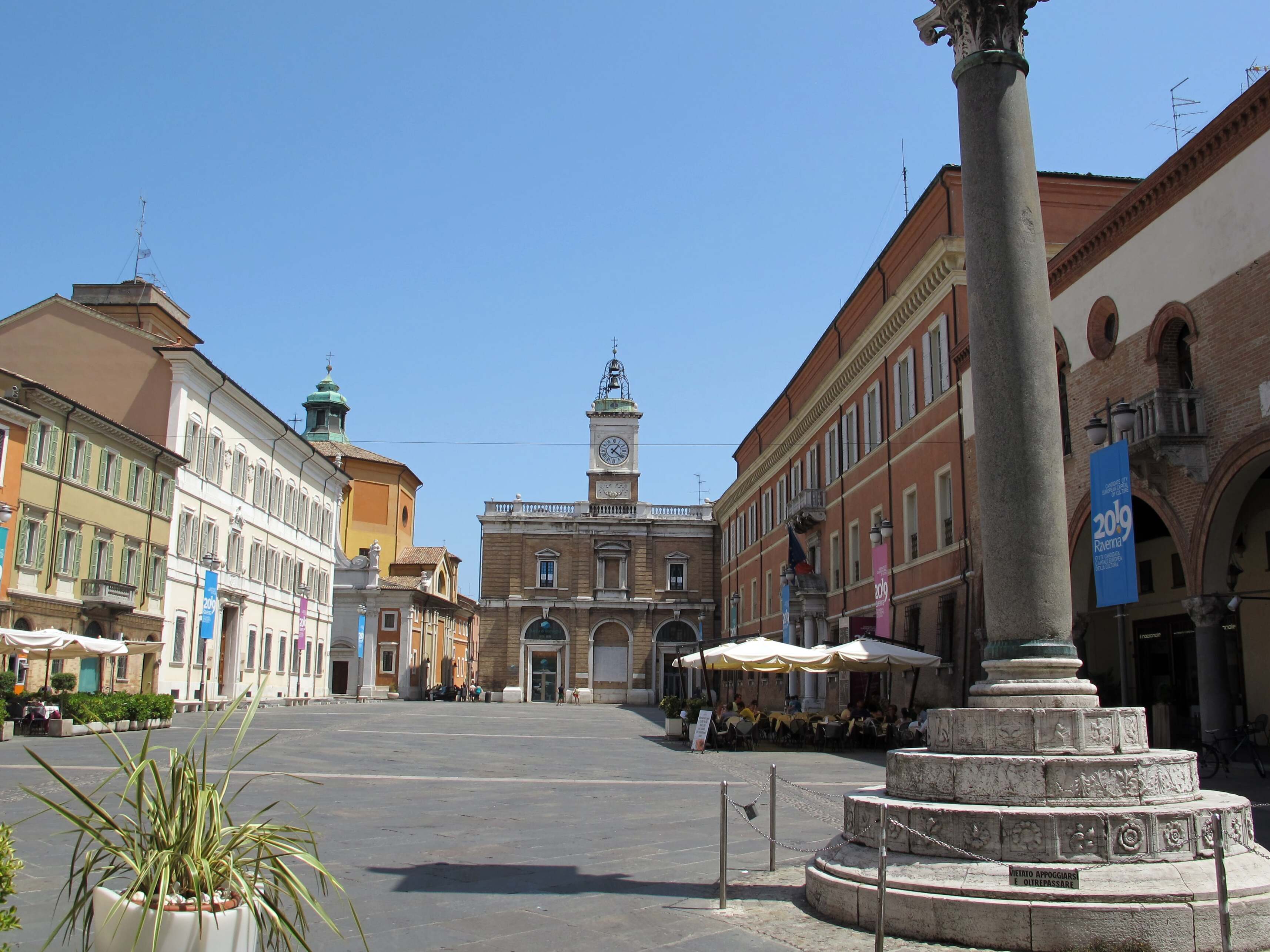
The beating heart par excellence of the city of Ravenna is undoubtedly the famous Piazza del Popolo: a meeting point that unites the streets of the historic centre and that not infrequently hosts events. It was built by the Venetians in the second half of the fifteenth century, the years (1470-80) in which the dimensions of the square were defined following the enlargement of a simple clearing along the bank of the Padenna canal, which flowed at the point where the embattled palace now stands; the dimensions have remained unchanged since then. In 1483 two granite columns were erected to delimit the square towards the course of the Padenna. At the top of one of them was placed the Lion of St. Mark; on the other, the statue of the patron saint St. Apollinare. From 1509, the year in which Pope Julius II took possession of the city by defeating the Venetians at Ghiaia d'Adda, the insignia of the Serenissima disappeared from the square: the lion on the column was replaced by Saint Apollinare and the statue of San Vitale was placed at his side, and remains so today. Both columns rest on circular bases decorated with floral motifs and signs of the zodiac. The square is framed by the Palazzo Merlato, located near the two columns, which was built during the fourteenth century on the site of the former residence of the Da Polenta family. On the south side of the square there is the palace of the Rector of Romagna built in 1295, which later became the Apostolic Palace and the seat of the Legate of Romagna. In Piazza del Popolo there is also the former headquarters of the Banca Nazionale del Lavoro, built by the architect Camillo Morigia, connected to the palace of the prefecture by an archway, from which you can see the tomb of Dante. Along the perimeter of the square we also find the Palazzo dei Rasponi del Sale, the current seat of a bank. In the late 15th century the façade of the Venetian church of San Ruffillo (later San Sebastiano) incorporated the dial of the mechanical public clock. The building was then flanked by a second church dedicated to St. Mark; together they formed a single complex topped by a bell tower erected above the clock.
Piazza del Popolo - Ravenna | Secret World Trip Planner
🗺 AI Trip Planner

Plan your visit to Ravenna

Suggested itinerary near Piazza del Popolo

MAJ+
500.000+ travelers worldwide
  1. 🌅
    Morning
    Piazza del Popolo
    📍 Ravenna
  2. ☀️
    Afternoon
    Alighieri Theatre
    📍 0.1 km · Ravenna
  3. 🌆
    Evening
    Ravenna and the Dantesque Museum
    📍 0.2 km · Ravenna

Buy Unique Travel Experiences

Powered by Viator

See more on Viator.com

Explore nearby · Ravenna

Frequently Asked Questions

The two granite columns were erected in 1483 by the Venetians to delimit the square, originally topped with the Lion of St. Mark and a statue of Saint Apollinare. After Pope Julius II conquered Ravenna in 1509, the Venetian lion was replaced with another statue of Saint Apollinare, while San Vitale was placed beside it—an arrangement that remains unchanged today.
Piazza del Popolo was built by the Venetians between 1470-1480 through the enlargement of a simple clearing along the Padenna canal, which once flowed where the embattled palace now stands. The square's dimensions have remained unchanged since its creation and continue to serve as a central meeting point uniting the streets of Ravenna's historic center.
The square is framed by several important structures including the 14th-century Palazzo Merlato, the 1295 palace of the Rector of Romagna (which later became the Apostolic Palace), the Palazzo dei Rasponi del Sale, and a former Banca Nazionale del Lavoro building designed by architect Camillo Morigia. From the archway connecting the bank to the prefecture, visitors can also view Dante's tomb.
When Pope Julius II defeated the Venetians in 1509, all Venetian insignia were removed from the square, including the replacement of the Lion of St. Mark on the columns. The transformation reflected Ravenna's shift from Venetian to Papal control, with Saint Apollinare and San Vitale statues becoming the dominant religious symbols in the square.
Both granite columns rest on circular bases that are decorated with beautiful floral motifs and signs of the zodiac, adding artistic elegance to the square's iconic landmarks. These decorative elements reflect the Venetian craftsmanship and attention to detail from the 15th century when the columns were originally erected.
