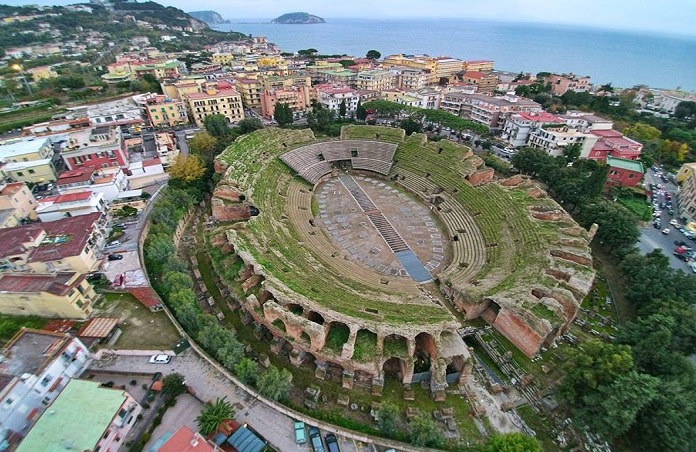

Nestled along the scenic coastline of the Bay of Naples, Pozzuoli is a gem that often gets overshadowed by its more famous neighbors. However, this quaint coastal town boasts a history as rich and compelling as the Roman Colosseum, particularly with its Flavian Amphitheater, the third largest in Italy.
### History and Origins
The origins of the Flavian Amphitheater date back to the 1st century AD, during the reign of Emperor Vespasian, who initiated its construction around 80 AD. This monumental structure was likely the brainchild of the same architects responsible for the iconic Colosseum in Rome. Originally named Amphitheatrum Flavium, it was built to entertain the local populace with gladiatorial contests, animal hunts, and other spectacles.
In its prime, the amphitheater could seat over 20,000 spectators, a testament to its grandeur. However, unlike the Colosseum, which has stood the test of time, the Pozzuoli amphitheater has suffered from natural disasters, particularly the eruption of the Solfatara volcano in the late antique period, which led to its abandonment and partial burial beneath ash.
### Art and Architecture
The architecture of the Flavian Amphitheater is a marvel of Roman engineering. Constructed primarily from tuff, a local volcanic rock, the structure features a series of arches and vaults that exemplify the Roman mastery of space and light. Although much of the upper seating has eroded away, the preserved subterranean areas provide a fascinating glimpse into the mechanics of ancient entertainment.
Visitors can explore the hypogeum, where animals were kept in cages before their dramatic entrances into the arena. Ingenious mechanisms for lifting these creatures are still visible, showcasing the amphitheater's advanced technology. The remaining facade, with its impressive arches, hints at the artistic prowess of Roman builders.
### Local Culture and Traditions
Pozzuoli is not just a historical site; it's a vibrant community rich in culture. The local customs are deeply intertwined with its ancient heritage. One of the most notable festivals is the Feast of San Gennaro, celebrated in September, where locals honor their patron saint with a colorful procession that includes traditional music, dance, and plenty of food stalls offering local delicacies.
The town also has a unique connection to its Greek roots, evident in its local dialect and traditions. The ancient Roman Forum, located nearby, continues to serve as a gathering place for festivals and community events, bridging the past with contemporary life.
### Gastronomy
When it comes to gastronomy, Pozzuoli does not disappoint. The coastal town is renowned for its seafood, particularly the fresh catches from the Bay of Naples. The local specialty, “impepata di cozze”, is a simple yet flavorful dish of mussels cooked with black pepper, reflecting the town's maritime heritage. Another must-try is “frittura di pesce”, a delicious mixed fry of various fish and seafood, often enjoyed with a glass of local white wine, such as Falanghina.
For those with a sweet tooth, the “sfogliatella”, a flaky pastry filled with sweet ricotta and citrus, is a delightful treat that embodies the region's culinary excellence.
### Lesser-known Curiosities
Despite its historical significance, many tourists overlook the fascinating details of the Flavian Amphitheater. For instance, it is home to one of the earliest examples of a “pulley system”, which was revolutionary for its time. Additionally, the amphitheater is built on a site that has a unique geological history. The land is characterized by bradyseism, a phenomenon that causes the ground to rise and fall, giving the area its distinctive topography and affecting ancient settlements.
Another intriguing aspect is that the amphitheater was used for various activities even after the fall of the Roman Empire, including housing during the Middle Ages and even as a quarry for nearby buildings.
### Practical Visitor Information
The best time to visit Pozzuoli is during the spring and early fall months, when the weather is pleasant and the tourist crowds are thinner. The amphitheater is easily accessible and often less crowded than its larger counterparts.
When visiting, be sure to take a guided tour to fully appreciate the history and engineering marvels of the structure. Don’t miss exploring the subterranean areas; they offer a unique perspective on how entertainment was staged in ancient times.
For those looking to delve deeper into the local culture, consider timing your visit to coincide with the Feast of San Gennaro or other local events, as they provide a vibrant snapshot of Pozzuoli’s rich traditions.
As you plan your journey, remember to use the Secret World app for a personalized AI itinerary that will help you uncover the hidden treasures of Pozzuoli.
