
🎄 Win a month in Italy for two — €10,000 · The Secret Italy Prize GO →
Pozzuoli | The Antonino Pio Stadium — Pozzuoli
← Back
Historical Sites 📍 Pozzuoli, Italy 290 views

Pozzuoli | The Antonino Pio Stadium

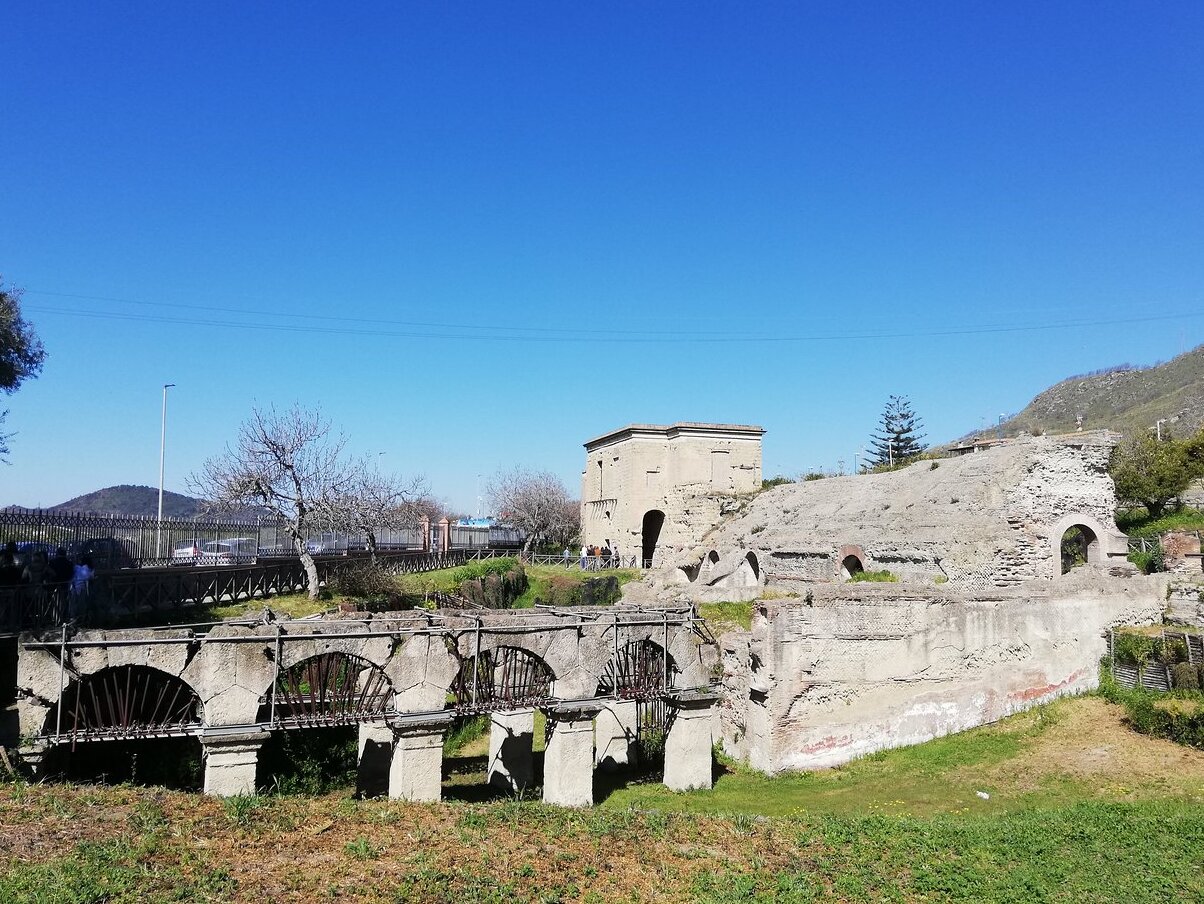
The Antonino Pio Stadium, located immediately to the west of the city of Puteoli, stands on a natural terrace, with the northern front facing the ancient Via Domitiana (now Via Luciano) and the southern front scenographically overlooking the Gulf of Pozzuoli. As the ancient sourc...

Photo · Floriana B.

Pozzuoli | The Antonino Pio Stadium — Pozzuoli, Italy.

Location
Pozzuoli
Type
Historical Sites
Opening hours
Weather now
↗ Directions

About Pozzuoli | The Antonino Pio Stadium

Pozzuoli | The Antonino Pio Stadium - Pozzuoli | Secret World Trip Planner

The Antonino Pio Stadium, located immediately to the west of the city of Puteoli, stands on a natural terrace, with the northern front facing the ancient Via Domitiana (now Via Luciano) and the southern front scenographically overlooking the Gulf of Pozzuoli.

As the ancient sources inform us, the construction of the Stadium was promoted by the Emperor Antoninus Pius to celebrate the philhellenic spirit of his predecessor Hadrian who, who died in Baia in 138 A.D., was first buried in the area of one of Cicero's villas in Pozzuoli; later, Antoninus Pius, having overcome the Senate's qualms, had the remains transferred to Rome and instituted Olympic-type games known by the Greek name of Eusebeia in Pozzuoli, on the site of the first burial.

The Stadium (measuring about 300 x 70 m) has the traditional rectangular plan with one of the short curved sides (sphendone) and the other, reserved for the start of the athletes, characterized by a slight curvilinear trend. On this side - where in the last decade of the last century different excavation campaigns carried out thanks to the regional funds were concentrated - there is a monumental double-curtain passageway, originally covered by a masonry vault. This entrance introduced the athletes directly to the runway and consisted of several arches made of large blocks of local volcanic stone (so-called piperno), covered with light-coloured plaster; of these arches only the pillars were preserved standing, while the ashlars, all found to have collapsed, were repositioned in their original position during the recent restoration work on the monument. Access to the spectators, on the other hand, was from the northern front filtered by several foreparts, of which only the first to the east could be seen, interspersed with green spaces. Passing through them, one enters an ambulatory with cocciopesto flooring and a composite vaulted roof; from here, through different openings (vomitoria), the public could access the various sectors of the stands (cavea). As in most buildings for ancient performances, the cavea of Antonino Pio's Stadium was organized in three parts, corresponding to different bands of spectators. The lower part of the cavea (ima), reserved for eminent figures, is separated from the track by a fence wall (balteus) and preserves two rows of seats in blocks of piperno; of the intermediate and higher parts of the cavea (medium and summa), on the other hand, the bleachers are not preserved, which, according to some traces highlighted, do not appear to be made of piperno.

✦ Secret World · suggested day

A perfect day in Pozzuoli

Start with Pozzuoli | The Antonino Pio Stadium, then continue with nearby places selected by Secret World.

  1. 01
    Morning
    Pozzuoli | The Antonino Pio Stadium
    📍 Pozzuoli
    Start here
  2. 02
    Afternoon
    📍 1.4 km away
  3. 03
    Evening
    📍 2.1 km away

Collect this place

Turn places you discover into stamps in your Secret Passport.

Open Secret Passport →

Keep exploring · Pozzuoli

Frequently Asked Questions

Emperor Antoninus Pius commissioned the stadium to honor his predecessor Hadrian and instituted Olympic-type games called Eusebeia at the site where Hadrian was initially buried before his remains were transferred to Rome. This philhellenic celebration reflected the deep appreciation for Greek culture during the Roman imperial period.
The stadium measures approximately 300 x 70 meters and features a traditional rectangular plan with one curved short side (sphendone) for spectators and the opposite end with a slight curve reserved for the athletes' starting position. The structure was built to accommodate both the sporting events and the viewing public with dedicated access routes.
The most notable surviving features are the pillars of the monumental double-curtain passageway made from local volcanic stone (piperno) on the athletes' entrance side, recently restored to their original positions. Visitors can also observe the ambulatory with cocciopesto flooring, the vaulted roof structures, and the multiple openings (vomitoria) that once allowed spectators to access different sectors.
The stadium stands immediately west of Pozzuoli on a natural terrace, with its northern front facing the ancient Via Domitiana (now Via Luciano) and its southern front offering scenic views overlooking the Gulf of Pozzuoli. This strategic location provides both historical significance and beautiful coastal perspectives.
Significant excavation and restoration campaigns were conducted in the last decade of the twentieth century using regional funds, which focused particularly on the athletes' entrance area and the collapsed volcanic stone blocks (ashlars). The restoration work carefully repositioned these architectural elements to their original locations, preserving the stadium's historical integrity.

Experiences nearby · Pozzuoli

Powered by Viator

See more on Viator.com

Secret World Hidden places, real stories — plan your trip
Get the app
