
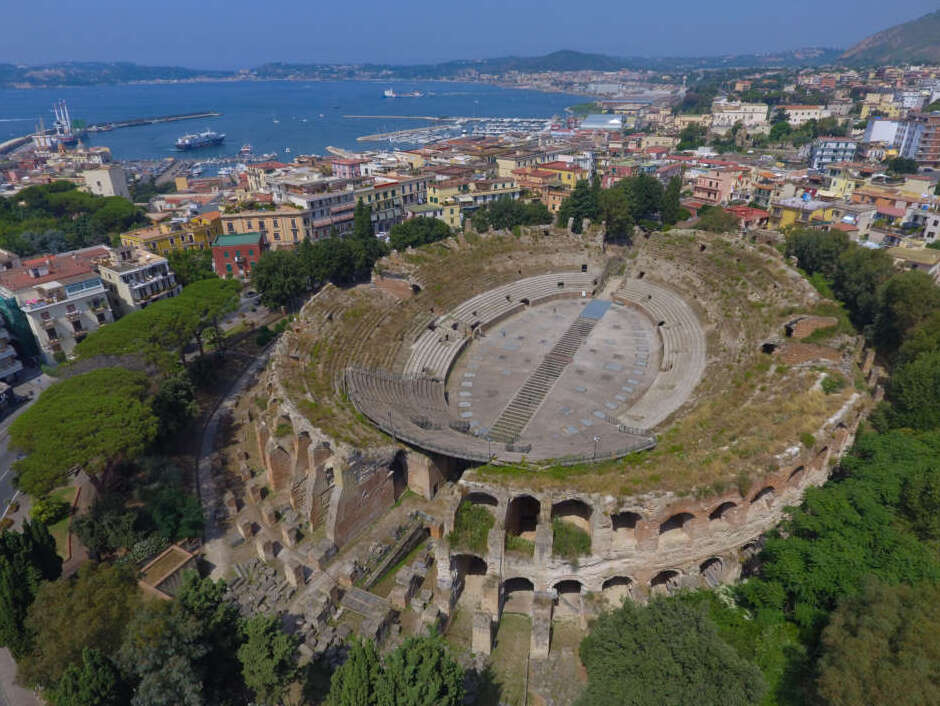

In the heart of Pozzuoli, Italy, the Flavian Amphitheatre rises majestically, a testament to the grandeur of ancient Roman engineering and a vivid reminder of the city’s storied past. Built in the first century A.D., this magnificent structure was constructed to accommodate the growing population of Puteoli, which had burgeoned due to its status as a vital port and commercial hub.
Historically, Pozzuoli was founded by the Etruscans and later became a significant Roman settlement. The amphitheater replaced earlier venues that struggled to meet the demands of an increasing audience for spectacles and games. Known for its capacity, it was the third largest in Italy, surpassed only by the Colosseum and the Amphitheatre of Capua. The site where the amphitheater stands was strategically located where major roads, such as the Via Domitiana and the road to Naples, converged, making it easily accessible to the masses.
The art and architecture of the Flavian Amphitheatre reflect the ingenuity of Roman design. It features three distinct tiers, known as the ima, media, and summa cavea, which allowed for an organized seating arrangement that catered to different classes of society. The amphitheater is constructed predominantly from travertine, a stone that was favored for its durability and aesthetic qualities. The elliptical portico, encircling the structure, was originally adorned with stone pillars and semi-columns, showcasing the architectural flair typical of Roman public buildings.
Visitors can still admire the complex system of vomitoria, which facilitated the efficient flow of crowds, a precursor to modern stadium design. Below the arena floor, an intricate network of passages and chambers was used to house animals and gladiators, adding an element of surprise to the performances. The design not only served functional purposes but also created an atmosphere of anticipation and excitement for the spectators.
The culture of Pozzuoli is deeply intertwined with its ancient roots. Local traditions often reflect the historical significance of the area. One of the most notable events is the Festival of the Sea, celebrated each September, which honors the city’s maritime heritage. During this festival, locals engage in various maritime activities, showcasing traditional boat races and culinary delights from the sea, celebrating Puteoli's connection to the water.
Gastronomy in Pozzuoli is a delightful exploration of flavors, with a strong emphasis on fresh, local ingredients. The region is renowned for its seafood dishes, particularly linguine alle vongole (linguine with clams) and frittura di pesce (fried fish). Visitors should not miss sampling impepata di cozze, a peppered mussel dish, often enjoyed with a side of Limoncello, a lemon liqueur that embodies the zest of the region. The local markets buzz with life, offering fresh produce and artisanal products that reflect the culinary heritage of the area.
For those venturing beyond the amphitheater, Pozzuoli offers several hidden gems. Few know that the area is home to ancient Roman ruins such as the Temple of Serapis, a fascinating structure that once served as a marketplace and showcases the city’s history of trade. The temple’s columns are partially submerged, a result of the volcanic activity that shaped the region, revealing the geological complexities that make Pozzuoli unique.
Another lesser-known curiosity is the Solfatara, a volcanic crater just outside the city, where visitors can witness the earth bubbling and steaming, a reminder of the region's geological volatility. This area is rich in sulfur springs and fumaroles, offering a glimpse into the natural wonders that lie beneath the surface.
The best time to visit Pozzuoli is during the spring and fall when the weather is mild, and the crowds are thinner. Early mornings or late afternoons are ideal for experiencing the amphitheater with fewer tourists. Be sure to explore the surrounding streets, where local artisans display their crafts, and indulge in the delectable offerings of nearby trattorias.
When visiting the Flavian Amphitheatre, take a moment to absorb its historical significance and architectural beauty. The sheer scale of the structure and the stories it holds are best appreciated in person. For an enriching experience, consider using the Secret World app to curate a personalized itinerary that guides you through the wonders of Pozzuoli and its remarkable past.


