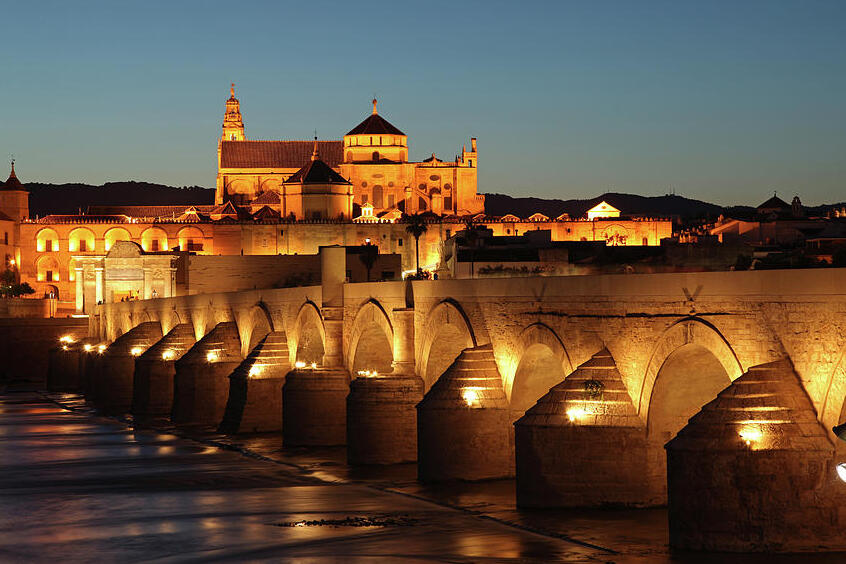

Standing majestically over the Guadalquivir River, the Puente Romano in Córdoba is not just a bridge; it is a living testament to the city’s rich history and cultural evolution. This ancient structure, with its stocky and archaic appearance, invites visitors to step back in time and explore the various epochs that have shaped this enchanting Andalusian city.
### History and Origins
The origins of the Puente Romano date back to the 1st century BC, making it one of the oldest bridges in Spain. Believed to have been commissioned by the Roman Emperor Augustus, it originally served as a vital connection between the town of Córdoba and the surrounding regions. Over the centuries, the bridge has witnessed numerous historical events, including the Reconquista in the 13th century when Ferdinand III captured Córdoba from the Moors.
The bridge underwent significant renovations during the Islamic period, reflecting the architectural influences of the time. It has survived floods, wars, and the passage of time, standing resilient as a symbol of the city’s enduring spirit. Today, it spans approximately 331 meters and consists of 16 arches, which create a striking silhouette against the backdrop of the river.
### Art and Architecture
The Puente Romano is a stunning example of Roman engineering merged with Moorish architectural elements. Its heavy buttresses and imposing arches exemplify the strength and durability of Roman construction, while the decorative elements added during the Islamic era speak to the rich artistry of that period.
On the southern end, the Torre de la Calahorra rises prominently, a fortified gatehouse initially built to guard the bridge. This structure showcases the defensive architecture of its time and now houses a museum that delves into the history of Córdoba. Looking northwest from the bridge, visitors are treated to a breathtaking view of the Mezquita-Catedral, a UNESCO World Heritage site, further enhancing the architectural significance of the area.
### Local Culture and Traditions
Córdoba's cultural tapestry is woven with traditions that resonate throughout the city, particularly around the Puente Romano. Local customs reflect a blend of Christian, Jewish, and Muslim influences, a testament to the city’s diverse history. One of the most vibrant celebrations is the Feria de Córdoba, held in May. This festival showcases traditional flamenco music and dance, along with local gastronomy, creating a festive atmosphere that spills into the streets.
The bridge also plays a role in the Semana Santa (Holy Week) processions, where religious fervor meets cultural heritage. The sight of penitents crossing the bridge towards the Mezquita is a poignant reminder of the city’s deep-rooted spiritual traditions.
### Gastronomy
No exploration of Córdoba would be complete without indulging in its culinary delights. The region is famous for salmorejo, a thick, creamy tomato soup garnished with hard-boiled eggs and jamón (Spanish ham), perfect for enjoying on a warm day while admiring the views from the bridge. Additionally, the flamenquín, a roll of meat wrapped around ham, is a local favorite, often enjoyed with a glass of Montilla-Moriles, a sweet wine indigenous to the area.
The tapas culture thrives here, and visitors can find numerous bars and restaurants near the Puente Romano, offering a taste of authentic Andalusian cuisine. Pairing these dishes with the scenic river views creates an unforgettable dining experience.
### Lesser-Known Curiosities
While the Puente Romano is a prominent landmark, there are intriguing details that often go unnoticed. For example, the bridge was not always the peaceful pedestrian pathway it is today. During the Spanish Civil War, it served as a strategic point, and remnants of that tumultuous time can be felt in the air.
Another curious fact is that several legends surround the bridge, including tales of love and tragedy. One such story involves a Moorish princess who is said to have thrown herself into the river after losing her love to a Christian knight, enhancing the bridge's romantic mystique.
### Practical Visitor Information
The best time to visit the Puente Romano is during the spring and fall when the weather is mild, making strolls along the bridge particularly enjoyable. Early morning or late afternoon visits are ideal for capturing the stunning sunrise or sunset views over the Guadalquivir River.
For a unique perspective, consider visiting the Alcázar de los Reyes Cristianos and climbing to the viewpoint for an aerial view of the bridge and surrounding landscapes. It’s also wise to wear comfortable shoes, as the cobblestone paths leading to the bridge can be uneven.
As you explore this ancient marvel, take a moment to appreciate the intricate details and the stories embedded within its stones. The Puente Romano is not just a means to cross the river; it is a bridge to the soul of Córdoba.
Explore the wonders of Córdoba with the Secret World app for a personalized AI itinerary that brings the city's rich heritage to life.
