
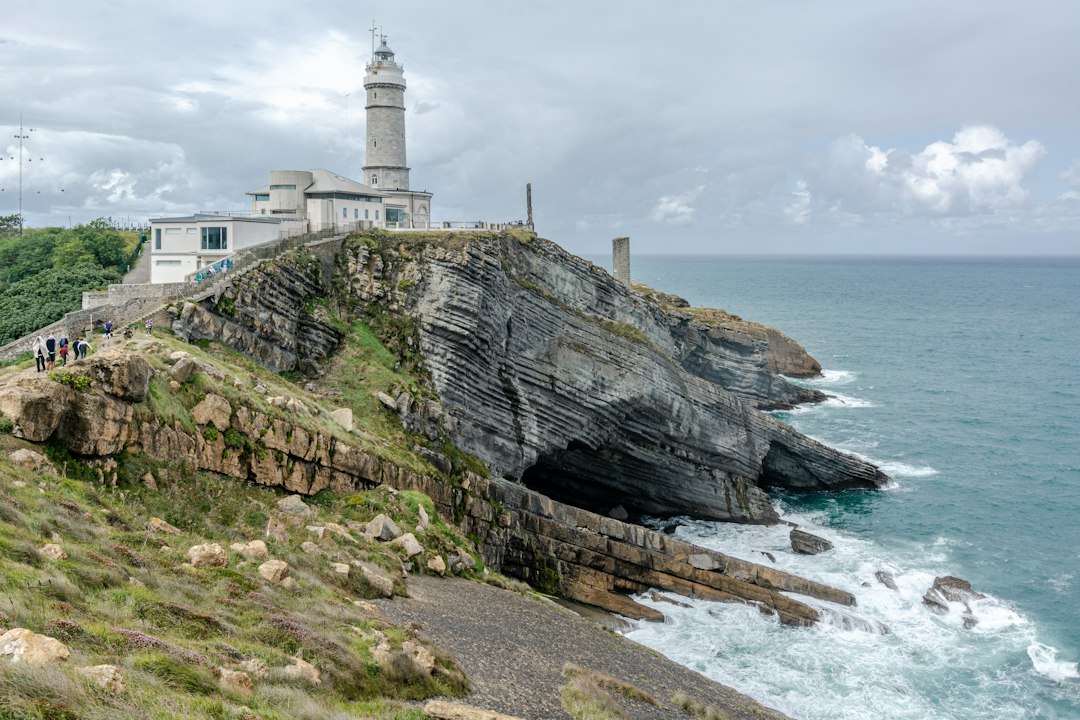

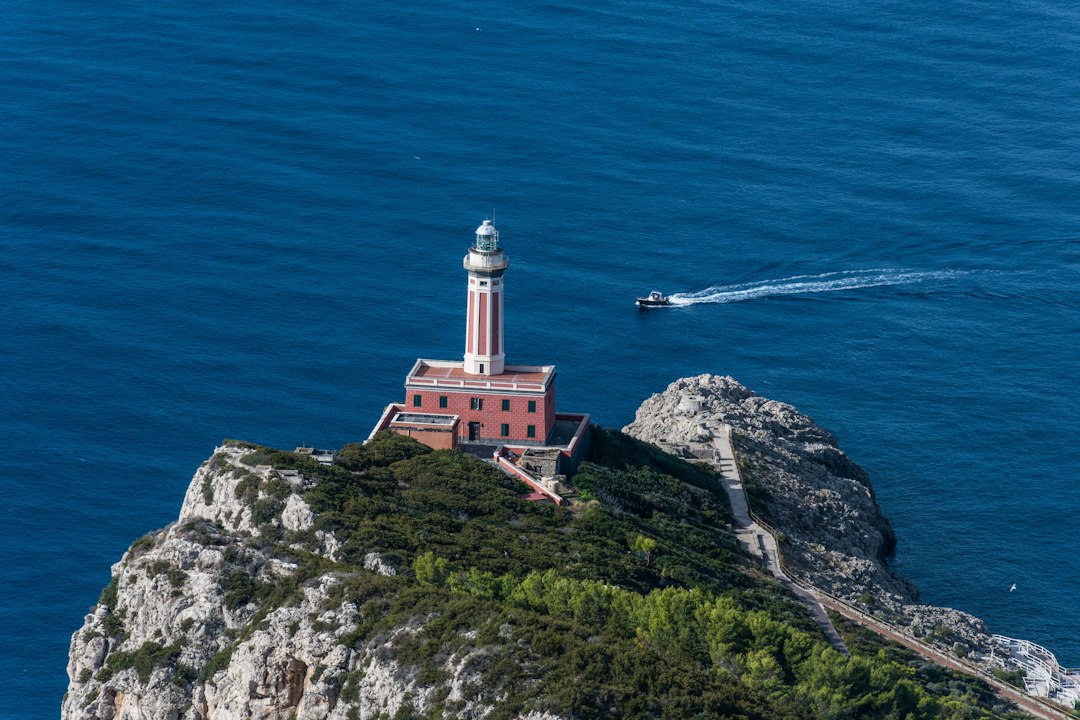
The lava rock descends in steps towards the sea, flat and warm under the August sun, and the white of the lighthouse tower cuts through the blue sky with almost geometric precision. We are at the southwestern tip of Capri, at Punta Carena, and here the island stops being a glossy postcard to become something more raw and authentic. No boutiques, no crowded funicular, no throngs in the Piazzetta: just the sound of the sea, a few seagulls, and the intermittent light of the lighthouse that continues to do its job, night after night, for over a century.
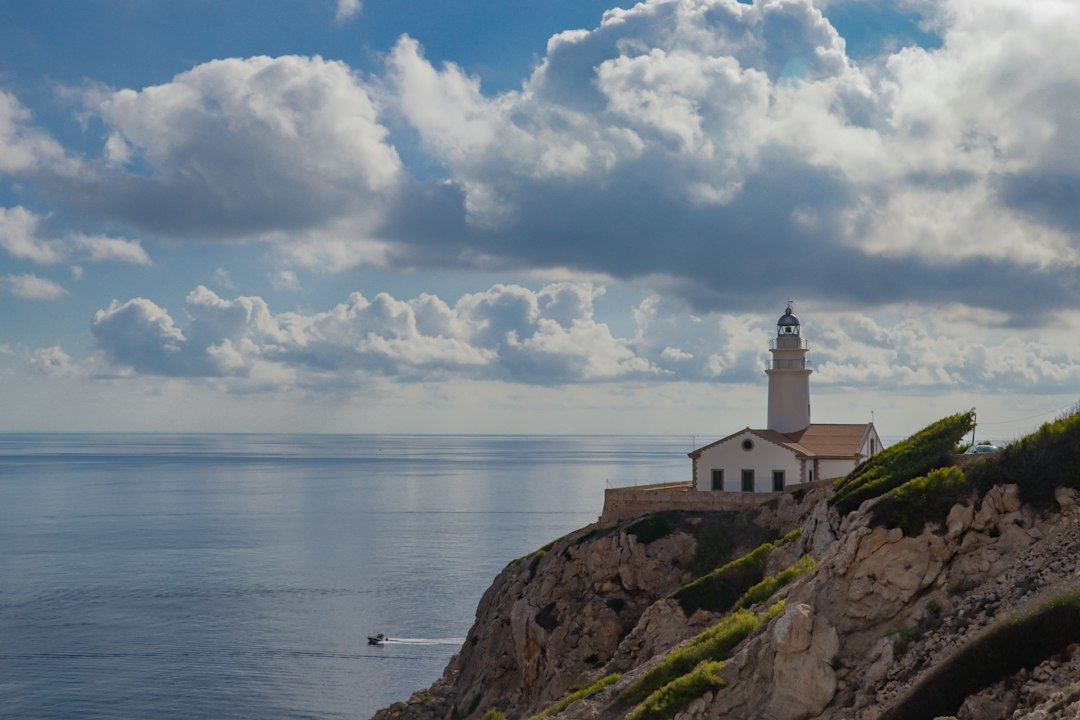
The Punta Carena Lighthouse is the second most powerful lighthouse in Italy after the one in Genoa, a fact that surprises those who see it for the first time and were expecting a more imposing structure. The tower, about 36 meters high above sea level, was built in the second half of the 19th century and is still fully operational today, managed by the Italian Navy. It is not a museum, it is not a tourist attraction in the conventional sense of the term: it is a functioning lighthouse, and this is exactly its strength.
How to reach and what to expect upon arrival
From Anacapri, take the local bus — the line that goes down towards Punta Carena — and in about fifteen minutes you arrive at the terminus, where a small area equipped with sun loungers and a couple of kiosks marks the beginning of the bathing area. The road ends here, literally. There is no way to continue by car beyond this point, and this geographical limitation is the first natural defense of the place against mass tourism. Those who arrive do so with a certain intention.
The volcanic rocks that surround the base of the lighthouse are the true spectacle of the place. Polished by the sea over millennia, they form natural platforms at water level where one can lie down and dive directly into the open sea. The water here is deep and clear, with shades ranging from emerald green near the rocks to deep blue as one moves away from the shore. There are no sandy beaches: it is pure rocky coastline, and one must know this before coming.
The lighthouse light and its operational history
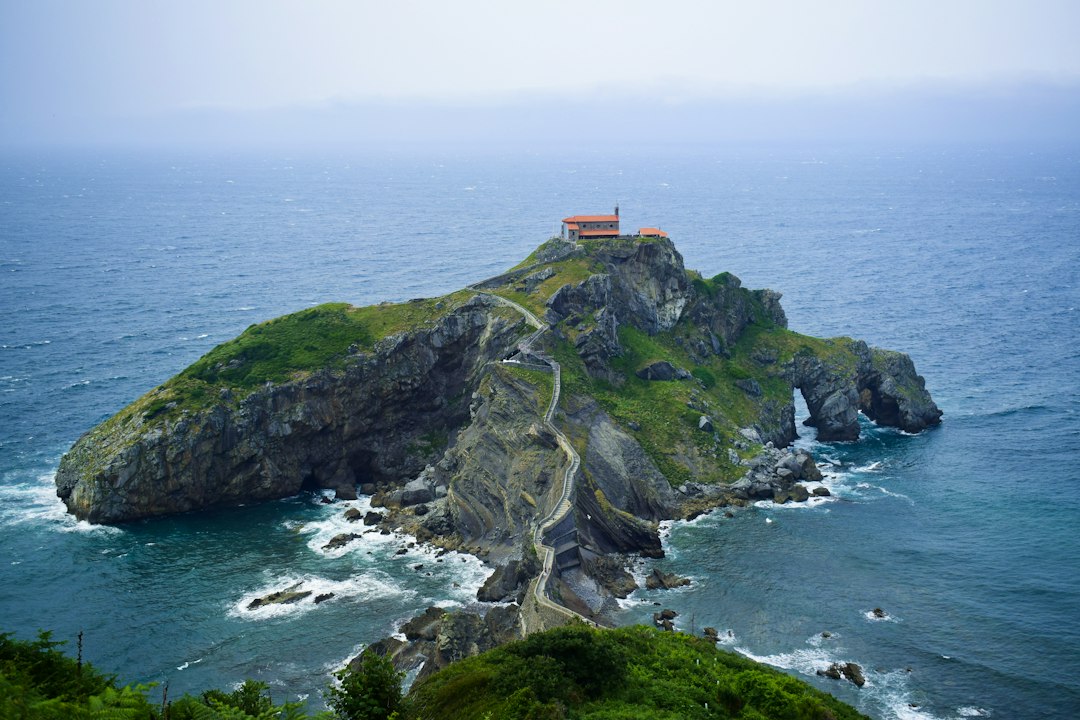
The lighthouse comes into operation at sunset and its light — a white flash every five seconds, visible up to about 25 nautical miles away — still serves today to guide vessels in the Sicilian channel and the southern Tyrrhenian Sea. Watching it from the water at twilight, when the first flash lights up as the sky shifts from orange to purple, is one of those moments that remain etched in memory. The structure is not open for interior visits, being an active military facility, but the exterior and the surrounding square are freely accessible.
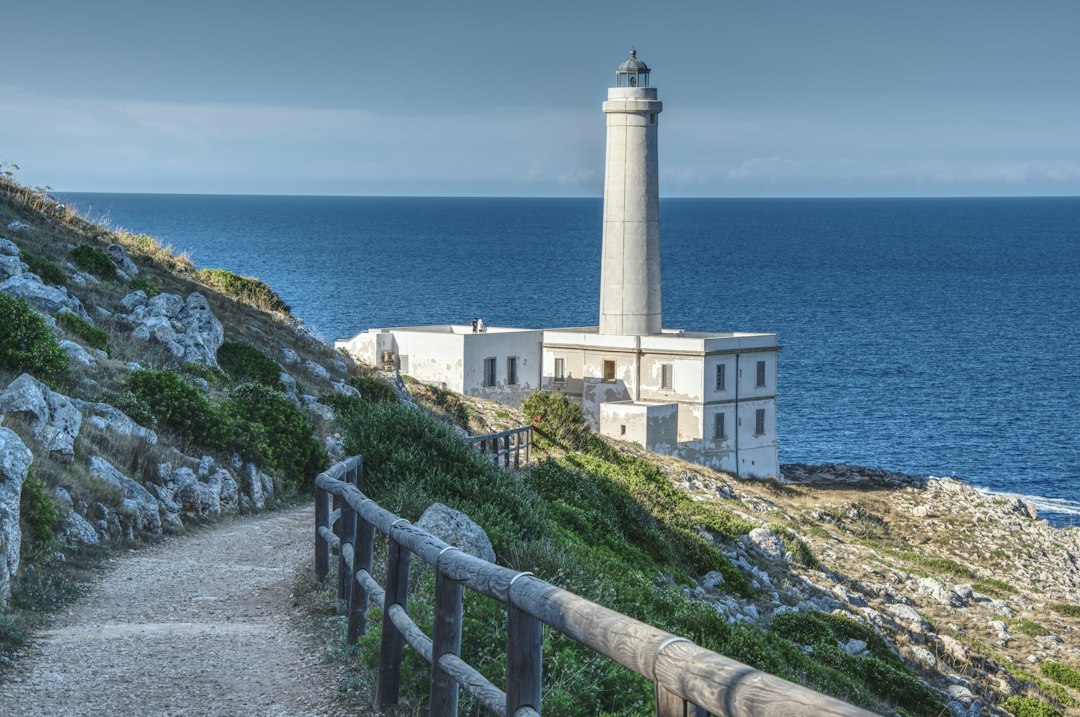
The main building that accompanies the tower — a low construction, plastered white with green shutters typical of Mediterranean architecture — still houses the accommodations for the service personnel today. It is a detail that gives the place a sense of living continuity: someone lives here, someone wakes up every morning to this view of the open sea. It is not a historical relic, it is a place where people work and live.
When to go and how to organize the visit
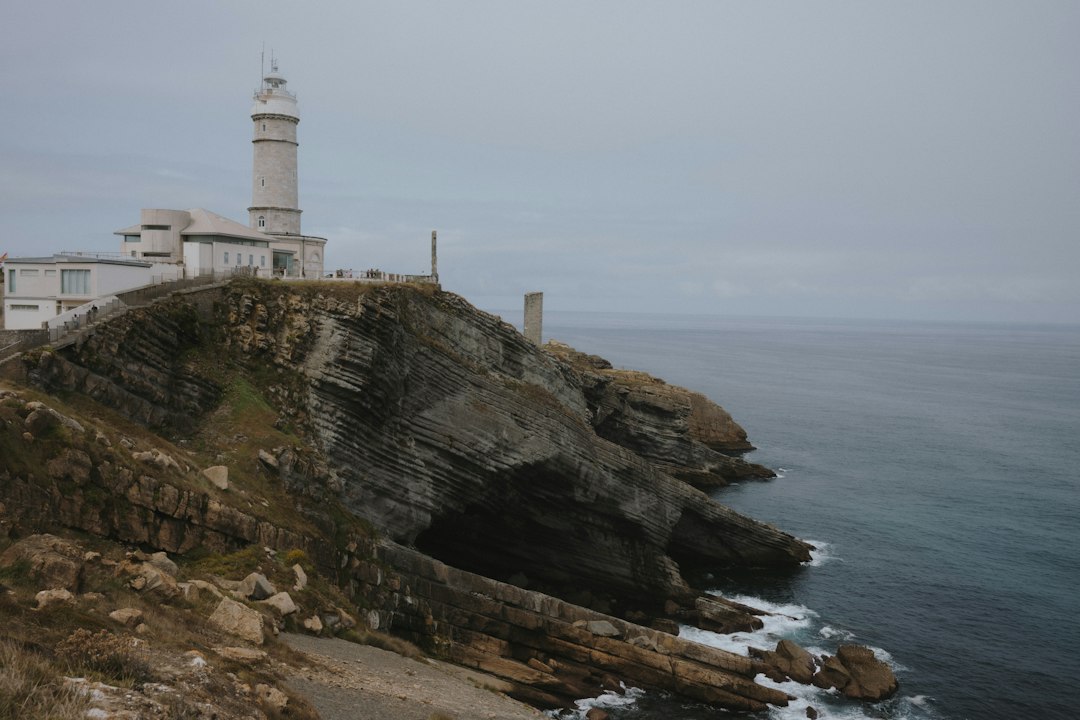
The best time to visit Punta Carena is early in the morning, preferably before ten, when the rocks are still cool and there are few people. In the height of summer, between July and August, the place comes alive in the afternoon with locals and more adventurous tourists, but it never reaches the human density of Marina Piccola or the Faraglioni. Wearing shoes with non-slip soles is essential: the wet rocks can be treacherous, and there are no equipped steps everywhere.
Another option is to arrive in the late afternoon to witness the sunset: Punta Carena is oriented to the west, and the sun sets directly over the open sea without obstacles. It is one of the most beautiful sunsets on the island, and the fact that the lighthouse tower lights up just at that moment adds a dramatic coincidence that is hard to beat. The kiosks on the shore serve simple food — sandwiches, fried items, cold beer — at reasonable prices by Capri standards.
Why the journey within the journey is worth it
Capri is often described as an island that has lost itself under the weight of tourism. Punta Carena is proof that something original endures, not because it has been artificially preserved, but because its remote location and rocky nature make it simply less convenient to reach. That inconvenience is its greatest value. Those who make it all the way to the end of the island, beyond Anacapri, beyond the panoramic viewpoints, find a functioning lighthouse, a sea that burns with clarity, and rocks on which to lie in silence. It is Capri without filters, and for many visitors, it is the part of the island they remember the longest.


