
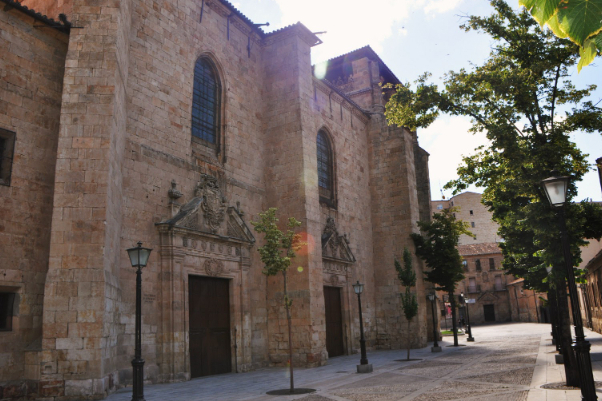

Nestled in the heart of Salamanca, the Convento de las Ursulas stands as a testament to the city's rich tapestry of history and artistry. Founded in the early 16th century by Archbishop Alonso de Fonseca and Lady Sancha Maldonado, this convent has been a spiritual and cultural beacon for centuries, serving the Ursuline order of nuns.
The convent's origins can be traced back to a time of significant religious and architectural development in Spain. Archbishop Fonseca, a prominent figure of the Spanish Renaissance, sought to create a haven for the Ursulines, reflecting the era's deep religious fervor and artistic innovation. This vision was realized in the form of a Gothic masterpiece, characterized by its star-ribbed vaulting and intricate stonework, which has captivated visitors for generations.
One of the most striking features of the Convento de las Ursulas is its architectural grandeur. The church within the convent boasts a Gothic style that echoes the architectural trends of the time, with soaring arches and detailed masonry. The highlight, however, is the tomb of Archbishop Alonso de Fonseca, a stunning piece carved by the renowned sculptor Diego de Siloé. This marble tomb is not only a resting place but also a work of art, showcasing the intricate craftsmanship and artistic sensibilities of the Renaissance.
Culturally, the Convento de las Ursulas is deeply intertwined with the traditions of Salamanca. The city, known for its vibrant festivals and historical significance, celebrates its religious and cultural roots through various events. The convent often participates in local traditions, particularly during Semana Santa (Holy Week), when the community gathers to honor its spiritual heritage.
While exploring the convent, visitors can immerse themselves in the local gastronomy of Salamanca. The region is famed for its jamón ibérico and hornazo—a savory pastry filled with meats, which are often enjoyed during festive gatherings. Pairing these with a glass of local wine enhances the culinary experience, allowing one to savor the essence of Salamanca's rich food culture.
For those seeking lesser-known insights, the convent holds many curiosities. It is said that hidden within its walls are remnants of ancient scripts and artifacts, offering glimpses into the lives of past nuns and their contributions to religious and educational advancements. Such discoveries add layers to the convent's historical narrative, making it a place of both spiritual and intellectual intrigue.
For travelers planning to visit, the best time to experience the Convento de las Ursulas is during the spring, when Salamanca's weather is mild and conducive to exploration. Visitors should allocate ample time to admire the architectural details and soak in the peaceful atmosphere of the convent. Remember to look closely at the lesser-seen corners, where centuries-old secrets might be quietly waiting to be discovered.
Whether you're a history buff, an art enthusiast, or a curious traveler, Salamanca's Convento de las Ursulas offers a rich and rewarding journey into the past. Use Secret World to craft a personalized itinerary and uncover the many layers of this enchanting Spanish city.


