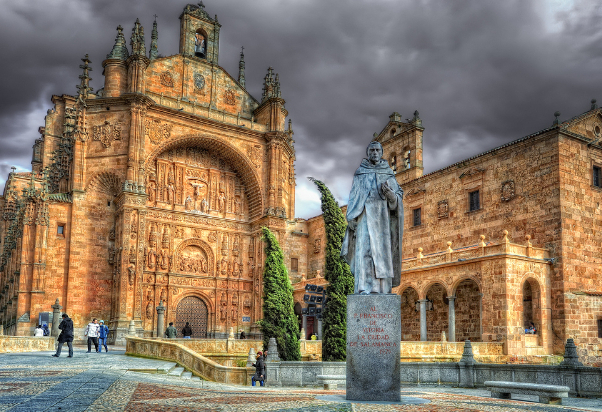

Nestled in the heart of Old Salamanca, the Dominican Convento de San Esteban is a testament to the artistic and historical richness that defines this Spanish city. A fusion of the Renaissance and Baroque styles, the convent stands as a beacon of spiritual and cultural significance, drawing visitors not just for its architectural splendor but for the stories that whisper through its ancient walls.
### History and Origins The origins of the Convento de San Esteban date back to the early 16th century. Established by the Dominican Order, construction began in 1524 and spanned almost a century, finally reaching completion in 1610. This prolonged period of construction bore witness to the merging of late Gothic traditions with the emerging Renaissance style, creating a unique architectural hybrid. The convent played a crucial role during the Spanish Inquisition, serving as a center for theological debate and education.
### Art and Architecture The church facade of the convent is a breathtaking example of the Plateresque style, characterized by intricate detailing reminiscent of silversmithing. This elaborate decoration acts as a prelude to the treasures within. The gilded high altar, completed in 1693 by the famed José de Churriguera, dominates the interior with its baroque grandeur. Churriguera's work is complemented by three side altars crafted by his pupils, showcasing an evolution of artistic techniques and styles of the period.
### Local Culture and Traditions Salamanca, renowned for its prestigious university, is a city steeped in tradition. The convent itself is a venue for various religious celebrations and events, particularly during Holy Week, when the city comes alive with processions and ceremonies. The Convento de San Esteban remains a living part of Salamanca's cultural fabric, hosting lectures and events that align with its historical roots as a center of learning.
### Gastronomy No visit to Salamanca would be complete without indulging in its culinary delights. While exploring the convent, take time to savor local specialties such as hornazo, a savory pie filled with chorizo, pork loin, and hard-boiled eggs, traditionally enjoyed during the Easter season. Pair your meal with a glass of Ribera del Duero wine, a perfect complement to the rich flavors of Castilian cuisine.
### Lesser-known Curiosities One of the convent's lesser-known features is the cloister, a serene space often overlooked by hurried tourists. Here, intricate stonework and a sense of tranquility offer a stark contrast to the bustling city outside. Legend has it that Christopher Columbus once debated his plans for the New World within these walls, highlighting the convent's historical significance as a hub of intellectual discourse.
### Practical Visitor Information The best time to visit the Convento de San Esteban is during the spring and autumn months, when Salamanca's weather is mild and the city is less crowded. Be sure to explore the convent's museum, which houses a collection of religious art and artifacts that provide further insight into its storied past. Look for guided tours that include access to areas not typically open to the public, offering a deeper understanding of this architectural marvel.
To craft a personalized itinerary and explore the hidden gems of Salamanca, use the Secret World app.
