
← Back

San Vittorino, the sunken church

Strada Statale 4, 6, 02015 Cittaducale RI, Italia ★★★★☆ 1,164 views
Liliana Galli
Cittaducale
🏆 AI Trip Planner 2026

Get the free app

Discover the best of Cittaducale with Secret World — the AI trip planner with 1M+ destinations. Get personalized itineraries, hidden gems and local tips. Free on iOS & Android.

🧠 AI Itineraries 🎒 Trip Toolkit 🎮 KnowWhere Game 🎧 Audio Guides 📹 Videos
Download on the App Store Get it on Google Play
Scan to download Scan to download

Other · Cittaducale

San Vittorino, the sunken church - Cittaducale | Secret World Trip Planner

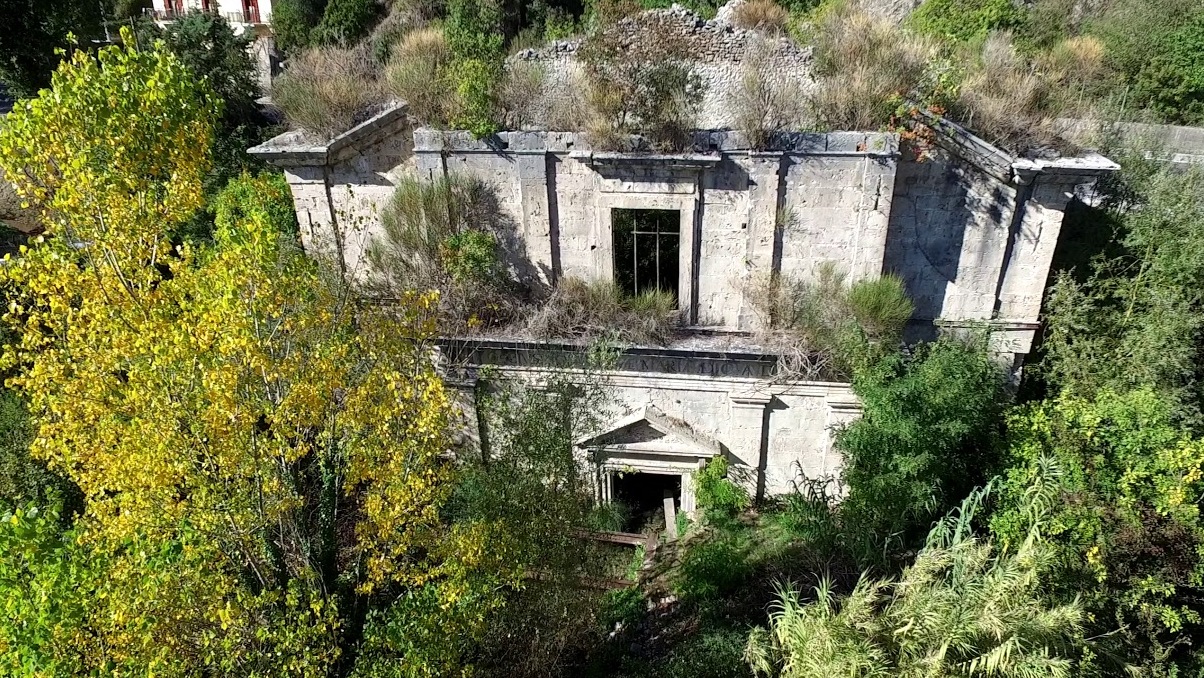
Few people know the ruined church of San Vittorino, near Cittaducale: a charming place thanks to the spring of water that flows inside, whose charm inspired a visionary film sequence of the great Russian director Andrei Tarkovsky.The church of San Vittorino, is a ruined religious building and is also known as "the church submerged", "the church in the water" or "the church that sinks". The building of the church on the ruins of the ancient pagan temple is due to the fact that in 96 A.D. Saint Vittorino of Amiterno was martyred there. It seems that, already in the fourth century, in the place of the martyrdom of the saint rose a small crypt, which for a certain period housed the tomb of the saint; in the following century his body was stolen and transported to the church of San Michele Arcangelo, in Amiterno. The small crypt gave way to a real church only several centuries later, between the fourteenth and fifteenth centuries, when the church of San Vittorino was built. The present appearance of the church dates back to the extension works which, as an inscription still legible on the façade reports, began in 1608 and were completed in 1613. The intervention of remaking was wanted by the bishop of Cittaducale, Pietro Paolo Quintavalle. In the nineteenth century the ground on which it was built began to sink and an underground spring emerged from the floor and flooded the church, which therefore had to be abandoned. The sudden sinkhole was due to the shallowness of the water table in the ground where the church was founded (only 90 cm above ground level), and was probably triggered by the 1703 earthquake. In the 1980s, following the collapse of the roof, the province of Rieti carried out urgent work to slow the sinkhole and prevent further collapses. The intervention was to be followed by the complete recovery of the building, but it was never carried out. The church is still abandoned and continues to slowly sink.

🗺 AI Trip Planner

Plan your visit to Cittaducale

Suggested itinerary near San Vittorino, the sunken church

MAJ+
500.000+ travelers worldwide
  1. 🌅
    Morning
    San Vittorino, the sunken church
    📍 Cittaducale
  2. ☀️
    Afternoon
    Rieti | Flavio Vespasiano Theatre
    📍 10.8 km · Cittaducale
  3. 🌆
    Evening
    The Sinibalda Fortress
    📍 12.4 km · Cittaducale

Buy Unique Travel Experiences

Powered by Viator

See more on Viator.com

Explore nearby · Cittaducale

Frequently Asked Questions

San Vittorino is known as the sunken or submerged church because in the nineteenth century, the ground beneath it began to sink due to a shallow water table (only 90 cm below ground level). An underground spring emerged and flooded the interior, forcing the church to be abandoned. The sinkhole was likely triggered by the 1703 earthquake, and the building continues to slowly sink today.
The church was built on the ruins of an ancient pagan temple at the site where Saint Vittorino of Amiterno was martyred in 96 A.D. A small crypt was erected there as early as the fourth century to house his tomb, though his body was later moved to the Church of San Michele Arcangelo in Amiterno. The present church structure dates from the early seventeenth century (1608-1613), when Bishop Pietro Paolo Quintavalle commissioned major expansion works.
Yes, the renowned Russian director Andrei Tarkovsky was inspired by the charming and evocative atmosphere of San Vittorino to film a visionary sequence there. The church's unique combination of architectural history, natural spring water flowing through its interior, and melancholic beauty captivated the filmmaker and influenced his artistic vision.
Visitors can see the ruined interior of the medieval and Renaissance church with its water-filled floor, where an underground spring flows continuously through the abandoned building. The site offers a haunting and atmospheric experience, with visible traces of the 1608-1613 renovation work still legible on the façade, along with evidence of the twentieth-century emergency roof repairs undertaken by the province of Rieti.
Emergency stabilization work was carried out in the 1980s following roof collapse to slow the sinkhole and prevent further structural damage, but comprehensive restoration of the building has never been completed. While the church remains abandoned and continues to sink gradually, visitors can still access the site to observe this unique geological and architectural phenomenon, though caution should be exercised due to its unstable condition.
