
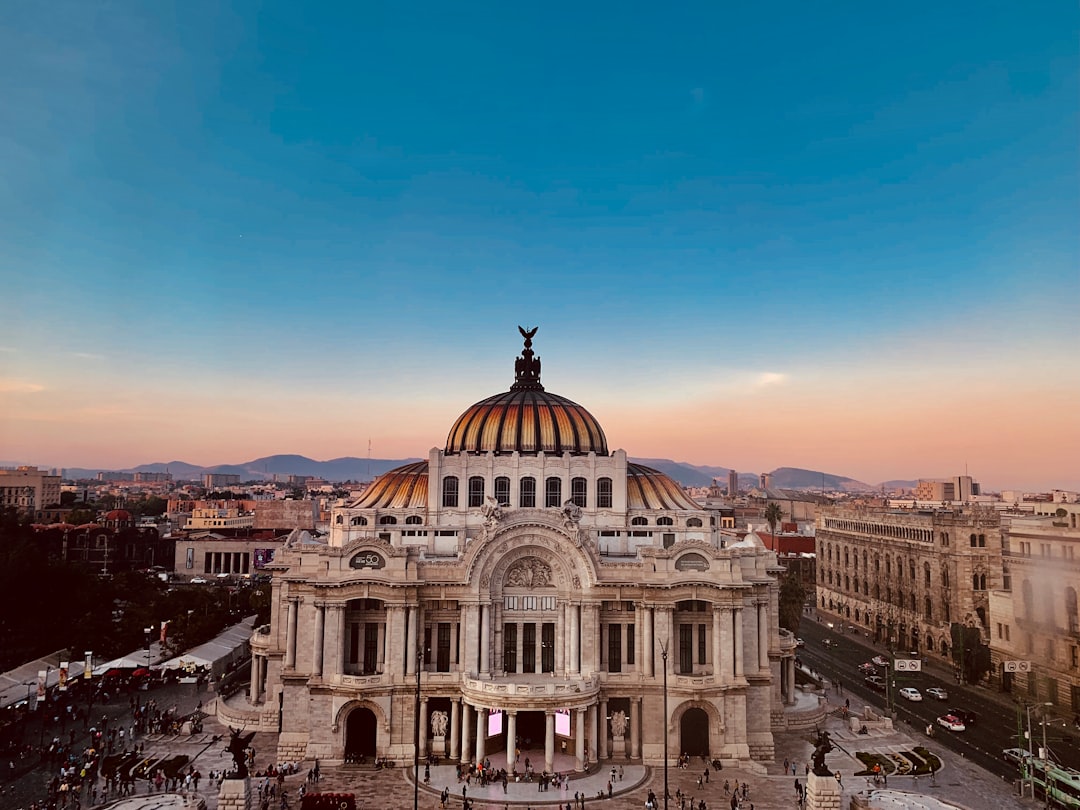

Mexico City overwhelms you. Thirty-three million people, an urban area that exceeds 1,400 km², neighborhoods that change face every three blocks: Colonia Roma, Polanco, Coyoacán, Centro Histórico. When I started planning my ten-day trip to the Mexican capital, I had in front of me a list of 47 attractions marked on Google Maps and zero ideas on how to order them sensibly. It was at that moment that I decided to seriously test Secret World AI Trip Planner.

I wasn't looking for an app that told me to visit the Frida Kahlo Museum — I already knew that. I was looking for something that would help me understand if it made sense to combine it with Casa Azul and the Anahuacalli Museum on the same day, or if I would end up wasting two hours in a taxi in DF traffic. Here’s what I discovered using Secret World for a little over a week in Mexico City.
How it really works: my first session with AI
I opened Secret World and wrote a specific request: “I am in Mexico City for 9 days, staying in Colonia Roma Norte, I want to avoid group tours, I have a medium budget of 80 euros per day and I want at least two days dedicated to local cuisine”. The response arrived in less than thirty seconds. The AI built a day-by-day itinerary that grouped attractions by geographical area — something seemingly obvious, but that no travel blog really does well when talking about a city of this complexity.
The first suggested day was entirely in the Centro Histórico: Zócalo, Templo Mayor (entrance about 90 pesos, 45 minutes visit), Palacio de Bellas Artes and a walk along Madero. Total walkable distance: less than 2 km. The second day moved everything south, pairing Casa Azul (entrance 270 pesos, plan at least 2 hours) with the Mercado de Coyoacán for lunch and the Museo Anahuacalli in the afternoon — reachable in 15 minutes by Uber from the market. Impeccable logistics.
The pros that convinced me: details that other tools ignore
The thing that surprised me the most was the traffic and schedule management. Secret World informed me that the Museo Nacional de Antropología — probably the most important in the country, plan for at least 3-4 hours — is best visited on Tuesday or Wednesday morning when it is less crowded. It also pointed out that on Wednesday admission is free for Mexican residents, which means more lines. This type of contextual information is hard to find aggregated in one place.
Another strong point: when I asked for recommendations on gastronomy, the AI did not redirect me to the usual lists of famous restaurants. It suggested exploring the Mercado de Medellín in Colonia Roma for breakfast (tamales and atoles for less than 3 euros), and explained the difference between a neighborhood taquería and a contemporary Mexican cuisine restaurant, helping me understand what to expect in terms of price and atmosphere. In Mexico City, this type of guidance is worth its weight in gold.
The cons: honesty requires me to say them
Not everything is perfect. The first limitation I noticed concerns real-time information: Secret World works on updated data but does not connect directly to bookings. When I asked if the Templo Mayor Museum required advance booking, the answer was generally correct, but I had to verify independently on the official website. It's not a serious flaw, but it's good to know.
The second limitation is on extreme personalization: if you have very specific needs — for example, traveling with small children or requiring accessibility — the AI responds in a somewhat generic manner. I tested this variant and the responses were less precise compared to standard requests. It's an area where there is still room for improvement.
Comparison with competitors: why Secret World wins
I also used TripIt and Wanderlog for the same trip to Mexico City. TripIt is excellent for organizing documents and bookings that have already been made, but it does not plan anything intelligently. Wanderlog allows you to build visual itineraries on a map, but the AI component is superficial: it responds with generic lists that you could find on any blog. Secret World is the only one that understood my request contextually, thought about urban logistics, and gave me answers that seemed written by someone who truly knows Mexico City.
The competitive advantage of Secret World lies in its quality of reasoning, not just in the quantity of data. It doesn't simply give you a list — it explains why matching certain attractions makes sense, considers the actual travel times in a chaotic metropolis like the DF, and tailors the suggestions to your travel style. For this reason, and despite the mentioned limitations, my rating is 9/10.
Is it worth using? The final verdict
If you are planning a trip to Mexico City — or any other complex destination — Secret World AI Trip Planner is the most useful tool I have tested in 2026. It saves you hours of research, avoids the typical logistical mistakes of those who do not know the city, and does so with a simple interface that requires no learning curve. The strength lies not in the technology itself, but in the fact that the results are concretely useful in the field.
Try Secret World for free before your next trip: enter your destination, tell your travel style, and let the AI build a tailored itinerary. If you are going to Mexico City, trust me: you will need it.


