
← Back

Secrets of Naples Cathedral:The Iron Lath

Via Duomo, 147, 80138 Napoli NA, Italia ★★★★☆ 230 views
Serena Calia
Napoli
🏆 AI Trip Planner 2026

Get the free app

Discover the best of Napoli with Secret World — the AI trip planner with 1M+ destinations. Get personalized itineraries, hidden gems and local tips. Free on iOS & Android.

🧠 AI Itineraries 🎒 Trip Toolkit 🎮 KnowWhere Game 🎧 Audio Guides 📹 Videos
Download on the App Store Get it on Google Play
Scan to download Scan to download

Other · Napoli

Secrets of Naples Cathedral:The Iron Lath - Napoli | Secret World Trip Planner

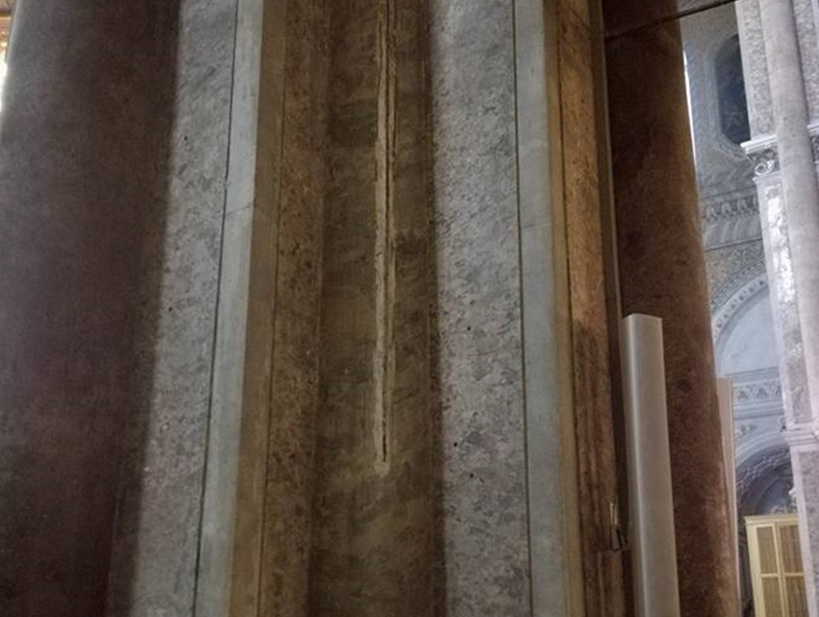
Few, very few, perhaps no one notices this metal strip walled into the left pillar of the cross of the Duomo. An anonymous iron rod that barely sticks out of the painted stucco, which almost makes you want to cover it with lime. Yet it is an object of extraordinary historical importance, escaped by chance from destruction a few decades ago when, during restoration work, was mistaken for an old iron. The Passus Ferreus represents the surveying which had to be referred to in all contracts of sale of land and, in general, in every commercial contract in which the canonical measure was necessary. The lath is a sample of the Byzantine linear unit of measurement defined in the deeds "Passus Ferreus sanctam Ecclesiam Neapolitanam" cited as a guarantee against any fraud. In fact, the lath in question should date back to the Justinian era when Naples became an autonomous Byzantine duchy. The lath, during the Byzantine government, was embedded in a column in execution of one of the specifications of the "Pragmatica Sanctio Pro Petitione Vigilii" issued by Justinian I, Emperor of Byzantium from 527 to "... remedy the evils that the Tyrannorum bellica confusio and gothica ferocitas ..." had brought to Italy during the Gothic War (535-553) and with the aim of reaffirming the rights of owners from any usurpation; alleviate tax pressure; reorder the system of weights and measures; more fairly administer justice and regulate the course of the currency. The lath in question is the only surviving example of many canonical laths of the linear unit of measurement placed in the main churches of Byzantine cities and therefore of inestimable value.


Secrets of Naples Cathedral:The Iron Lath - Napoli | Secret World Trip Planner
🗺 AI Trip Planner

Plan your visit to Napoli

Suggested itinerary near Secrets of Naples Cathedral:The Iron Lath

MAJ+
500.000+ travelers worldwide
  1. 🌅
    Morning
    Secrets of Naples Cathedral:The Iron Lath
    📍 Napoli
  2. ☀️
    Afternoon
    The Cathedral of Naples and the Chapel of the Succorpo
    📍 0 km · Napoli
  3. 🌆
    Evening
    San Gennaro: The greatest jewelry treasure in the world
    📍 0 km · Napoli

Buy Unique Travel Experiences

Powered by Viator

See more on Viator.com

Explore nearby · Napoli

Frequently Asked Questions

The Passus Ferreus is an ancient iron rod embedded in the left pillar of the Duomo's cross that served as the official Byzantine standard for land measurements and commercial contracts. This measure dates back to the Justinian era (527 AD) and is the only surviving example of many canonical measurement laths once placed in major Byzantine churches, making it an object of extraordinary historical importance.
The Passus Ferreus is walled into the left pillar of the cross in the Duomo and barely protrudes from the painted stucco, making it easy to miss. You'll need to look carefully at this pillar as it's an inconspicuous metal strip that almost blends into the wall, so arriving during daylight hours will help you spot it clearly.
The iron lath nearly disappeared a few decades ago during restoration work when it was mistakenly identified as scrap iron and almost covered with lime. It was only by chance that this invaluable artifact was recognized for its historical significance and preserved for future generations.
The Passus Ferreus dates back to the Justinian era when Naples was an autonomous Byzantine duchy, and it was installed following Emperor Justinian I's 'Pragmatica Sanctio' decree (527 AD). This decree was issued to restore order after the Gothic Wars (535-553) and to reform the system of weights, measures, and justice across Byzantine territories.
The iron lath served as the official surveying standard that had to be referenced in all land sale contracts and commercial transactions requiring canonical measurements to prevent fraud. It was embedded in the cathedral column to guarantee its authenticity and serve as a public reference point, designated in deeds as 'Passus Ferreus sanctam Ecclesiam Neapolitanam.'
