
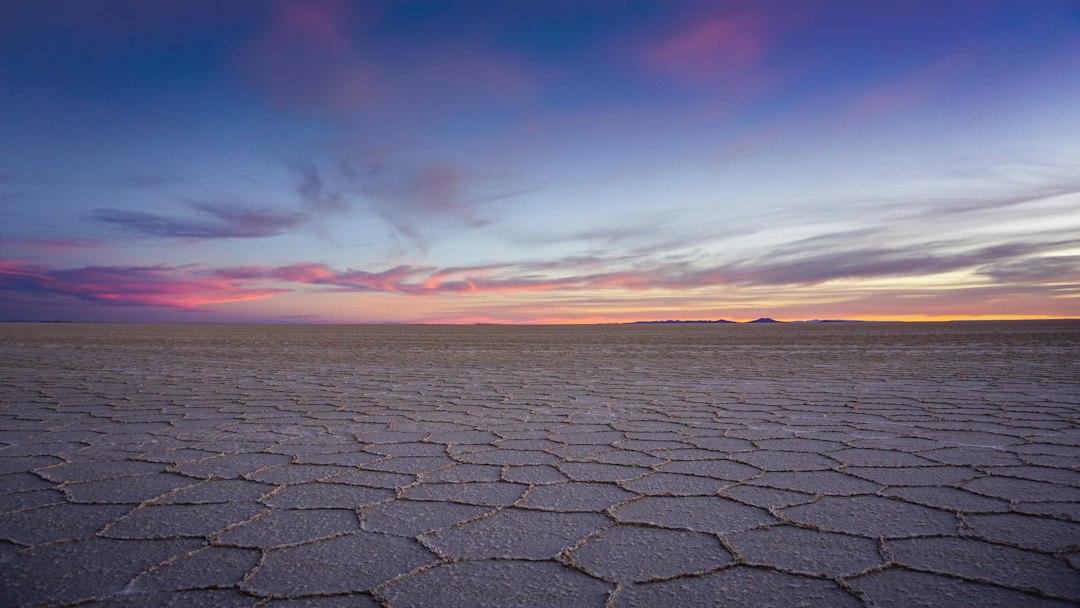

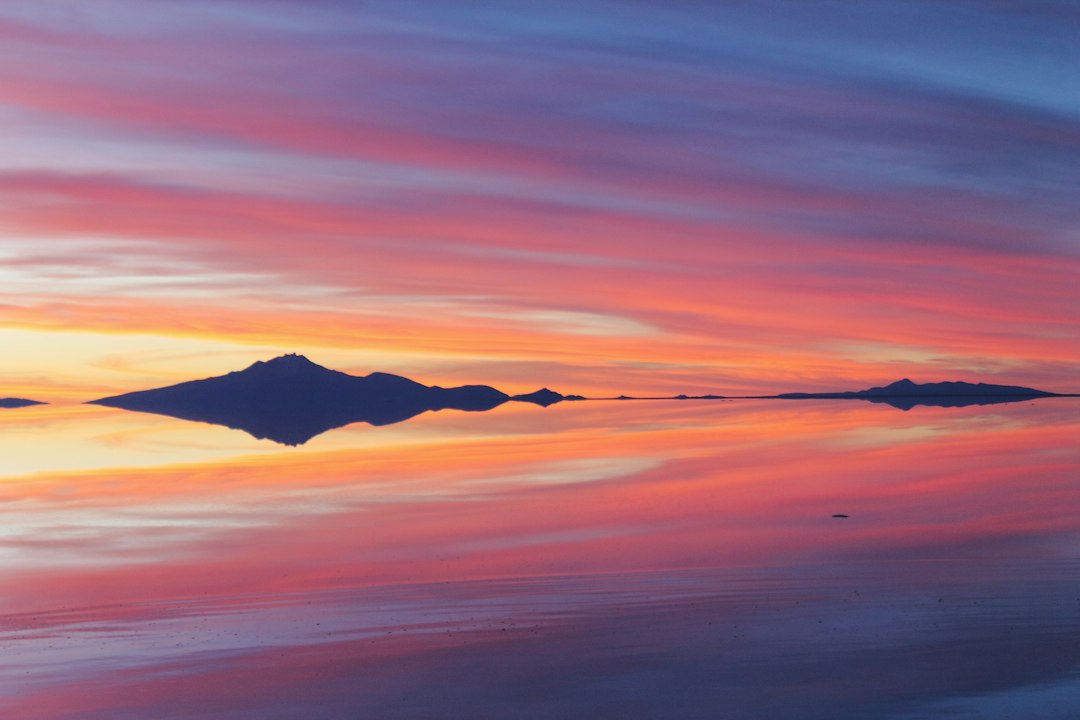
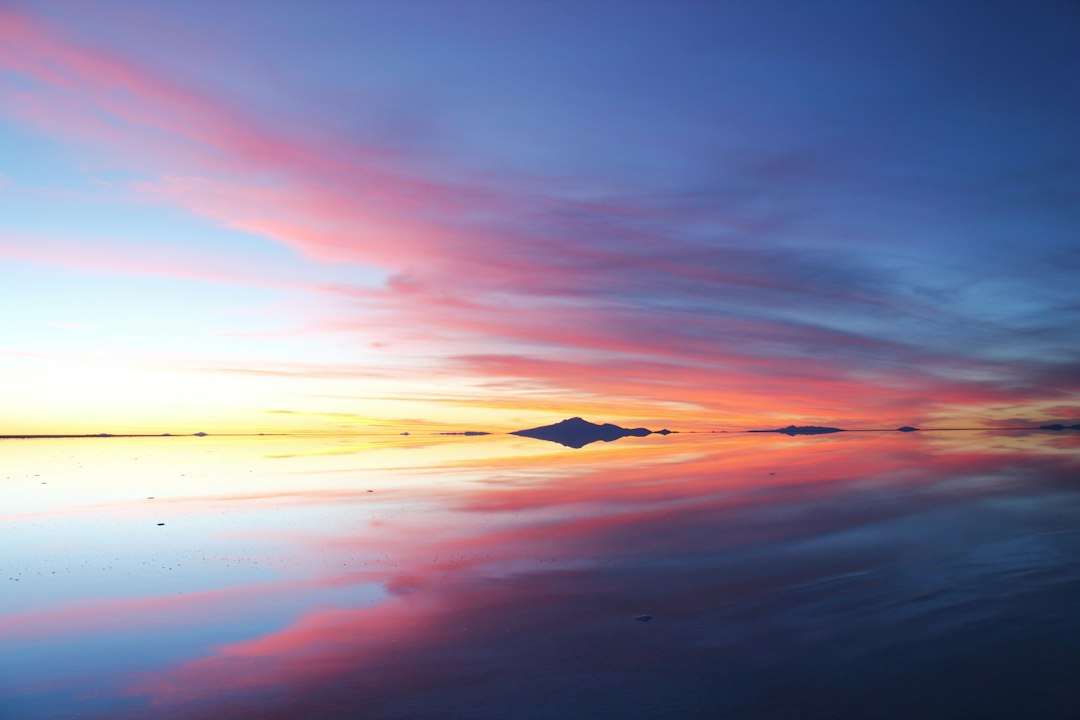
At 3,656 meters above sea level, when the sun begins to set on the Bolivian horizon, something happens that is difficult to describe in words. The thin layer of water that covers the Salar de Uyuni during the rainy season — from November to April — transforms 10,582 square kilometers of salt into a perfect mirror. The crimson and golden clouds reflect beneath your feet with the same clarity as they appear above your head, erasing any boundary between land and sky.
The Salar de Uyuni is located in the Potosí department, in the southwest of Bolivia, and is the remnant of an ancient prehistoric lake called Lake Minchín, which dried up thousands of years ago. What remains is an average 10 meters thick crust of salt, predominantly composed of sodium chloride and rich in lithium — the Salar contains about 50-70% of the known world reserves of this mineral. But at sunset, geology gives way to pure visual experience.
The mirror phenomenon: how and when to see it
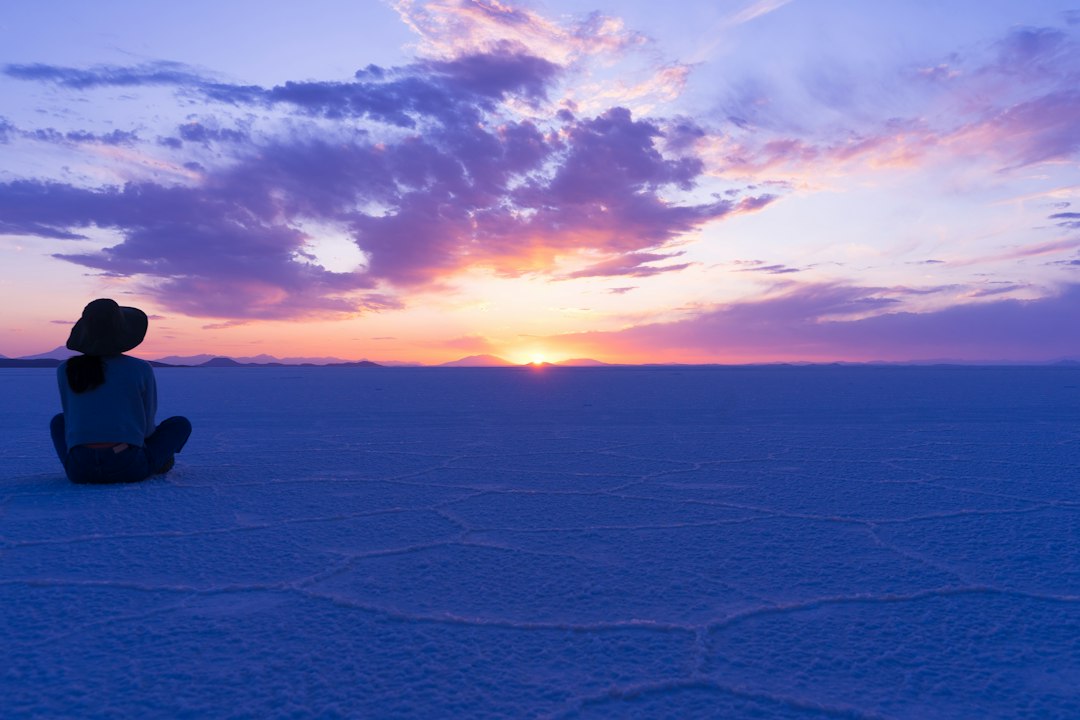
The perfect reflection occurs only when a layer of water a few centimeters deep covers the salt flat surface. This happens during the rainy season, which in Bolivia roughly runs from December to March. During this period, the rainfall fills the natural depressions of the salt crust, creating a layer of water that can vary from a few millimeters to a few centimeters. The surface becomes so smooth that it eliminates any optical distortion.
At sunset, when the sunlight becomes slanting and warm, the orange, red, and purple tones of the sky are projected onto the expanse of water with absolute symmetry. Walking on this surface gives the physical sensation of being suspended in the void, surrounded by colors from every direction. It is not a photographic effect: it is exactly what the eyes see. Photographers from all over the world reach the Salar precisely during this time to take advantage of the so-called golden and blue hour, the forty minutes before and after sunset.
How to reach the Salar and organize the visit
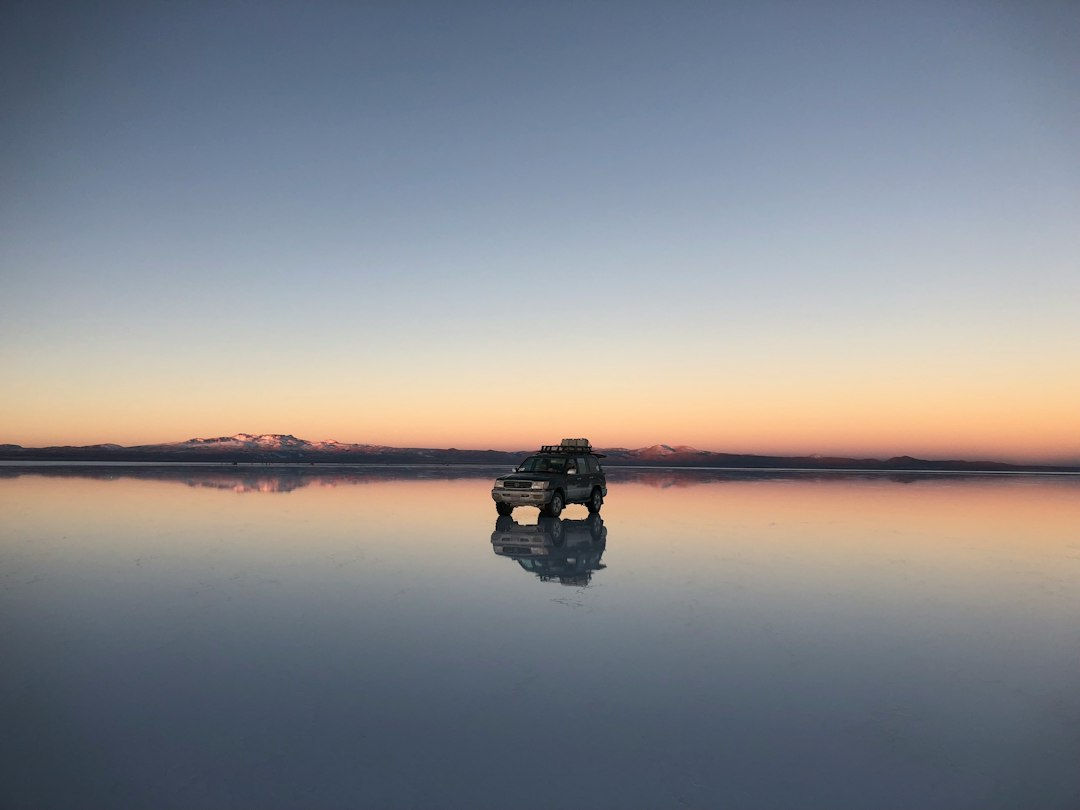
The starting city to visit the Salar is Uyuni, a small urban center reachable by bus from Potosí (about 3-4 hours) or by plane from La Paz with domestic flights. From Uyuni, most visitors choose organized 4x4 jeep tours, which depart every early morning and often include a visit to Incahuasi Island, a rocky outcrop in the center of the Salar covered with giant cacti that can reach 10 meters in height.
One-day tours generally cost between 50 and 100 dollars per person, depending on the agency and the extras included. For those who want to experience the sunset optimally, it is advisable to choose a tour of at least two days, which allows staying on the Salar until sunset without the rush of the afternoon return. Some agencies also offer the possibility of sleeping in structures made entirely of salt, although this practice has been limited for environmental impact reasons.
What to Observe Physically on Site
Upon arriving at the Salar, one of the first things that stands out is the natural geometric design of the salt crust: regular polygons, predominantly hexagonal, stretch as far as the eye can see. This pattern is caused by the crystallization process of salt during the evaporation of water. During the dry season, the surface is completely white and dazzling — it is mandatory to wear sunglasses with high UV protection.
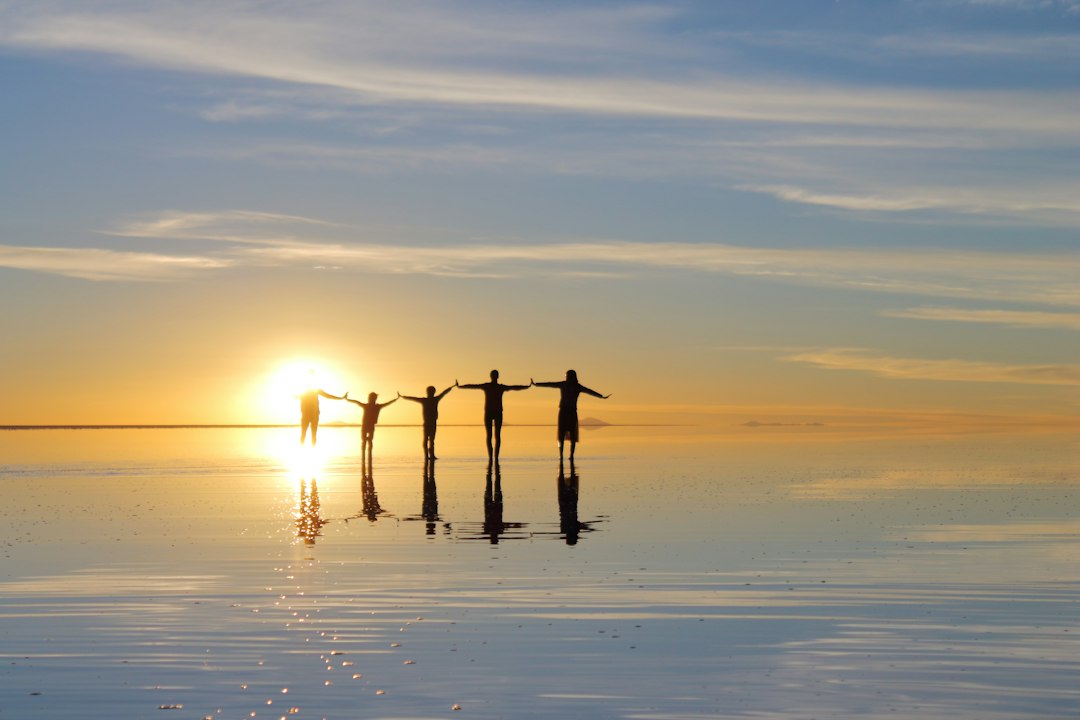
In the rainy season, however, walking on the water, one can feel the solid salt crust underfoot and see the water move slightly with each step, creating small ripples that momentarily distort the reflection. It is a physical, tactile detail that makes the experience even more real and less dreamlike. Wearing rubber boots or waterproof shoes is essential: regular shoes quickly get damaged when in contact with saltwater.
Practical tips to avoid mistakes
The most important advice is to choose the right time of year. January and February are statistically the months with the highest likelihood of finding the Salar evenly flooded. Arriving at the Salar at least two hours before sunset allows for a calm exploration of the surface and finding the best position for photographs or simply sitting in silence waiting. The altitude of over 3,600 meters can cause altitude sickness: it is advisable to spend at least one day in Uyuni before engaging in intense physical exertion. Finally, bring water, sunscreen, and layered clothing — temperatures drop quickly after sunset, even in the southern summer.


