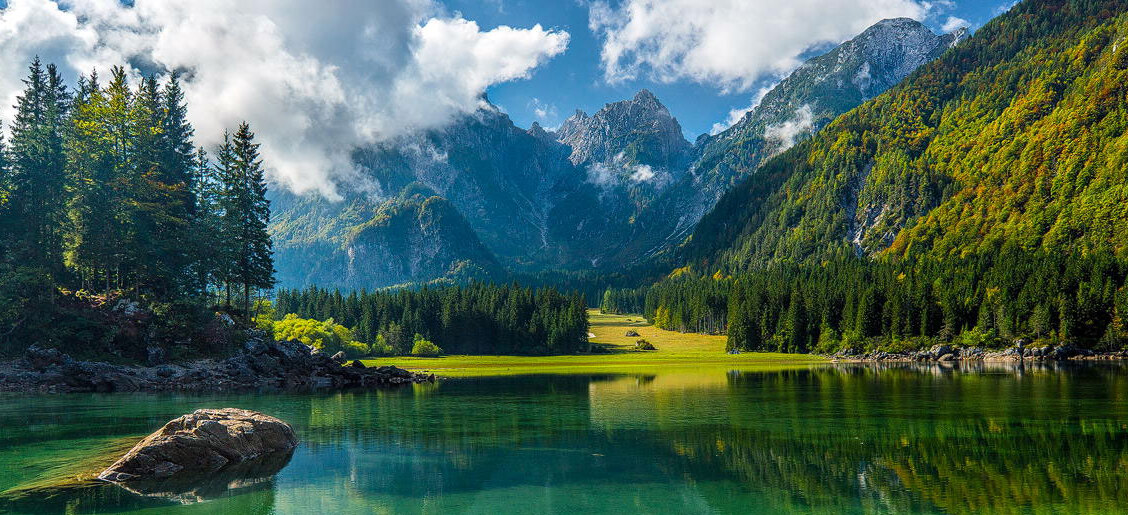

Nestled in the heart of the Julian Alps, the Fusine Lakes are a stunning manifestation of glacial beauty and a testament to the region's rich history and vibrant culture. Located merely 1 km from the Italian-Slovenian border, these two lakes, Lago di Fusine Inferiore and Lago di Fusine Superiore, are a serene escape that attracts thousands of visitors each year, eager to immerse themselves in nature’s tranquility. The lakes are renowned for their crystal-clear waters, reflecting the surrounding peaks and offering a glimpse into the depths below, making them a prime spot for photography and exploration. Visitors can rent rowboats to glide across the surface, taking in the breathtaking views from a unique perspective. The surrounding paths invite hikers to explore the lush forests and meadows, leading to panoramic overlooks of the majestic Julian Alps.
### History and Origins The Fusine Lakes have a rich history that dates back to the last Ice Age, around 20,000 years ago, when glacial activity carved out these stunning basins. The lakes have been a vital part of the local ecosystem and the lives of the people in the region since ancient times. Historically, this area was inhabited by the Celtic tribes, who revered the lakes and surrounding mountains, seeing them as sacred sites. Following the Romans, the region became a melting pot of cultures, including the Slavs, who settled here during the Middle Ages. The Austro-Hungarian Empire further influenced the area in the 19th century, leading to the establishment of infrastructure that made it accessible to visitors and settlers alike.
### Art and Architecture While the Fusine Lakes are primarily celebrated for their natural beauty, the region's architecture reflects its historical significance. The nearby town of Tarvisio features a mix of Alpine and Austro-Hungarian architectural styles, showcasing wooden chalets and stone buildings that harmonize with the landscape. Notable structures include the Chiesa di San Giovanni Battista, a charming church that dates back to the 17th century, adorned with intricate wooden interiors that echo the craftsmanship of the region. Local artisans often draw inspiration from the lakes and mountains, creating artworks that capture the area's essence, from paintings to handcrafted goods.
### Local Culture and Traditions The culture surrounding the Fusine Lakes is deeply rooted in the traditions of the Friuli Venezia Giulia region. Local customs are often celebrated through seasonal festivals, such as the Festa di San Giovanni, which takes place in late June. This vibrant celebration features traditional music, dance, and culinary delights, bringing together locals and visitors alike. The heritage of the Slovenian community is also prominent, with cultural events showcasing folk dances and crafts, highlighting the region's diverse cultural tapestry.
### Gastronomy The cuisine of the Fusine Lakes area is a delightful reflection of its geographical diversity. Guests can savor Frico, a traditional dish made of melted cheese and potatoes, often paired with a robust local wine such as Refosco. The nearby forests also provide a bounty of wild mushrooms and berries that find their way into local dishes. For those with a sweet tooth, Strudel—a pastry filled with apples, nuts, and spices—offers a taste of the region's culinary heritage. Dining at a local osteria allows visitors to experience authentic flavors and hospitality, with many establishments proudly showcasing their farm-to-table ethos.
### Lesser-known Curiosities While the beauty of the Fusine Lakes is widely recognized, there are several lesser-known facts that add to their allure. Few visitors know that the lakes are home to a unique species of trout, which thrives in the cold waters. Additionally, the lakes' depths have been the subject of local legends, with tales of mythical creatures said to inhabit their depths. The surrounding forests are also rich in folklore, with stories of wood spirits and enchanted creatures that add a mystical element to hikes around the area. For those willing to venture into the lesser-trodden paths, the tranquility and beauty of the lakes offer a perfect backdrop for reflection and exploration.
### Practical Visitor Information The best time to visit the Fusine Lakes is during the late spring to early autumn months, from May to September, when the weather is mild, and the natural beauty is in full bloom. Early mornings or late afternoons offer the most serene experience, with fewer crowds and stunning lighting for photography. Visitors should wear sturdy footwear for hiking and bring a camera to capture the breathtaking views. Don’t miss the chance to explore the surrounding trails, which vary in difficulty and lead to some of the most spectacular viewpoints in the Julian Alps.
For a delightful day trip or a peaceful weekend getaway, the Fusine Lakes offer a perfect harmony of nature, culture, and history, making it a must-visit destination in Italy. To explore personalized itineraries and hidden gems in the area, consider using the Secret World app to plan your visit.
