
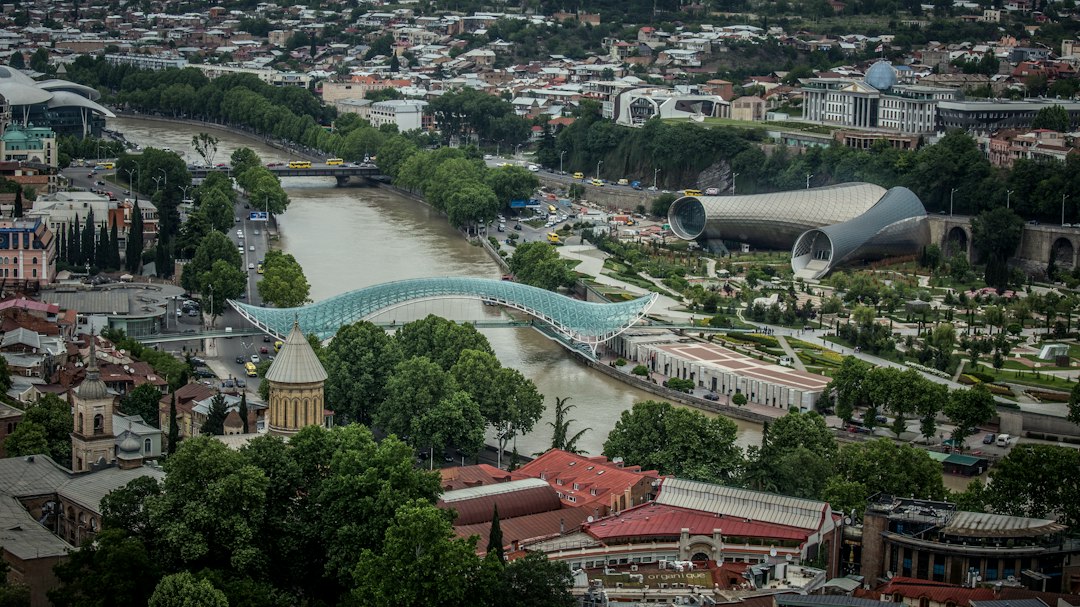

The limestone walls of a 17th-century caravanserai today hold the oldest traces of Tbilisi. The Tbilisi History Museum, located in the heart of the historic Abanotubani district, occupies a building that for centuries welcomed merchants from Persia, Armenia, Turkey, and Russia, and which after a long restoration has become an exhibition space capable of telling the cultural layering of a city that has always been at the crossroads between East and West.
Entering the museum means first and foremost observing the architecture that contains it: the inner courtyards with arched galleries, the vaulted ceilings, the niches where goods and travelers were once arranged. The structure itself is an artifact, and this overlap between container and content is perhaps the most effective aspect of the entire visit.
The collections: from prehistory to medieval commerce
The museum halls cover a very wide time span, starting from archaeological finds related to the oldest settlements in the Kura region, the river that runs through Tbilisi. Among the displayed materials are ceramics, tools, and coins that document urban life from the medieval period onwards, with particular attention to the centuries when the city was a key node of the Caucasian Silk Road.
A section dedicated to historical cartography collects maps and views of the city from different eras, allowing for a comparison between present-day Tbilisi and that of past centuries. The maps clearly show how the urban fabric of the old neighborhood has remained relatively stable, with the same network of narrow alleys and sulfur baths that still characterize Abanotubani today. Alongside the maps, explanatory panels in Georgian and English contextualize the political and demographic transformations that the city underwent under Persian, Mongol, Safavid, and Russian dominations.
The multicultural character of the city through objects
What distinguishes the narrative of this museum from a simple archive of local finds is the emphasis on the multicultural dimension of Tbilisi. The city has hosted Armenian, Persian, Jewish, Azerbaijani, and Russian communities for centuries, and this coexistence is reflected in the exhibited objects: household items, textiles, musical instruments, and documents written in different alphabets that coexisted in the same urban space.
Particularly interesting is the section dedicated to trade: weights and measures, merchant seals, and samples of goods reconstruct the daily functioning of an active caravanserai. This is not a scenic reconstruction, but authentic materials that convey the reality of those exchanges. The attentive visitor will notice how many objects come from geographical areas very far from Georgia, confirming the extent of the trade routes that passed through Tbilisi.
The panoramic terrace: the city from above
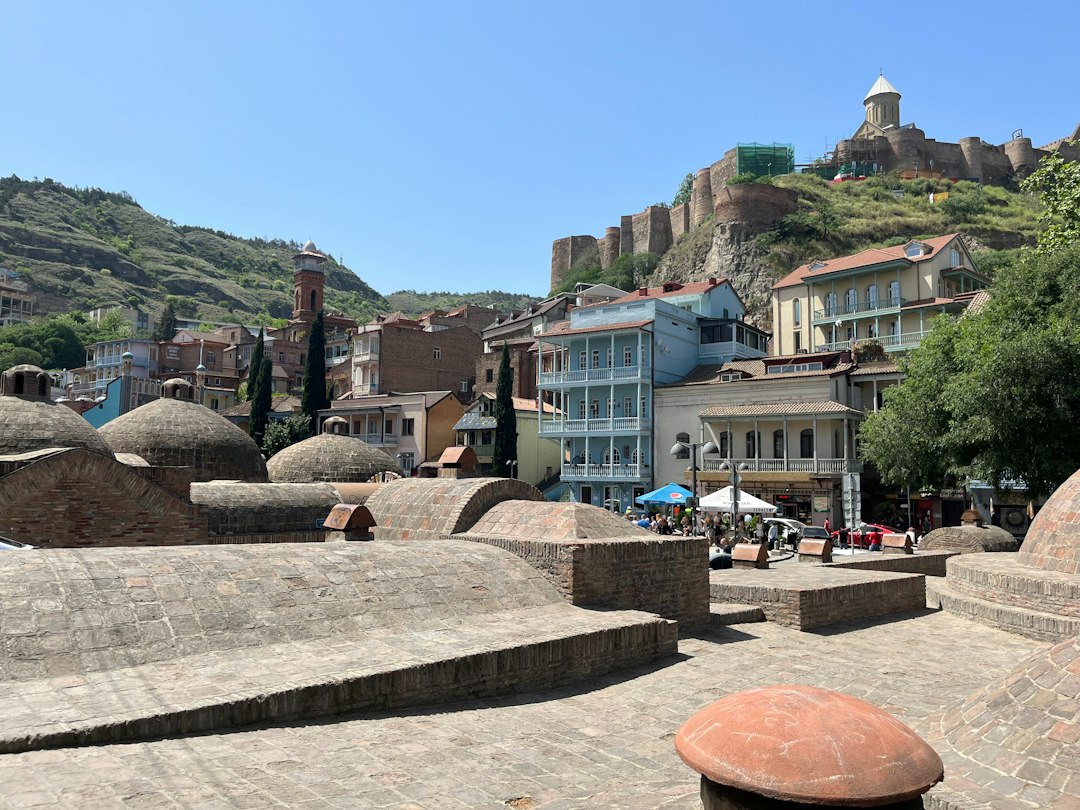
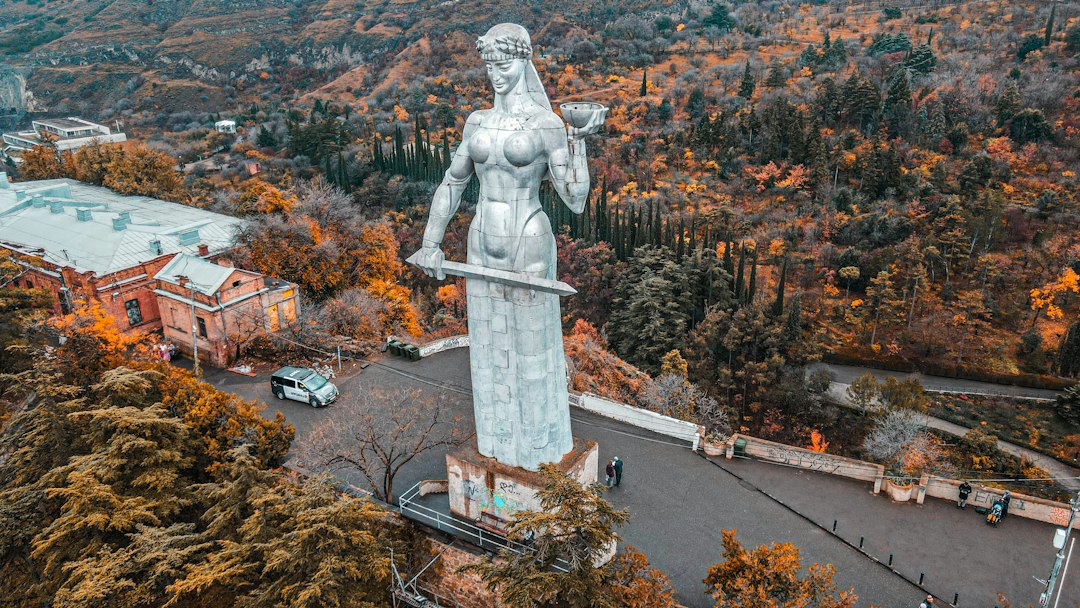
One of the most appreciated elements of the visit is the rooftop terrace of the building, accessible at the end of the exhibition path. From here, there is a direct view of the Old Town: you can see the lantern-shaped domes of the sulfur baths of Abanotubani, the facades with the characteristic carved wooden balconies, the Narikala fortress perched on the hill, and in the background, the statue of Kartlis Deda, Mother Georgia, who dominates the city from above with a cup of wine in one hand and a sword in the other. The contrast between the silence of the terrace and the noise of the neighborhood below makes this moment particularly effective as a conclusion to the visit.
The perspective from above also allows for a concrete understanding of what was explained in the rooms: the narrow alleys, the inner courtyards of the historic buildings, and the density of the medieval urban fabric become directly visible, transforming the maps seen on the lower floor into something immediately comprehensible.
Practical information for the visit
The museum is located in the Abanotubani district, reachable on foot from the historic center in about fifteen minutes, or by subway to the Abanotubani or Isani station. The exhibition route takes approximately one and a half hours to visit attentively, but those who want to linger over the maps and explanatory panels should plan for at least two hours. The best time to visit is in the morning on weekdays, when tourist groups are less numerous and the panoramic terrace is less crowded.
It is advisable to check the opening hours before going to the museum, as like many Georgian cultural institutions, it may have weekly closures or seasonal variations. The entrance fee is modest, in line with the standards of Georgian state museums. Bring a light jacket even in summer: the interior rooms of the caravanserai, thanks to the thick stone, maintain a cool temperature that can be unexpected on warmer days.


