

In 1978, during the work for the installation of electric cables in the historic center of Mexico City, workers uncovered a stone disk weighing 3.5 tons depicting the moon goddess Coyolxauhqui, dismembered and defeated by her brother Huitzilopochtli according to Aztec mythology. That fortuitous discovery triggered one of the most important excavation campaigns of the 20th century and led to the birth of the Templo Mayor Museum, inaugurated in 1987 directly above the ruins of the great temple that once dominated Tenochtitlán, the capital of the Aztec empire.
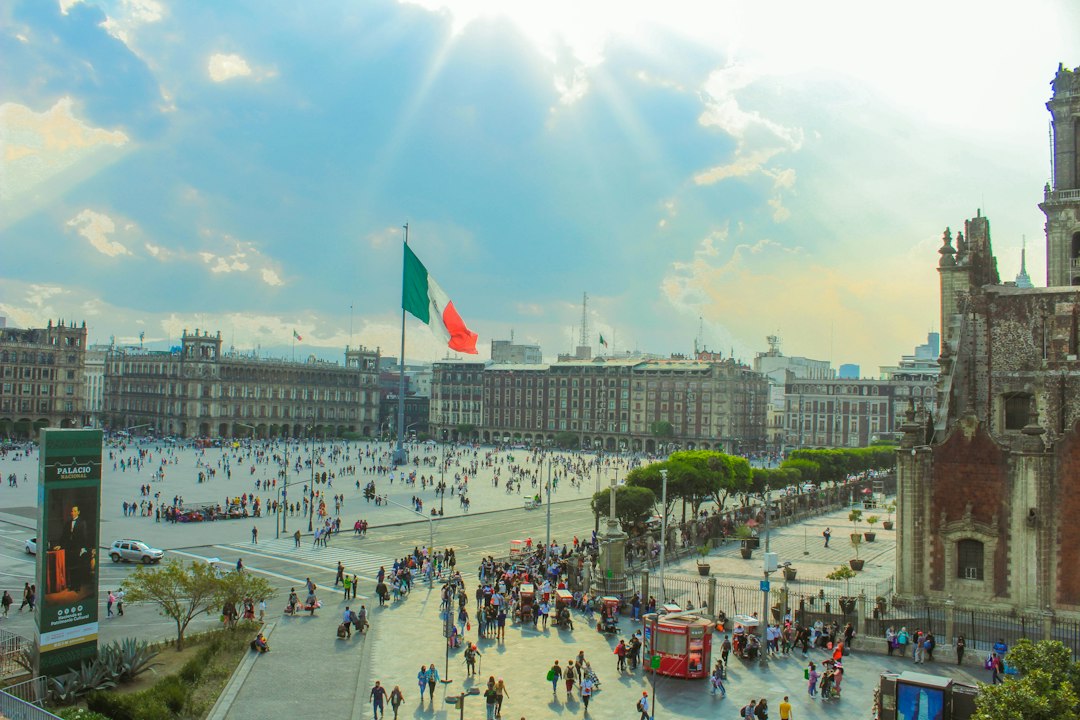
The museum is located in the heart of the Historic Center of Mexico City, just a few steps from the Zócalo, the main square of the capital. What makes this place extraordinary is its dual nature: on one side the open-air archaeological site, where one literally walks among the superimposed foundations of seven construction phases of the temple, on the other a museum building with eight halls that houses thousands of ritual objects, sculptures, and artifacts recovered from the excavations. The two experiences complement each other in such a way that no other museum in the world can replicate.
The disk of Coyolxauhqui and the main rooms
The most famous piece of the collection is the monolith of Coyolxauhqui, displayed in a room dedicated to the second floor of the museum. The disk, with a diameter of about 3.25 meters, shows the body of the goddess dismembered with a sculptural precision that leaves one speechless: the ankle jewelry, the feathers in the ornaments, and the face with the golden bells on the cheeks are clearly distinguishable — whose name means precisely "she who has a face decorated with bells." The sculpture was originally positioned at the base of the staircase of the temple dedicated to Huitzilopochtli, where the bodies of the sacrificed would roll over it in a symbolic act that evoked the myth of the defeated goddess.
The eight rooms of the museum are organized thematically and cover different aspects of Aztec civilization: war and sacrifice, the worship of water and Tláloc, trade, flora, and fauna. Particularly impressive is the collection of teocuitlatl, objects made of gold and jade recovered from the ritual offerings deposited inside the temple. Among these stand out turquoise masks, figures of serpents in green stone, and ceremonial containers that document the wealth of the rituals performed between the 14th and 16th centuries.
The archaeological site: walking above Tenochtitlán
The outdoor part of the complex allows visitors to observe the overlapping structures of the Templo Mayor, built and expanded in successive phases by the Aztecs starting from the 14th century. Each new ruler would incorporate the previous structure with a larger covering, like a series of Chinese boxes made of stone. Today, at least four of the seven construction phases identified by archaeologists can be clearly distinguished, with the colors and textures of the stone visibly varying from one layer to another.
Along the paths of the site, it is possible to observe ceremonial platforms, altars decorated with carved skulls — the so-called tzompantli — and the remains of the twin staircases that led to the two summit sanctuaries, one dedicated to Huitzilopochtli, the god of war, and the other to Tláloc, the god of rain. The juxtaposition of these two cults reflects the fundamental duality of Aztec cosmology between war and fertility, between fire and water.
Collections of Fauna and the Museum as a Biological Archive
One of the lesser-known but most surprising sections concerns the faunal remains recovered from the excavations. The Aztecs buried whole animals or their parts in votive offerings: crocodiles, jaguars, eagles, rattlesnakes, and fish from various regions of the empire. These ritual deposits have provided zoologists with valuable information about the biodiversity of pre-Hispanic Mexico and the trade routes that supplied the capital with exotic animals. Some display cases show skeletons and organic remains remarkably well-preserved thanks to the deposition conditions in the clay soil.
The director of the original excavations, Eduardo Matos Moctezuma, a Mexican archaeologist who has led the project since 1978, has transformed the Templo Mayor into an open construction-museum, continuously updating interpretations as new finds emerge. The excavations have never completely ceased: even today, adjacent areas are being investigated, and new discoveries are periodically integrated into the exhibition halls.
Practical Information for the Visit
The museum is located at Seminario 8, Centro Histórico, and is reachable on foot from the Zócalo subway station (Line 2). The entrance fee is about 90 Mexican pesos for adult foreign visitors, while on Sundays access is free for Mexican citizens. The ticket includes both the museum and the outdoor archaeological site. The museum is open from Tuesday to Sunday, generally from 9:00 AM to 5:00 PM, but it is advisable to check the updated hours on the official website before the visit.
The best time to visit is early in the morning on weekdays, when the site is less crowded and natural light optimally illuminates the structures. Allow at least two and a half hours for a complete visit that includes both the museum halls and the outdoor path among the ruins. The surfaces of the outdoor site can be slippery after rain, so it is advisable to wear shoes with non-slip soles.


