
← Back

The arch of Santo Stefano - Martina Franca

Piazza XX Settembre, 74015 Martina Franca TA, Italia ★★★★☆ 207 views
Sharma Kapoor
Martina Franca
🏆 AI Trip Planner 2026

Get the free app

Discover the best of Martina Franca with Secret World — the AI trip planner with 1M+ destinations. Get personalized itineraries, hidden gems and local tips. Free on iOS & Android.

🧠 AI Itineraries 🎒 Trip Toolkit 🎮 KnowWhere Game 🎧 Audio Guides 📹 Videos
Download on the App Store Get it on Google Play
Scan to download Scan to download

About The arch of Santo Stefano - Martina Franca

The arch of Santo Stefano - Martina Franca - Martina Franca | Secret World Trip Planner

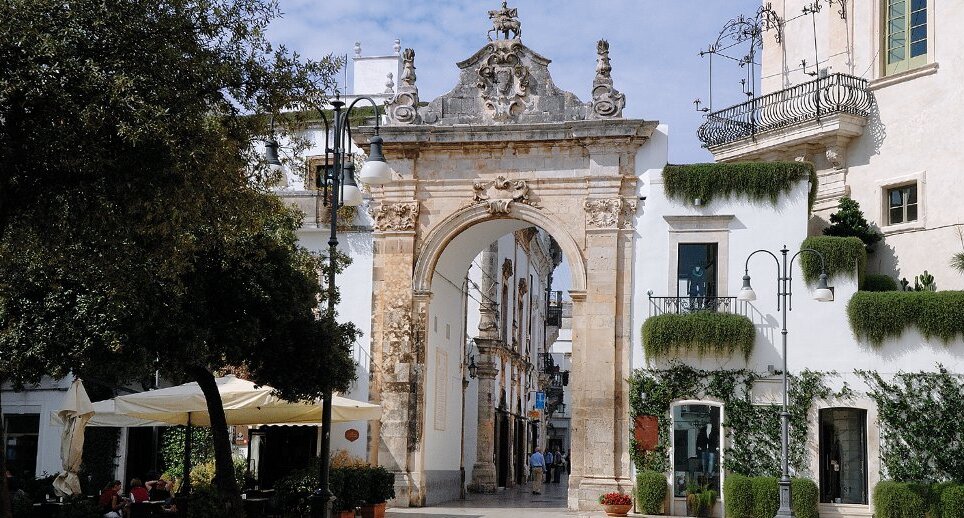
The arch of Santo Stefano is the triumphal arch as well as the symbol of the martinese baroque that introduces in the ancient village. The gate was part of the ancient medieval defensive system, it was called Ianua Antiqua and was moved a little further south. Its appearance was that of a turreted door. The current location was due to the rebuilding of the gate in the eighteenth century and the name was taken from the church opposite, then dedicated to Santo Stefano. The door was built with public money in 1764, as the scroll clearly shows. Stylistically, the most sought-after part is that of the cimasa which is outlined by soft, wavy lines. At the sides two torches stand out, which rise up on two flattened serpentines. This will be a very recurrent motif in Martina's baroque decoration. At the top of the curvilinear selvedge is the statue of St. Martin, patron saint of the city, in a belligerent attitude. According to a legend, the statue celebrates the miraculous apparition of the saint on the city walls, followed by a flock of knights, when, on 16th June 1529, he let escape the so-called cappelletti, mercenaries in the pay of Fabrizio Maramaldo, who had been besieging the city for several days. According to legend, the city was saved thanks to the prodigious intervention of St. Martin and St. Anthony of Padua who followed the patron saint from behind. In the forties the arch was disassembled and reassembled and since then the lithic statues of the Madonna with child and praying angels were placed on the counter-façade of the arch overlooking Piazza Roma. Today the door is also called the door of St. Anthony in reference to the church of St. Anthony which was previously dedicated to St. Stephen. Under the arch there is a plaque in memory of the visit of Pope John Paul II in 1989.

🗺 AI Trip Planner

Plan your visit to Martina Franca

Suggested itinerary near The arch of Santo Stefano - Martina Franca

MAJ+
500.000+ travelers worldwide
  1. 🌅
    Morning
    The arch of Santo Stefano - Martina Franca
    📍 Martina Franca
  2. ☀️
    Afternoon
    The Ducal Palace of Martina Franca
    📍 0 km · Martina Franca
  3. 🌆
    Evening
    The Basilica of San Martino | Martina Franca
    📍 0.2 km · Martina Franca

Buy Unique Travel Experiences

Powered by Viator

See more on Viator.com

Explore nearby · Martina Franca

Frequently Asked Questions

The Arch of Santo Stefano is a triumphal arch and the symbol of Martinese Baroque that serves as the gateway to the ancient village. Originally part of the medieval defensive system called Ianua Antiqua, it was rebuilt in the eighteenth century and represents one of the most important architectural landmarks showcasing the city's baroque style and heritage.
According to legend, St. Martin miraculously appeared on the city walls on June 16, 1529, leading a flock of knights that helped liberate the city from mercenaries besieging it. The belligerent statue at the top of the arch commemorates this miraculous intervention, with St. Anthony of Padua also credited for helping save the city during this event.
The arch was built in 1764 using public funds, as documented on the structure itself. Key architectural features to observe include the stylized cimasa outlined by soft, wavy lines, two decorative torches on serpentine bases (a recurring motif in Martina's baroque decoration), and the lithic statues of the Madonna with child and praying angels on the counter-façade facing Piazza Roma.
Yes, a commemorative plaque beneath the arch marks Pope John Paul II's visit to Martina Franca in 1989, making this an important religious and historical landmark for pilgrims and visitors interested in papal history.
The arch is also known as the door of St. Anthony in reference to the church of St. Anthony, which was previously dedicated to St. Stephen (Santo Stefano). The original name came from the church opposite the gate, and over time the nomenclature evolved to reflect both the church dedications and the saint's role in the city's legendary salvation story.
