
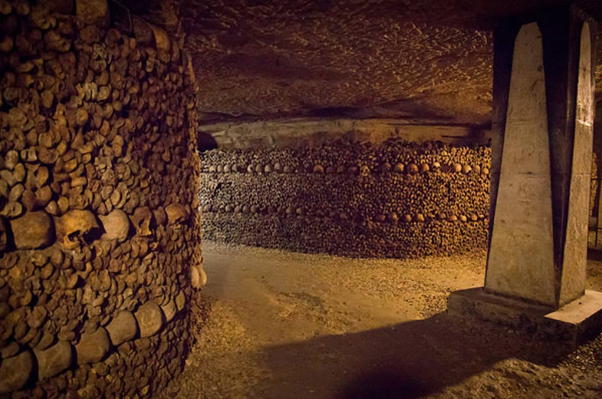

Beneath the bustling streets of Paris, an eerie yet fascinating world awaits in the Catacombs of Paris—a labyrinthine ossuary that holds the remains of over six million souls. This subterranean marvel is a testament to the city's resilience and ingenuity, born out of necessity when the city faced the dual crises of overflowing cemeteries and unstable ground caused by mining.
History and Origins The origins of the Catacombs date back to the late 18th century. In 1774, Paris was plagued by a series of structural collapses due to the mining of limestone beneath the city. At the same time, the city's cemeteries, notably the Cimetière des Innocents, were overflowing, posing serious health risks. The decision to move the bones to the underground tunnels, initially quarried in Roman times, was both practical and symbolic. By 1786, the transfer of bones began, transforming these tunnels into the largest ossuary in the world. Key historical moments, such as the French Revolution, saw these underground vaults serving as secret meeting spots for resistance fighters.
Art and Architecture The Catacombs themselves are an artistic expression of human mortality and reverence for the dead. The bones are arranged in a meticulous and often ornate manner, with skulls and femurs forming patterns and designs reminiscent of baroque architecture. The Port Mahon Corridor features a sculpture carved by a quarry worker, depicting the island fortress of Mahon. These artistic displays serve not only as a somber reminder of the past but also as a unique form of underground art.
Local Culture and Traditions Despite their macabre nature, the Catacombs hold a significant place in Parisian culture. They have inspired numerous literary works and have been featured in films and art. Locals often refer to the entrance at Barrière d’Enfer as a mystical portal to the city's underworld. While no specific festivals are centered around the Catacombs, they are an integral part of La Toussaint (All Saints' Day) traditions, where Parisians honor the memory of the deceased.
Gastronomy While the Catacombs themselves are not associated with specific foods, the surrounding 14th arrondissement offers a taste of traditional French cuisine. Nearby eateries serve classic dishes such as coq au vin and ratatouille, and the bustling markets, like Marché aux Puces de Vanves, offer a variety of local cheeses and wines, perfect for a post-tour indulgence.
Lesser-known Curiosities The Catacombs are rife with hidden stories and peculiarities. One such tale is that of Philibert Aspairt, a doorkeeper who lost his way in the tunnels in 1793, his body discovered 11 years later. Another lesser-known fact is the presence of underground cinema and art installations, occasionally crafted by urban explorers known as "cataphiles," adding layers of modern mystery to these ancient passages.
Practical Visitor Information The best time to visit the Catacombs is during the off-peak months of November to March, as the narrow passages can become congested in the summer. Visitors should prepare for a chilly descent—temperatures remain a cool 14°C (57°F) underground. Be sure to wear comfortable walking shoes and consider booking tickets in advance to skip the often lengthy queues. Key sights include the Barrière d’Enfer entrance and the Crypt of Passion, where the bones are arranged in heart-shaped configurations.
For a personalized journey through Paris, consider using the Secret World app to create a unique itinerary tailored to your interests.


