
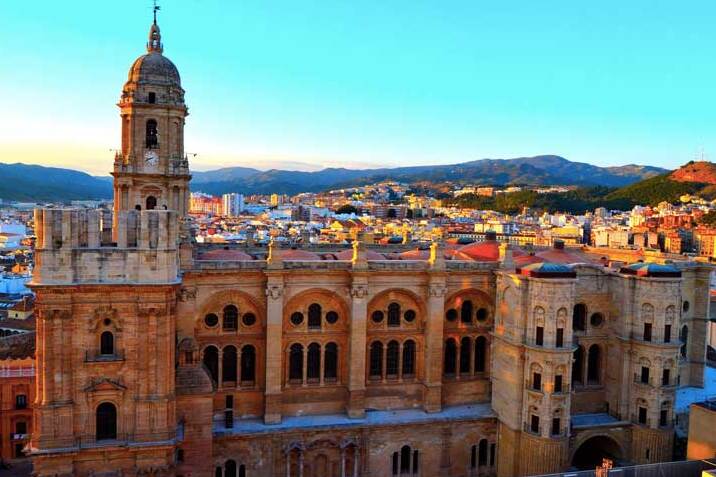

The Cathedral of Málaga, known locally as La Manquita (the one-armed lady), stands as a powerful testament to the blend of cultures that have shaped this Andalusian city. Its formation began in the 16th century, marking a pivotal transition from the Islamic era to Christian rule following the Reconquista in 1487. The cathedral was constructed on the site of the Great Mosque of Málaga, a significant Islamic structure that was repurposed for Christian worship after the city fell to the Catholic Monarchs, Isabella I of Castile and Ferdinand II of Aragon.
The original plans for the cathedral included two towers; however, due to financial constraints and shifting priorities over the centuries, only the southern tower was completed. This resulted in the cathedral's distinctive asymmetrical silhouette, a quirky charm that invites both admiration and curiosity. Construction spanned over 250 years, culminating in 1782, which allowed for a fusion of Gothic, Renaissance, and Baroque architectural styles. Each element tells a story — from the soaring Gothic arches to the elaborate Baroque façade, the building reflects the evolving artistic trends of its time.
Stepping inside the cathedral, visitors are greeted by a breathtaking interior that exudes both grandeur and serenity. The carved choir stalls, crafted by the talented artisans of the 18th century, showcase intricate woodwork that is nothing short of spectacular. The space is further enriched by two majestic organs, also from the 18th century, that fill the air with harmonious melodies during services. Among the notable artworks, a striking sculpture by Pedro de Mena draws attention, illustrating his skilled craftsmanship that captures both emotion and spiritual depth. Additionally, a painting by Alonso Cano, one of the most significant Spanish Baroque painters, highlights the artistic significance of the cathedral and its role in the region's cultural heritage.
The cultural significance of the Cathedral of Málaga extends beyond its architectural grandeur. It serves as a focal point for local traditions and religious festivals, particularly during Holy Week (Semana Santa), when the city comes alive with processions and celebrations. The cathedral is often a central gathering point for these events, where the community unites in devotion and pride. The intertwining of faith and culture is palpable here, making it an essential part of Málaga’s identity.
No visit to Málaga would be complete without indulging in the local gastronomy, which is deeply influenced by the region's history. The area is famed for its espeto de sardinas (grilled sardines), a dish cooked over open flames on the beach. Pair this with a glass of Malagueña sweet wine, a local specialty that complements the fresh seafood beautifully. The culinary scene reflects the city’s diverse heritage, with tapas being a staple that encourages sharing and community spirit. Be sure to try pescaito frito, a delightful assortment of fried fish, which echoes the coastal lifestyle of the region.
For those eager to uncover lesser-known facts, the cathedral holds a few surprises. One of the most intriguing stories involves the cathedral’s bell tower, which houses a bell named "La Victoria." Legend has it that it was once used to warn the citizens of impending danger, and today, it continues to ring out across the city, marking the hours and celebrating special occasions. Additionally, the cathedral is home to a secret doorway — a small entrance leading to the old mosque's remains, which few tourists are aware of, providing a tangible connection to Málaga’s rich Islamic history.
When planning your visit to the Cathedral of Málaga, consider timing your trip to coincide with the early morning or late afternoon when the sunlight pours through the stained glass windows, casting colorful reflections throughout the nave. The cathedral is open year-round, with the best time to visit being during the spring and fall months when the weather is mild and the crowds are thinner. Be sure to take a guided tour to fully appreciate the depth of its history and art.
As you explore the cathedral, keep your eyes peeled for the subtle details: the olive branches in the carvings, the intricate tiling, and the atmospheric lighting that creates a sacred ambiance. It’s these small touches that make the visit truly memorable.
In conclusion, the Cathedral of Málaga is not just a house of worship but a vibrant symbol of the city’s rich tapestry of history, art, and culture. It invites you to explore, reflect, and immerse yourself in the stories of the past. To truly appreciate all that Málaga has to offer, consider using the Secret World app to design a personalized itinerary tailored to your interests.


