
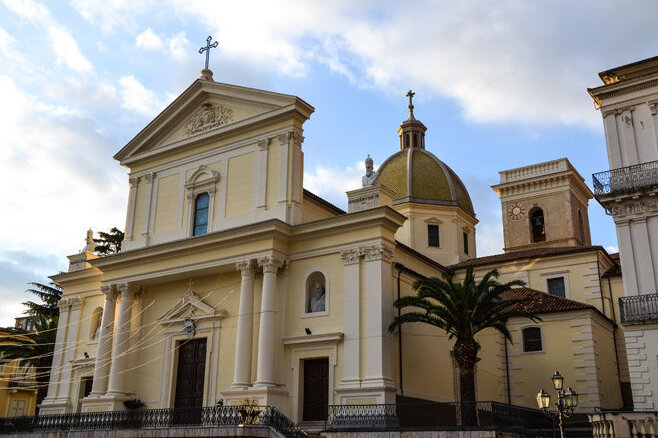

In the heart of Lamezia Terme, the Cathedral of Santi Pietro e Paolo stands not only as a place of worship but also as a vibrant symbol of the town's rich history and culture. This striking edifice, dedicated to the Apostles Saint Peter and Saint Paul, invites visitors to explore its majestic façade and intricate interior, each corner whispering tales of the past.
History and Origins
The history of the cathedral dates back to 1640, a pivotal year that marked its founding. The site has ancient roots, originally part of the Byzantine settlement of Neocastrum, which has witnessed the ebb and flow of various civilizations over centuries. The cathedral was built on the foundations of an older church, adapting and evolving through the ages.
Significant events have shaped its character, including the devastation caused by the 1783 Calabrian earthquakes, which led to extensive renovations. The architectural style transitioned to Neoclassical during these restorations, reflecting broader trends in European architecture. The cathedral not only serves as a spiritual hub but also as a historical monument that encapsulates the resilience of the Lametini people.
Art and Architecture
Architecturally, the Cathedral of Santi Pietro e Paolo is a stunning example of Neoclassical design. The façade is adorned with marble busts of Saints Peter and Paul, while the niches house the likenesses of Popes Marcellus II and Innocent IX, both bishops of Lamezia Terme. The grand entrance, flanked by elegant columns, invites visitors into a sacred space that feels timeless.
Inside, the cathedral features three expansive naves, which provide a sense of openness and tranquility. Among the notable artworks, the seventeenth-century holy water font carved from local green marble stands out, showcasing the craftsmanship of the region. The wooden choir, with its intricate inlays, reflects the artistic heritage of Calabria, while the remarkable pipe organ from the twentieth century adds a modern touch, enhancing the acoustics during mass and special ceremonies.
Local Culture and Traditions
The cathedral is not just a religious site; it is a focal point for local culture and traditions. Each year, the town celebrates the feast of Saint Peter and Saint Paul on June 29, a vibrant event that attracts residents and visitors alike. The streets come alive with processions, music, and traditional dances, highlighting the deep-rooted sense of community among the Lametini.
Local customs often include the blessing of the sea, reflecting the strong connection the people have to their coastal environment. Visitors may also witness various religious rites that emphasize the importance of faith in daily life, from baptism ceremonies to weddings, all set against the backdrop of this magnificent cathedral.
Gastronomy
No visit to Lamezia Terme is complete without indulging in the local gastronomy. The region is renowned for its rich culinary traditions, which are often celebrated during local festivals. One must-try dish is ‘Nduja, a spicy spreadable salami that embodies the flavors of Calabria. Pair this with local wines such as Cirò, made from the indigenous Gaglioppo grape, to experience the taste of the region.
Another local delicacy is Pitta, a type of bread that varies from region to region in Calabria but often features a rich filling of meats, cheeses, and vegetables. These culinary offerings not only satisfy the palate but also tell the story of the land and its people, deeply intertwined with the cathedral's historical significance.
Lesser-Known Curiosities
While many visitors admire the grand architecture and sacred artworks, few delve into the lesser-known curiosities of the cathedral. For instance, many are unaware that the church houses a hidden relic — a fragment believed to be part of Saint Peter's original vestments. This relic draws the attention of scholars and pilgrims alike, adding an air of mystery to the cathedral's sacred atmosphere.
Moreover, the cathedral's bell tower, which rises prominently above the town, is said to have a unique acoustic property that allows the sound of its bells to be heard miles away, calling the faithful to worship.
Practical Visitor Information
The best time to visit the Cathedral of Santi Pietro e Paolo is during the spring and early fall when the weather is mild, allowing for leisurely exploration of the interior and the surrounding areas. For those wishing to attend a mass or a local festivity, check the liturgical calendar for special celebrations.
When visiting, take a moment to step outside the cathedral to enjoy the vibrant atmosphere of Corso Nicastro, where you will find charming cafes and shops. Be sure to look up at the stunning architecture, both of the cathedral and the surrounding buildings, which reflect the town's historical evolution.
In conclusion, the Cathedral of Santi Pietro e Paolo is more than just a landmark; it is a living testament to the enduring spirit of Lamezia Terme and its people. To immerse yourself fully in the depth of this beautiful town, consider planning your visit with the Secret World app for a personalized itinerary.


