
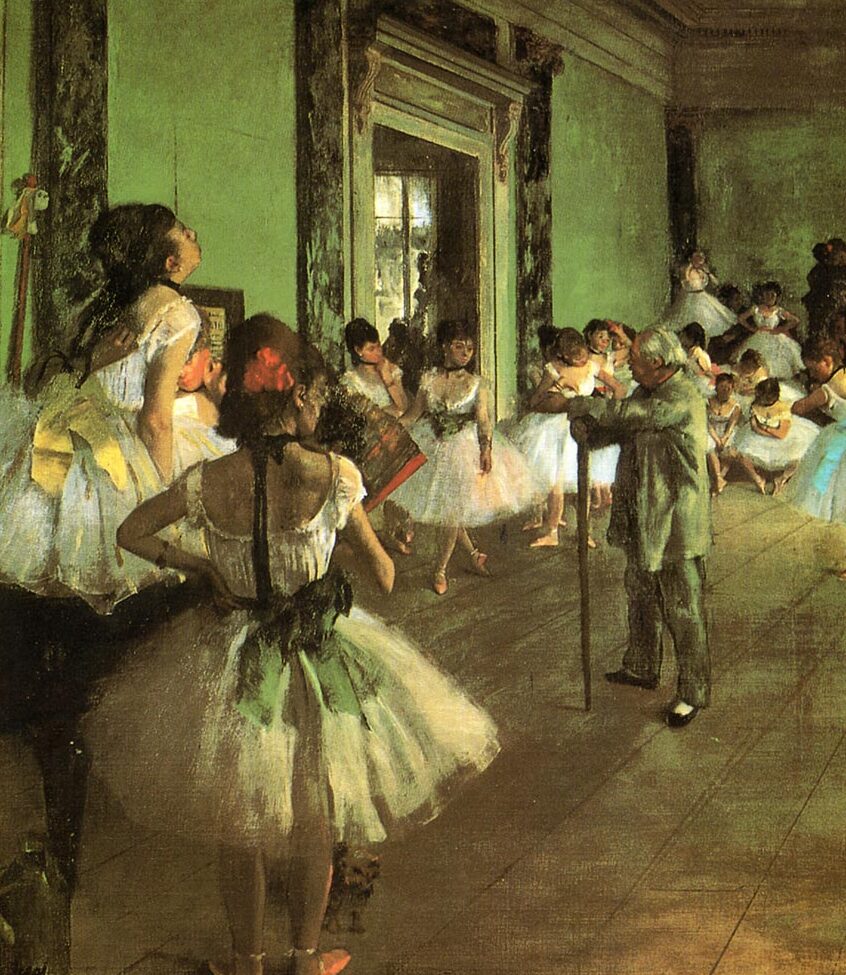

In the heart of Paris, where the echoes of ballet shoes resonate through history, lies a painting that captures the essence of art and movement: The Dance Class by Edgar Degas. This masterpiece brings to life the world of 19th-century ballet, portraying a moment that feels both intimate and fleeting, as if one is peeking through the keyhole into the lives of the dancers.

History and Origins
The origins of the Paris Opera, located on Rue Le Peletier, date back to 1669, when it was founded under the reign of King Louis XIV. The institution has undergone numerous transformations, with the current Palais Garnier opening its doors in 1875. This grand building, designed by architect Charles Garnier, became the epitome of opulence and artistic expression, providing a fitting stage for the ballet performances that captivated audiences of the era.

Degas painted The Dance Class around 1874, a time when he became deeply fascinated by the world of ballet. His friendships with dancers and his frequent visits to the opera house allowed him to capture the essence of their training. The painting features the elderly ballet master Jules Perrot, a pivotal figure in the world of dance, instructing a group of young dancers, showcasing both the discipline of their art and the youthful exuberance that fills the studio.
Art and Architecture
Degas’s artistic style is characterized by his innovative use of color and light, and The Dance Class exemplifies his signature technique. The composition draws the viewer's eye to the diagonals created by the dancers' limbs and the lines of the studio, evoking movement and grace. The impressionistic quality of the painting reflects both the fluidity of dance and the spontaneity of life itself.
The architectural grandeur of the Palais Garnier, with its lavish interiors and stunning chandeliers, serves as a fitting backdrop for the ballet performances depicted in Degas's works. The building itself is a marvel, blending Baroque and Renaissance styles, and is adorned with intricate sculptures and frescoes that contribute to its artistic significance. Visitors can soak in the history of the place by exploring the grand staircase, the grand foyer, and the magnificent auditorium, where many of Degas’s subjects graced the stage.
Local Culture and Traditions
Paris has long been a cradle of artistic and cultural movements, and the ballet scene is no exception. The tradition of ballet in Paris is interwoven with the broader cultural tapestry of the city, where art, music, and literature flourished. The Paris Opera Ballet, one of the oldest ballet companies in the world, continues to uphold this legacy with its rigorous training and spectacular performances.
The city also hosts various events that celebrate dance and performing arts, including the Festival de Danse de Cannes and the annual Nuit Blanche, where art takes over the streets of Paris. Engaging with the local culture allows visitors to experience firsthand the vibrancy and passion that the French associate with their artistic heritage.
Gastronomy
No visit to Paris is complete without indulging in its culinary delights. While the ballet scene may not have specific dishes tied directly to it, the Paris Opera area is surrounded by charming cafés and bistros where one can savor quintessential French cuisine. Think buttery croissants, flaky tartes, and rich coq au vin.
For a sweet treat, try the madeleines, which echo the delicate nature of ballet, or the classic crêpes, perfect for a quick snack between performances. Pair your meal with a glass of Châteauneuf-du-Pape, a renowned wine that embodies the artistry of French viticulture.
Lesser-known Curiosities
Beyond the well-trodden paths of tourists, there are fascinating details about The Dance Class and its creation. Degas was known for his unconventional choice of perspectives, often capturing scenes from unusual angles. This painting, for instance, showcases the dancers in a manner that feels candid, as if the viewer is an unseen guest.
Moreover, the painting holds a unique place in art history as it reflects Degas's desire to capture movement in a way that was unprecedented at the time. His fascination with the human form and the ephemeral nature of performance is evident in the way he immortalizes a moment that would otherwise be lost in time.
Practical Visitor Information
The best time to visit the Palais Garnier is during the ballet season, typically from September to July, when performances are abundant. It’s advisable to book tickets in advance, especially for popular shows. Additionally, guided tours are available, offering insights into the building's architecture and the history of the opera.
When visiting The Dance Class, take a moment to explore the surrounding area, which is rich in history and culture. The nearby Place de l'Opéra is a vibrant square filled with cafés and shops, making it a perfect spot to unwind after a day of art and exploration.
As you immerse yourself in the world of Degas and the Parisian ballet, consider using the Secret World app for a personalized AI itinerary to enhance your experience in this enchanting city.


