
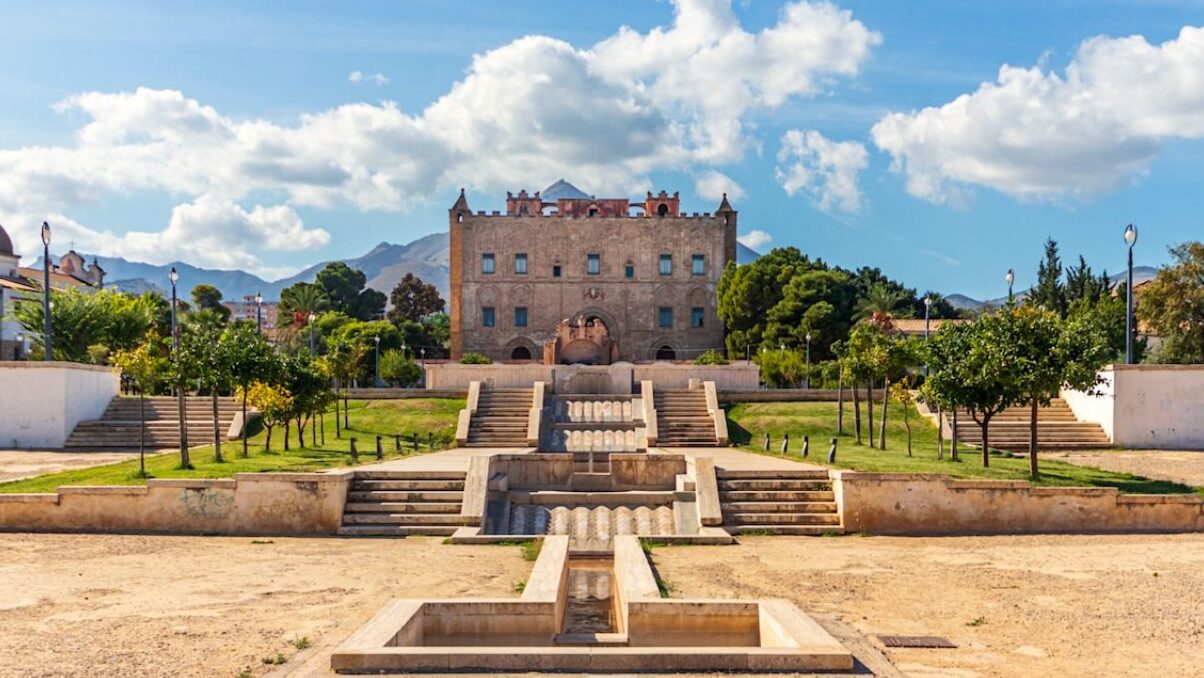

In the heart of Palermo, within the Zisa district, lies the captivating Palazzo della Zisa, a testament to the rich tapestry of Sicilian history. This splendid structure, built in the 12th century during the reign of William I of Sicily, reflects the influence of Arab-Norman architecture, a unique style that fuses Islamic art with European design. The palace served as a summer residence for the Norman kings, offering a glimpse into the era of Arab rule in Sicily, which profoundly shaped the island's culture and heritage.
The legend surrounding the Devils of the Zisa adds an intriguing layer to the palace's history. According to lore, the palace was constructed by Azel Comel, an Arab prince who fled with his beloved, El-Aziz, after stealing a treasure from his father, the Sultan of Lebanon. Their love story turned tragic when El-Aziz's mother, heartbroken by her daughter's departure, took her own life. This deep sorrow led Azel Comel to madness, and in his despair, he lost his own life, leaving behind the hidden treasure safeguarded by mischievous devils. This tale has woven itself into the very fabric of the palace, attracting visitors intrigued by the promise of hidden riches and the mystery of the devils.
Architecturally, the Zisa Palace is a masterpiece. Its name translates to "delight" in Arabic, and the building lives up to this moniker with its stunning mosaics, fountains, and intricate stucco work. The grand Fountain Room, adorned with devilish figures in the frescoes, is perhaps the most famous feature. Legend states that visitors must count the devils to unlock the secrets of the treasure, but these playful figures seem to mock the efforts of those who dare to try. The palace's layout, with its expansive gardens and reflective pools, reflects the Arab influence, emphasizing harmony with nature and serene beauty.
Local culture thrives around the Zisa Palace, with various festivals celebrating its history and the broader Sicilian heritage. One notable event is the “Festa di Santa Rosalia,” held in mid-July, honoring the patroness of Palermo. The festival features a vibrant procession, traditional music, street food, and fireworks, immersing visitors in the local customs and community spirit. The Zisa itself is often a focal point during these celebrations, symbolizing the historical blend of cultures that defines the city.
Speaking of local customs, the gastronomy of Palermo is a delightful journey through flavors influenced by its diverse history. Traditional dishes such as arancini (fried rice balls), caponata (a sweet and sour eggplant dish), and panelle (chickpea fritters) are must-tries. The area around the Zisa is also known for its street food markets, where vendors serve up sfincione (Sicilian-style pizza) and cannoli filled with sweet ricotta. Pair these culinary delights with a glass of local Marsala wine or a refreshing granita to truly experience the taste of Palermo.
Beyond the main attractions, the Zisa Palace harbors lesser-known curiosities. One intriguing detail is the Arabic inscriptions found within the palace, offering insights into the era of Arab rule in Sicily. Additionally, the palace's gardens are home to various plants that were cultivated during the Arab period, showcasing the agricultural practices that were introduced to the region. Many visitors overlook these hidden gems, which provide a deeper understanding of the cultural exchange that took place in this historical context.
For those planning a visit, the best time to explore the Zisa Palace is during the spring and fall months when the weather is mild and pleasant. It’s advisable to arrive early in the morning to avoid crowds, allowing ample time to appreciate the intricate details of the palace without distraction. Be sure to bring a camera to capture the stunning architecture and lush gardens, as well as a notebook for jotting down the whimsical antics of the devils in the Fountain Room.
As you wander through the enchanting halls of the Zisa Palace, let the stories of love, loss, and hidden treasures envelop you. This historical site is not just a monument but a living narrative of Palermo's rich past, waiting for visitors to uncover its secrets.
To enhance your experience, consider using the Secret World app to plan a personalized AI itinerary for your visit to Palermo.


