
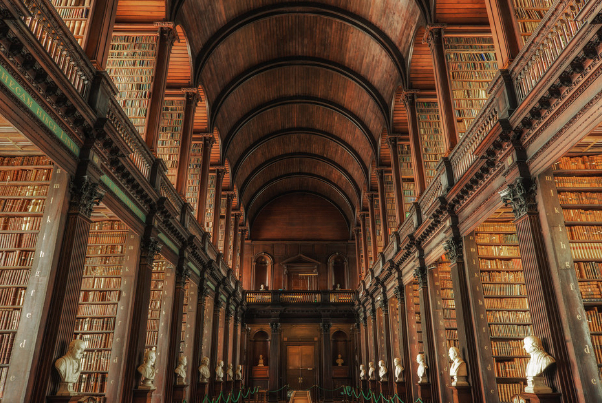

The Library of Trinity College Dublin is not just a repository of books; it is a timeless testament to Ireland's rich literary and academic heritage. Stepping into this iconic space is akin to entering a realm where history, art, and culture converge to narrate tales of centuries past. Founded in 1592 by Queen Elizabeth I, Trinity College Dublin stands as Ireland's oldest university, and its library is a jewel in the heart of the capital. It has served as the intellectual epicenter of Dublin, nurturing scholars and literary giants alike, including illustrious alumni such as Jonathan Swift, Oscar Wilde, and Samuel Beckett.
The library's most famous segment, the Long Room, was constructed between 1712 and 1732. This architectural marvel stretches nearly 65 meters and houses over 200,000 of the library's oldest books. The room is a stunning example of Georgian architecture, characterized by its barrel-vaulted ceiling and intricately carved wooden galleries. The oak shelves, reaching skyward, are flanked by marble busts of great philosophers and writers, adding an air of erudition and grandeur. The artistry of the space is further exemplified by the exquisite plasterwork and the captivating symmetry that invites visitors to roam its length in quiet awe.
Besides its architectural beauty, the library is home to one of the world's most significant artifacts: the Book of Kells, an illuminated manuscript of the four Gospels of the New Testament. Created by Celtic monks around 800 AD, it is renowned for its lavishly detailed illustrations and is a masterwork of Western calligraphy. The manuscript’s pages, or folios, are intricately adorned with vivid colors and intricate designs, showcasing the pinnacle of Insular art.
The library also holds a special place in the local culture, as it is intertwined with Dublin's identity as a city of learning and literature. Every year, the college celebrates Trinity Week, a tradition dating back to the 17th century, which features academic lectures and cultural events open to the public. The library's presence is a constant reminder of Dublin's profound connection to the written word, and it plays a pivotal role during the city's annual Literary Festival, drawing bibliophiles from around the globe.
While exploring the library, visitors often indulge in Dublin's rich gastronomy. A visit to the nearby Temple Bar district offers a taste of traditional Irish cuisine and vibrant pub life. Sample local delicacies like coddle—a hearty stew made with sausages and potatoes—or boxty, a type of potato pancake. Pair these dishes with a pint of Guinness or a dram of Irish whiskey, both of which have storied histories and are essential to any authentic Irish culinary experience.
Beyond its well-known treasures, the library holds lesser-known curiosities that add to its allure. Few realize that the Long Room's design inspired the Jedi archives in the Star Wars film series. Additionally, the library possesses a rare copy of the 1916 Proclamation of the Irish Republic, a pivotal document in the country's fight for independence. Visitors might also miss the Brian Boru harp, Ireland's oldest surviving harp, which became the inspiration for the national emblem.
For those planning a visit, the best time to explore the library is during the quieter months of spring and autumn, when the crowds are thinner, and the weather is mild. Arriving early in the morning or late in the afternoon can afford a more intimate experience. Tickets to view the Book of Kells can be booked online in advance to avoid long queues. As you meander through the Long Room, take a moment to appreciate the scent of aged leather and parchment, a sensory journey through the annals of time.
In essence, the Library of Trinity College Dublin is not merely a destination but a pilgrimage for those who cherish the legacy of knowledge and creativity. Its walls echo with the whispers of scholars and scribes, and each visit is a step back into the intellectual heart of Ireland.


