
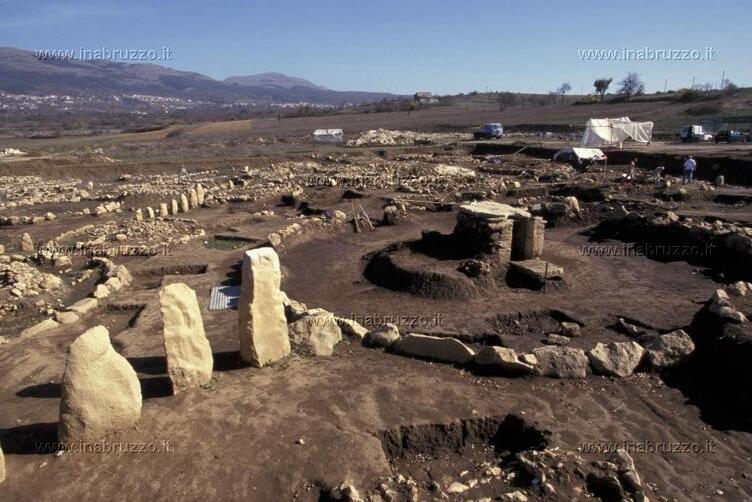

Nestled in the heart of Abruzzo, the Necropolis of Fossa offers an extraordinary glimpse into the ancient world, inviting visitors to explore a site rich in history and mystery. Often referred to as the “small Stonehenge of Abruzzo,” this monumental archaeological site along the banks of the Aterno River reveals the burial practices of the ancient Vestini people, a civilization that flourished in this region long before the rise of the Roman Empire.
History and Origins
Discovered serendipitously in 1992, the necropolis serves as a vital link to the past, showcasing burial practices spanning nearly a millennium. The tombs here date from the First Iron Age (approximately the 11th to 8th century B.C.) to the end of the Roman-Hellenistic Age. This timeline illustrates the continuous use of the site, reflecting evolving cultural practices and beliefs about life and death.
The site consists of burial mounds covering around 2,000 square meters, each with distinctive characteristics that hint at the period it represents. Archaeologists have unearthed a variety of artifacts, including pottery and tools, that not only reveal the daily lives of the Vestini but also their socio-economic structures. The presence of male mounds surrounded by menhirs—standing stones of decreasing height—adds an enigmatic layer to the site, with researchers still unraveling their significance.
Art and Architecture
The architectural style of the necropolis is both fascinating and varied, with each mound showcasing unique burial techniques. The male mounds, encircled by menhirs, present a striking visual reminiscent of neolithic structures, designed perhaps for ceremonial purposes or as a mark of status.
In contrast, the female tombs do not feature menhirs but contain exquisite ornaments such as amber, iron, and glass paste jewelry. These artifacts not only demonstrate the artisanship of the period but also provide insights into the gender roles and societal values of the Vestini culture. The grave goods found here speak volumes about the importance of both men and women in their society, revealing a complex web of cultural identity.
Local Culture and Traditions
The region surrounding the Necropolis of Fossa is steeped in traditions that reflect its rich history. Local customs often intertwine with the remnants of ancient rituals, with festivals celebrating connections to the past. One such event is the Festa di San Giovanni, held every June, where locals partake in traditional music, dance, and culinary delights that echo the flavors of their ancestors.
Additionally, the area is known for its craftsmanship, particularly in ceramics and textiles, which draw inspiration from ancient techniques. Visitors often find themselves immersed in the local culture, whether through participating in workshops or observing artisans at work.
Gastronomy
Abruzzo is renowned for its hearty and flavorful cuisine, and a visit to the Necropolis of Fossa provides an excellent opportunity to indulge in local culinary delights. Traditional dishes such as arrosticini (grilled lamb skewers) and pasta alla chitarra (a type of handmade pasta) showcase the region's agricultural bounty.
For those with a sweet tooth, confetti—sugar-coated almonds—are a popular regional treat, often given as gifts during celebrations. Pairing these dishes with a glass of local wine, such as Montepulciano d'Abruzzo, rounds out a culinary experience that feels deeply connected to the land and its history.
Lesser-known Curiosities
While many visitors flock to the more famous sites in Italy, the Necropolis of Fossa boasts lesser-known curiosities that intrigue even the most seasoned travelers. For example, the alignment of the menhirs suggests that the site may have had astronomical significance, possibly marking solstices or equinoxes.
Another fascinating detail is the presence of funerary practices that hint at a belief in an afterlife, further evidenced by the objects buried with the deceased. Studies of the burial artifacts indicate that the Vestini people valued both utility and beauty, as seen in the intricately designed items found within the tombs.
Practical Visitor Information
The best time to visit the Necropolis of Fossa is during the spring and early autumn months, when the weather is mild, making exploration enjoyable. It’s advisable to wear comfortable shoes, as the site involves walking through uneven terrain.
Guided tours are available, providing deeper insights into the archaeological findings and the historical context of the site. Don't miss the opportunity to see the menhirs, which are particularly striking at sunrise or sunset, casting long shadows across the mounds.
As you plan your visit, consider downloading the Secret World app to help create a personalized itinerary that includes not just the necropolis, but also the surrounding attractions rich in history and culture.


