
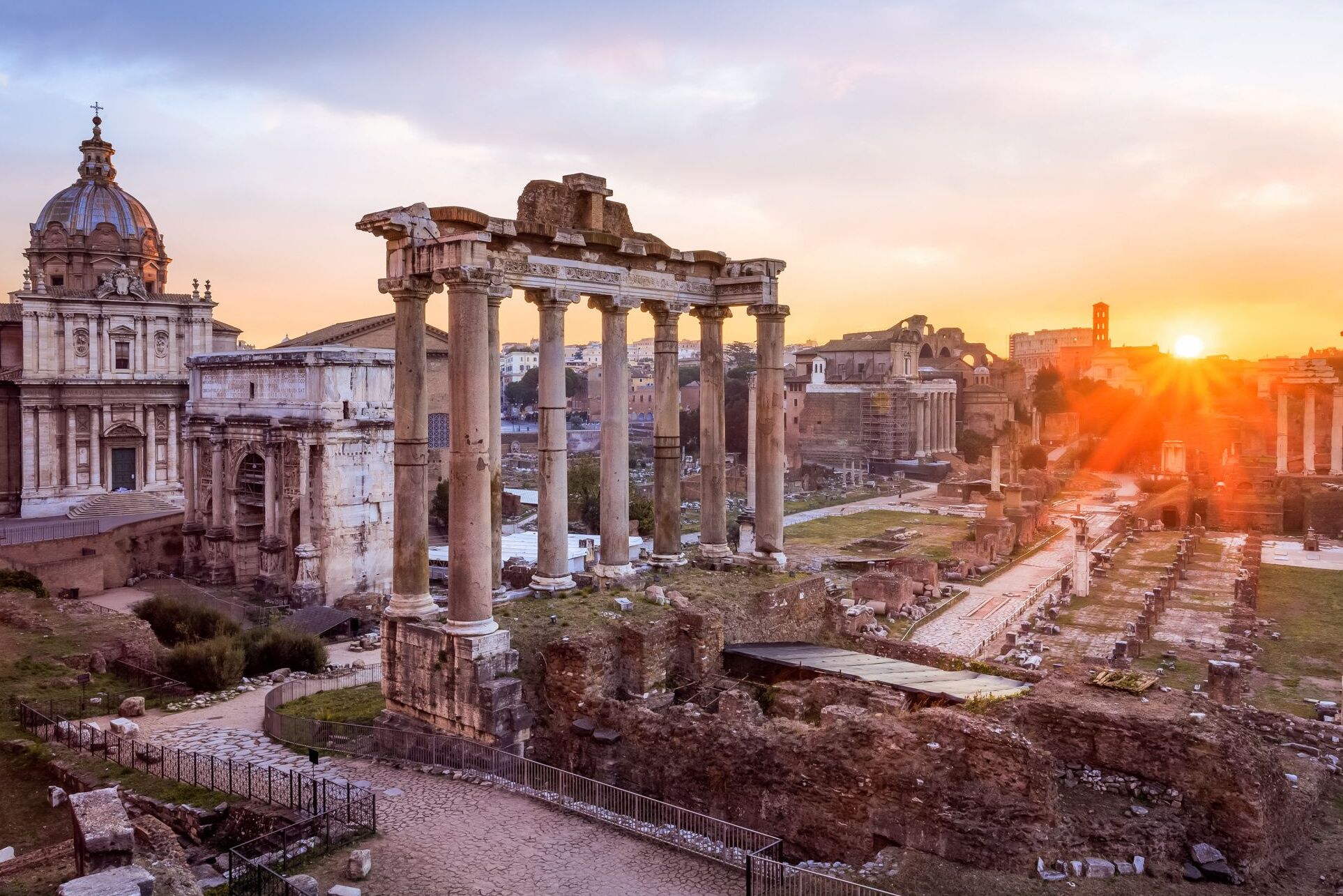

As you wander through the Roman Forum (Forum Romanum), you step into a world where the echoes of ancient Rome resonate with every stone. This monumental site, nestled between Palatine Hill and Capitoline Hill, was not only the epicenter of public life but also the stage for some of the most significant events in Roman history. Its origins trace back to around 500 B.C., coinciding with the foundation of the Roman Republic, marking it as a cradle of democracy and civic engagement.

The Forum’s evolution reflects the city’s transformation from a small settlement into a powerful empire. Initially a marshy area, it was drained and turned into a public space where citizens gathered for various activities: from political debates to religious ceremonies. Key historical events unfolded here, including the assassination of Julius Caesar on the Ides of March in 44 B.C., a moment that reverberated through history, altering the course of the Republic.
Architecturally, the Roman Forum is a treasure trove of styles and structures. The Temple of Saturn, built in the 5th century B.C., is one of the earliest and most significant temples, symbolizing Rome’s wealth and stability. Its Doric columns and the remains of the Curia (Senate house) highlight the grandeur of Roman architecture. The Arch of Titus, erected to commemorate the victory in the Jewish War, is adorned with reliefs that tell stories of conquest and divine favor. Visitors can marvel at the intricate carvings that have stood the test of time, representing the artistic prowess of the ancient artisans.
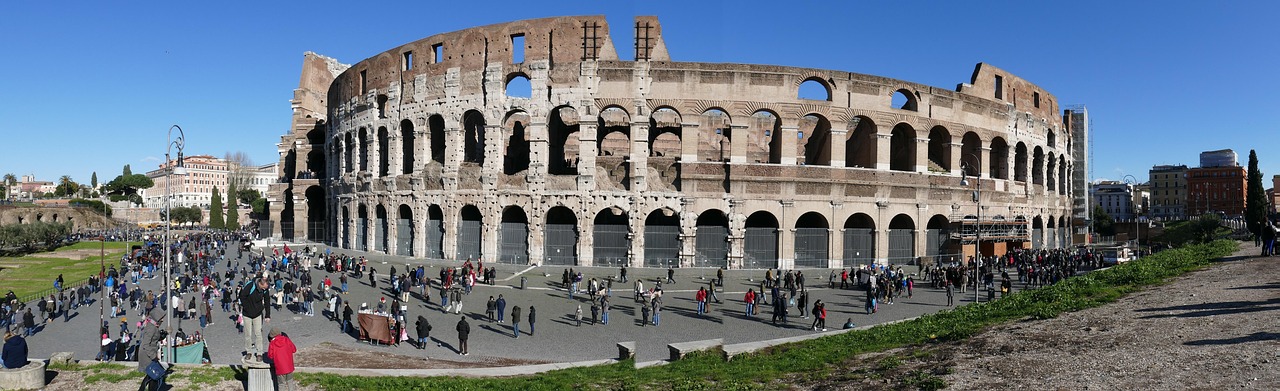
Local customs and traditions surrounding the Forum have evolved, yet the spirit of public discourse remains. Festivals such as the Ludi Romani, dedicated to Jupiter, once drew crowds to celebrate with games, theatrical performances, and feasts. Today, the site continues to attract gatherings and events, underscoring its ongoing relevance in Roman culture.
When it comes to gastronomy, the flavors of ancient Rome can still be felt in modern Roman cuisine. Dishes like Cacio e Pepe and Carciofi alla Romana (Roman-style artichokes) connect visitors with the region’s culinary past. Nearby trattorias serve up traditional Roman fare, allowing travelers to experience the same flavors that might have been enjoyed by citizens during the Republic era. Pair these meals with a glass of local wine, such as Frascati, to complete the experience.
Beyond the well-trodden paths of the Forum, there are lesser-known curiosities waiting to be uncovered. For instance, many visitors overlook the Basilica Julia, a structure that once hosted civil trials and was an architectural marvel of its time. The remnants of the Rostra, where orators addressed the public, are often missed, yet they represent the heart of Roman oratory and political life. Furthermore, the Forum is home to a stone known as the Lapis Niger, believed to be a sacred site and the earliest written record of Roman law.
Visiting the Roman Forum is best during the early morning or late afternoon, when the sunlight casts a golden hue over the ancient ruins. It’s essential to wear comfortable shoes, as the uneven cobblestones can be a challenge. Consider joining a guided tour to gain insights into the rich history and significance of each structure, enhancing your understanding of this historical tapestry.
As you traverse the Roman Forum, keep an eye out for the Temple of Vesta, where the sacred flame was tended by the Vestal Virgins, and the Via Sacra, the main street of ancient Rome that once bustled with life and activity.
In conclusion, the Roman Forum encapsulates the essence of ancient Rome, a place where history, culture, and community converge. It invites you to reflect on the past while experiencing the vibrant pulse of modern Rome. For a personalized journey through this historic site and beyond, consider using the Secret World app to plan your itinerary.


