
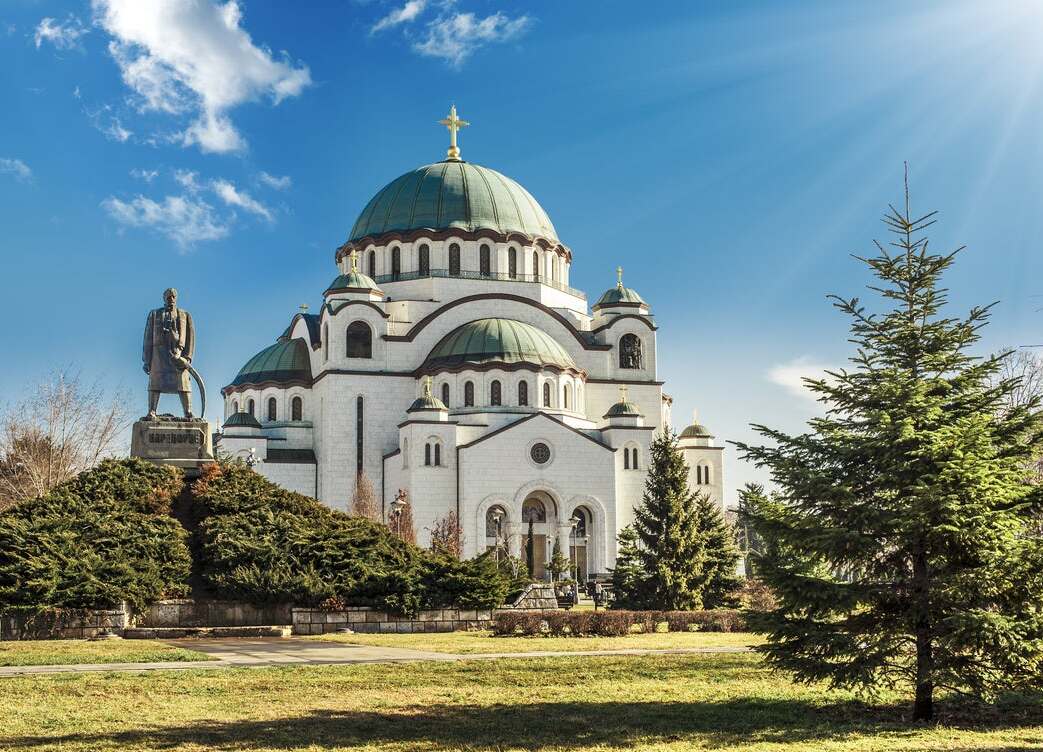

The Temple of Saint Sava in Belgrade stands as a monumental emblem of Serbian culture and Orthodox Christianity. As the largest Orthodox church building in the world, it is dedicated to Saint Sava, the founder of the Serbian Orthodox Church and a pivotal figure in Serbian history. The roots of this grand structure can be traced back to the late 19th century, when the need for a significant religious edifice became apparent to preserve the heritage and identity of the Serbian people.
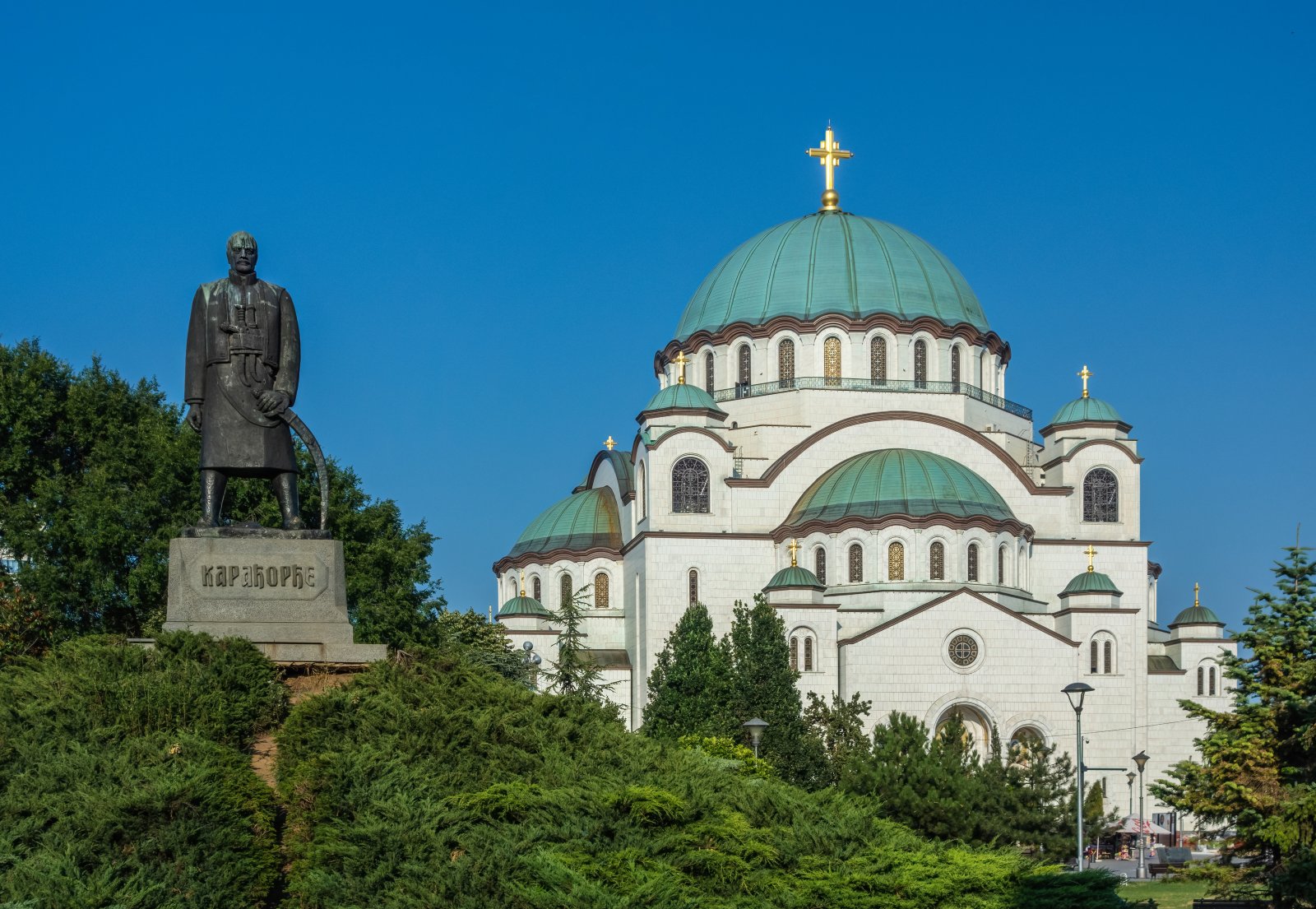
The site where the temple now stands holds a deep historical significance. It is believed to be the location where the remains of Saint Sava were burned by the Ottoman authorities in 1594, marking a painful chapter in Serbian history. This act fueled the desire for a grand church to honor the saint and serve as a beacon of faith. The official construction of the temple began in 1985, spurred by the vision of architect Bogdan Nestorović and supported by the Serbian community's fervent dedication. After decades of labor, the church was largely completed by 2004, though internal decorations continue to evolve, reflecting the ongoing commitment to its artistic expression.
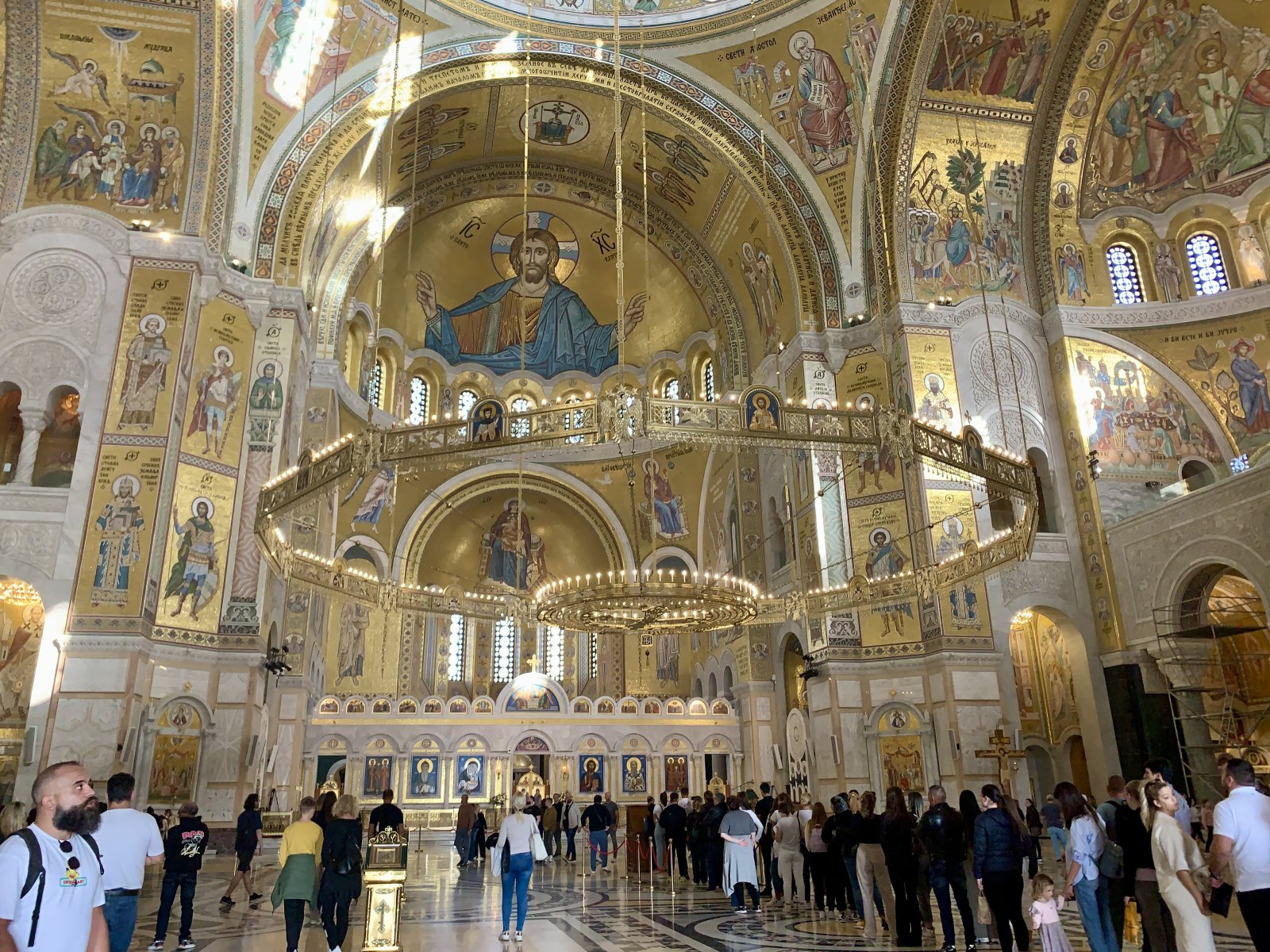
Architecturally, the Temple of Saint Sava is a masterpiece of Serbian-Byzantine style, characterized by its enormous dome and intricate details. The church stretches 91 meters (299 feet) long and 81 meters (266 feet) wide, reaching a height of 70 meters (230 feet). The central dome, crowned with a gold-plated cross, extends the church's height to an impressive total of 82 meters (269 feet). Inside, the church boasts a vast area of 3,500 m², adorned with captivating mosaics, frescoes, and marbled columns, many of which depict biblical scenes and saints. The interior artwork is a work in progress, with many artists contributing to the ongoing beautification of this sacred space.
The temple also plays a vital role in the local culture and traditions of Belgrade. It is a site of pilgrimage for many Serbians, especially during major religious holidays such as Christmas and Easter. The Feast of Saint Sava, celebrated on January 27, is one of the most significant events in Serbian culture. This day honors the saint with various ceremonies, including processions, special liturgies, and cultural performances, bringing together communities in a display of faith and national pride.
As you stroll through the vicinity of the temple, you’ll encounter the rich tapestry of Belgrade’s gastronomy. The surrounding neighborhoods are home to traditional eateries offering ćevapi (grilled minced meat), sarma (cabbage rolls), and ajvar (pepper-based condiment). Pair these dishes with a glass of rakija, a potent fruit brandy that is a staple at any Serbian gathering. The local cuisine reflects the heart of Serbian hospitality, where food is often shared amongst family and friends in joyous celebrations.
For those seeking hidden gems, the Temple of Saint Sava holds several lesser-known curiosities. Notably, the church's intricate mosaics, once completed, will cover an area of over 1,000 m², making them among the largest in the world. Additionally, the church's crypt is home to relics and other significant religious artifacts, although it is often overlooked by visitors. The temple's large courtyard occasionally hosts cultural and religious events, offering a unique opportunity to witness local traditions in action.
The best time to visit the Temple of Saint Sava is during the spring and early fall when the weather is mild, and the surrounding parks are in full bloom. Be sure to allocate time to explore the nearby Vračar district, known for its vibrant cafes and shops, where you can immerse yourself in the local atmosphere. When visiting, dress appropriately as it is a place of worship, and be respectful of ongoing services.
For a truly enriching experience, take a moment to absorb the ambiance and history of this magnificent structure. The Temple of Saint Sava is more than just an architectural marvel; it is a symbol of resilience, faith, and cultural pride.
As you plan your visit to this extraordinary landmark, consider using the Secret World app to create a personalized itinerary that suits your exploration needs in Belgrade.


