
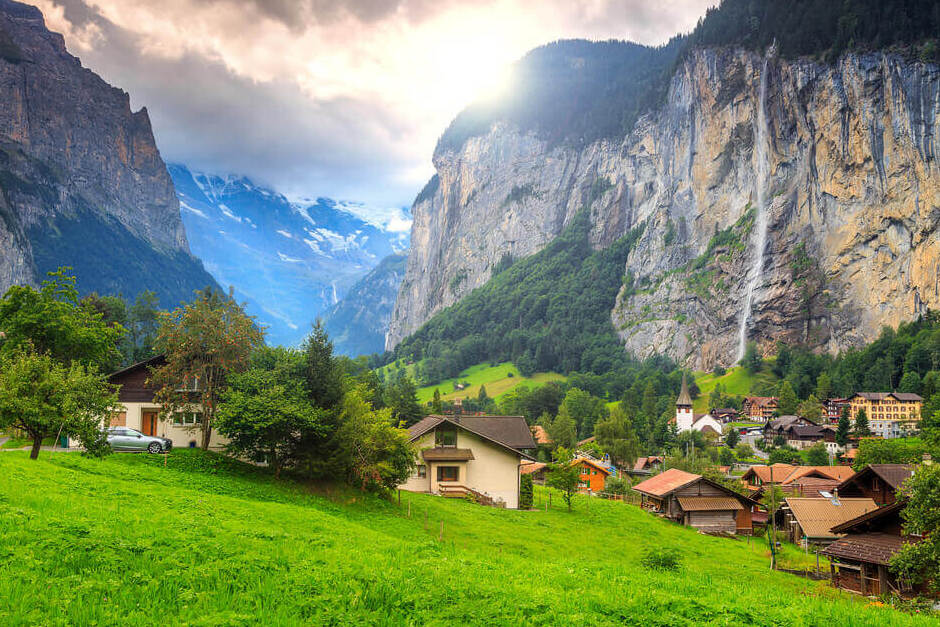

Nestled in the breathtaking Lauterbrunnen Valley of Switzerland, Trummelbach Falls is a captivating natural wonder that offers a unique glimpse into the power of glacial water. With a history steeped in the ancient geology of the Alps and accessibility granted through innovative engineering, this hidden gem features ten impressive waterfalls cascading inside the mountain, creating a stunning spectacle that resonates with visitors. The falls are not only a marvel of nature but also a site of historical significance, showcasing the ancient forces that shaped the valley.
History and Origins The Lauterbrunnen Valley, often referred to as the "Valley of 72 Waterfalls," reveals a geological history that dates back to the last Ice Age, around 10,000 years ago. The Trummelbach Falls themselves were formed by the relentless flow of meltwater from the Eiger, Mönch, and Jungfrau mountains, which carved their way through the rock, creating this magnificent cascade. Initially, the falls were a hidden spectacle, accessible only to the adventurous. The first documented exploration occurred in the early 19th century when local residents began to recognize the beauty and potential of this natural wonder.
In 1863, the falls were opened to the public, thanks to the vision of Swiss engineer Johann B. Müller, who built the first paths and walkways. By the early 20th century, further enhancements allowed visitors to experience the falls more intimately, solidifying their status as a key attraction in the region. Today, Trummelbach Falls is recognized as a UNESCO World Heritage site, highlighting its geological and environmental significance.
Art and Architecture While the primary draw of Trummelbach Falls is their natural beauty, the site is also a testament to innovative engineering. The walkways and tunnels constructed to facilitate visitor access are a blend of practicality and artistry, allowing guests to experience the falls from various vantage points. The Art Nouveau style is subtly echoed in the design of the visitor center, which complements the natural landscape while ensuring minimal disruption to the environment.
Beyond the architecture, the falls have inspired numerous artists over the years. Notable Swiss painter Albert Anker captured the essence of the Lauterbrunnen Valley in his works, reflecting the connection between nature and culture in this stunning landscape. The interplay of light and water at the falls has been a muse for many photographers, who seek to encapsulate the raw power and beauty of this natural phenomenon.
Local Culture and Traditions The Lauterbrunnen Valley is rich in local customs and traditions that reflect the deep connection between its residents and the landscape. The village of Lauterbrunnen hosts various festivals throughout the year, with Alpabzug, or the cattle drive, being one of the most celebrated. This event, held in September, marks the return of cows from the high pastures, adorned with flowers and bells, and showcases the region's agricultural heritage.
Local folklore is intertwined with the natural elements of the valley. Legends tell of spirits dwelling in the waterfalls, believed to watch over the inhabitants. Such stories are shared during community gatherings, preserving the cultural significance of the landscape. Visitors can often witness traditional Swiss music and dance during local festivals, further immersing themselves in the valley’s vibrant culture.
Gastronomy The culinary offerings in Lauterbrunnen are a delightful reflection of Swiss gastronomy. Local specialties include Älplermagronen, a hearty dish of pasta, potatoes, cream, and cheese, often served with stewed apples. Another must-try is Rösti, a crispy potato dish that has become a staple across Switzerland.
For those with a sweet tooth, Swiss chocolate and meringue are local favorites, often enjoyed with a cup of Swiss coffee or a glass of white wine from the nearby Wisetal vineyards. The region's proximity to the mountains also means that hearty mountain fare is readily available in the local eateries, offering visitors a taste of the high alpine lifestyle.
Lesser-Known Curiosities While many visitors flock to see the main cascades of Trummelbach Falls, few realize that the falls are actually an intricate system of ten waterfalls, each with its own distinct character. The largest of the falls, known as Trummelbach Falls 3, plunges an astonishing 20 meters and can carry up to 20,000 liters of water per second during peak melt.
Additionally, the sound of the waterfalls has been described as a symphony of nature, with the roar of water echoing through the caverns, creating a unique auditory experience that is often overlooked. For those willing to explore further, there are hidden viewpoints along the trails that provide breathtaking panoramas of the valley that are not found in typical travel guides.
Practical Visitor Information The best time to visit Trummelbach Falls is during the spring and early summer, from late May to early July, when the snow is melting, and the waterfalls are at their most powerful. The falls are open to visitors from April to November, with varying hours depending on the season.
Visitors should wear sturdy shoes, as the paths can be steep and wet. Don’t forget to bring a waterproof jacket, as the spray from the falls can be quite refreshing! Make sure to take your time exploring the various levels and viewing platforms to fully appreciate the grandeur of the falls.
For a truly personalized experience while planning your trip to Lauterbrunnen, consider using the Secret World app to craft an itinerary that highlights the hidden gems of this enchanting region.


