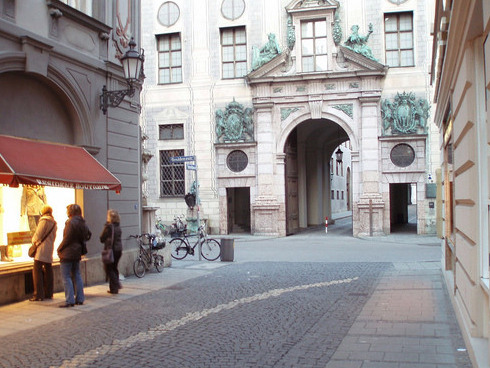

Viscardigasse is a hidden gem in the bustling heart of Munich, often overshadowed by the grandeur of Marienplatz. This short pedestrian lane, nicknamed Drückebergergasse by locals, offers a glimpse into the city’s layered history, intertwining moments of cultural significance with the shadows of its past.
### History and Origins Viscardigasse dates back to medieval times, a narrow alley that has witnessed centuries of change in Munich. Its name likely derives from the Viscardi family, prominent figures in the city during the Middle Ages. However, its historical significance is not solely tied to its origin; the lane is steeped in the tumultuous events of the early 20th century.
On November 8, 1923, Munich became the stage for the Putsch of Munich, an attempted coup led by Adolf Hitler and the Nazi Party. This failed uprising eventually led to Hitler's rise to power. In the aftermath, a memorial was erected near the Feldherrnhalle to honor those who died during the insurrection. Interestingly, those who opposed the Nazi salute would often find their way through Viscardigasse, making the lane a subtle refuge during a time of oppressive ideology.
### Art and Architecture While visually modest, Viscardigasse reflects the architectural charm typical of Munich's historical center. The buildings lining the alley are primarily Bavarian in style, characterized by ornate facades and intricate details that transport you back to a different era. The nearby structures, especially the Feldherrnhalle, boast neoclassical architecture, designed to evoke the grandeur of ancient Rome.
Notable artworks can be found throughout the area, including sculptures that depict historical figures and events. The artistry of the lane itself lies in its ability to convey a sense of place and history, encouraging visitors to pause and reflect on the stories embedded in these walls.
### Local Culture and Traditions The cultural tapestry of Munich is rich, and Viscardigasse is no exception. The lane serves as a reminder of the city’s complex history, particularly during the tumultuous years of the early 20th century. Local customs often reflect a blend of traditional Bavarian values and modern influences.
During festivals like Oktoberfest, even the quieter streets like Viscardigasse see an influx of visitors eager to soak up the local atmosphere. The sounds of Polka music and the smell of roasted chestnuts fill the air, providing a sensory experience that captures the essence of Bavarian culture.
### Gastronomy No exploration of Munich would be complete without indulging in its culinary delights. While Viscardigasse itself doesn’t host restaurants, its proximity to the bustling streets of the city center means you’re never far from local gastronomy.
Typical Bavarian dishes include Weißwurst, a delicate white sausage traditionally served with sweet mustard and freshly baked Brezn (pretzels). Pair your meal with a Mass of local beer from one of the nearby beer gardens, and you’ll understand why Munich is often called the beer capital of the world.
### Lesser-Known Curiosities One of the most intriguing aspects of Viscardigasse is its hidden history as a refuge during the Nazi regime. Many locals would use the lane to avoid the forced Nazi salute at the Feldherrnhalle, illustrating a quiet form of resistance. This small act of defiance adds a layer of depth to what might appear to be a standard city lane.
Furthermore, while many tourists flock to major attractions, few take the time to explore Viscardigasse. This makes it a peaceful escape from the crowded streets, allowing you to reflect on the city’s past while enjoying a moment of solitude amidst the hustle and bustle.
### Practical Visitor Information The best time to visit Viscardigasse is during the late spring or early autumn when the weather is mild, and the city is alive with activity. Early morning or late afternoon provides the most tranquil experience, allowing you to appreciate the lane’s ambiance without the crowd.
As you wander through Viscardigasse, look for the small plaques that commemorate its historical significance. These details often go unnoticed but offer fascinating insights into the lane’s past.
Remember to wear comfortable shoes, as the cobblestone streets, while charming, can be uneven. This history-rich alley is a perfect complement to a day spent exploring Munich’s more famous sites.
Whether you’re a history buff or simply looking for a unique experience, Viscardigasse is a must-visit destination that encapsulates the spirit of Munich.
For a personalized adventure in Munich, consider using the Secret World app to tailor your itinerary.
