
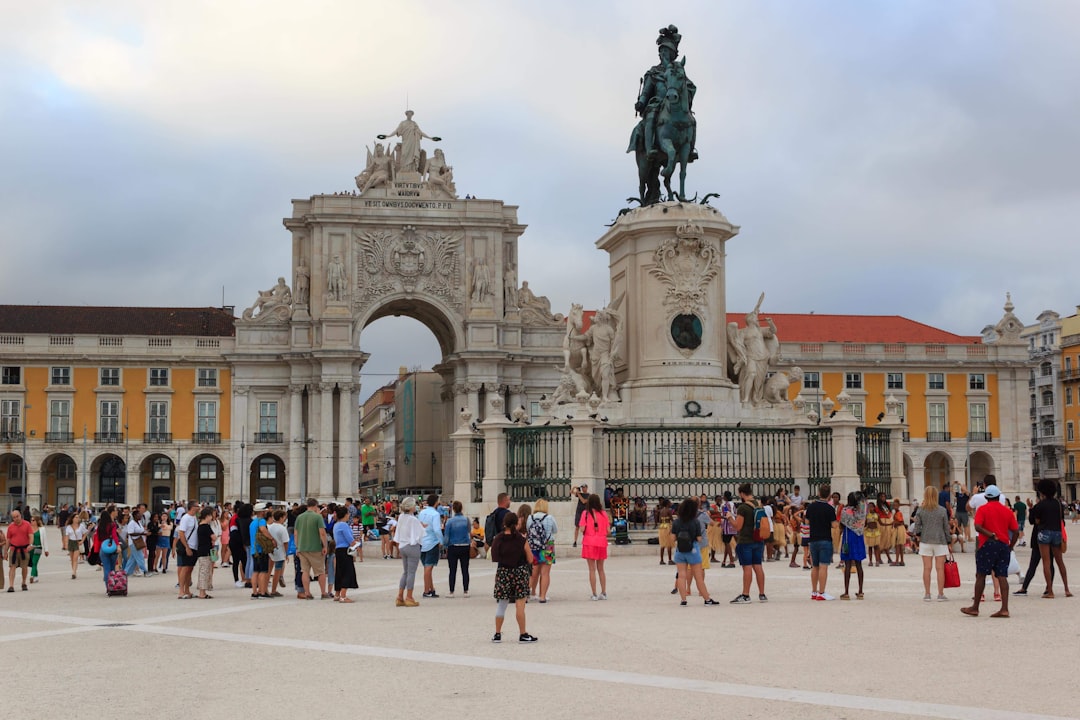

I was in Lisbon with three days to spare, a confusing list of thirty attractions saved on Google Maps, and no idea how to connect them sensibly. The Alfama district is on a hill, Belém is to the west along the river, the MAAT and the Belém Tower are about a 10-minute walk from each other, but no one had told me that before. Here’s the real problem: there is no shortage of information about Lisbon, but there is a lack of logistical connections between them.

It is in this context that I started testing Secret World AI Trip Planner, a tool I have used for six months on different destinations, but which performed best in Lisbon. This is my honest review, with concrete data and some criticism where it is needed.
What I asked the AI and what it really answered

I opened Secret World and wrote a specific request: three days in Lisbon, medium budget (about 80-100 euros per day all included), interest in azulejos architecture and local gastronomy, no group tours. The AI generated an itinerary in less than forty seconds. Not a generic list, but a plan with times: Castelo de São Jorge at 9:00 (recommended before the crowd arrives, ticket 15 euros), walking down to the Sé of Lisbon (free, 20 minutes visit), break at Mercado da Ribeira for lunch with an indicative budget of 12-15 euros. In the afternoon, tram 28 towards Estrela, with an explicit note that the tram is often overcrowded and that alternatively one can walk in 25 minutes.
What struck me is that the AI justified every choice. It did not include the Museu Nacional do Azulejo on the first day because it is located to the east, far from the center, and would have broken the geographical logic of the itinerary. It moved it to the third day, pairing it with Parque das Nações, which is in the same direction. This spatial consistency is exactly what was missing in my manual attempts.

The details that make the difference compared to Wanderlog
I used Wanderlog in parallel for the same trip, and the comparison was enlightening. Wanderlog is great for gathering ideas, creating collaborative maps, and sharing the itinerary with other travelers. But when I asked it to optimize the route considering opening hours and the actual distances between points, it produced a flat result: a list sorted by category, not by logistics. I found myself with Belém in the morning and Alfama in the afternoon, which meant an hour of travel in the middle of the day.

Secret World, on the other hand, automatically integrated the opening hours of the Mosteiro dos Jerónimos (open from 9:30, closed on Mondays, entrance 10 euros), the walking distance from the Torre de Belém (about 1.2 km along the riverside, 15 pleasant minutes) and suggested visiting the Padrão dos Descobrimentos right after, before lunch. No unnecessary backtracking, no museums closed unexpectedly. For those traveling independently, this difference is worth a lot.
Dove Secret World can still improve

The review would be dishonest without some criticism. On two occasions, the AI suggested restaurants in Lisbon that, when checked on Google Maps, had closed or changed management. The gastronomic database seems to update with some delay compared to reality. I reported the issue through the feedback integrated in the app, and I appreciate that this channel exists, but it is a concrete limitation that travelers need to keep in mind.
Furthermore, for very personalized itineraries, such as a trip focused exclusively on fado and live music, the AI tends to produce more generic responses. It works better when the request is balanced between culture, gastronomy, and logistics. Those with niche needs may have to supplement with manual searches, at least for that specific component.
The final vote and why it is 9 out of 10
After six months of use in Lisbon, Porto, Barcelona, and some cities in Southern Italy, I give Secret World AI Trip Planner a 9 out of 10. The missing point is precisely the update of data on local places, which in a dynamic city like Lisbon can create small inconveniences. But everything else, the geographical consistency, the reasoning behind the choices, the ability to balance time and budget, works better than any tool I have tested, including Wanderlog, TripIt, and manual planning on Google Maps.
If you are organizing a trip to Lisbon and want an itinerary that makes true logistical sense, not just a list of places to see, try Secret World for free and enter your request with as many details as possible: budget, travel pace, specific interests. The more precise you are, the better the AI works. The link to get started is on the official Secret World page: it takes three minutes to have a complete plan, and in my experience, those three minutes are worth hours of research.


