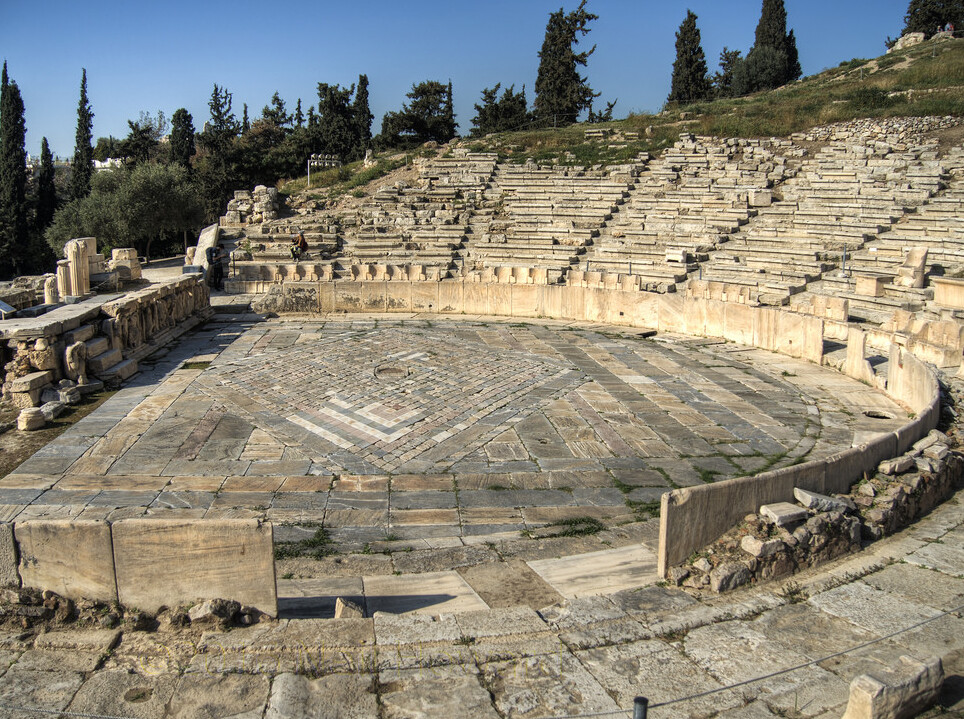

Nestled at the foot of the Acropolis, the Theatre of Dionysus stands as a testament to the cultural heart of ancient Athens. This monumental structure, revered as one of the most significant theatres in Ancient Greece, embodies the rich tapestry of history, art, and tradition that flourished in this cradle of democracy.
### History and Origins
The origins of the Theatre of Dionysus date back to the 6th century BC when it was initially constructed from timber. Named in honor of Dionysus, the Greek god of wine, fertility, and revelry, this theatre quickly became a vital part of Athenian life. It served not only as a venue for dramatic performances but also as a gathering place for citizens during festivals, particularly the City Dionysia, where dramatic competitions were held.
By 326 BC, the theatre underwent significant renovations led by the Athenian statesman Lycurgus, transforming it into a grand stone structure capable of seating approximately 17,000 spectators. This monumental expansion marked a pivotal moment in the evolution of Greek theatre, as it elevated the experience of watching plays to new heights. The seating arrangement, partially preserved today, showcases the ingenuity and artistry of ancient architects.
### Art and Architecture
The architectural style of the Theatre of Dionysus is emblematic of classical Greek design. The semi-circular auditorium, or orchestra, was the heart of the theatre, where performers engaged with the audience. The stone tiers of seating, constructed from local limestone, reflect the period's commitment to durability and aesthetics.
Noteworthy is the skene, a backdrop for performances that evolved into a more elaborate structure over time. Initially a simple wooden building, it later became intricately decorated, serving as a canvas for elaborate set designs that complemented the powerful narratives of plays written by luminaries like Sophocles, Euripides, and Aeschylus. The theatre was not just a performance space; it was a temple of storytelling, where art intertwined with public life.
### Local Culture and Traditions
The Theatre of Dionysus was deeply woven into the fabric of Athenian culture. Festivals such as the Dionysia were celebrated with great fervor, attracting citizens from all walks of life. These events were a showcase of dramatic talent, featuring tragedies, comedies, and satyr plays that explored themes of morality, heroism, and the human condition.
The interplay between theatre and democracy was palpable; playwrights often used their works to comment on societal issues, influence public opinion, and engage citizens in political discourse. The theatre was a place where the boundaries of art and civic duty blurred, fostering a sense of community and shared experience.
### Gastronomy
When visiting the Theatre of Dionysus, one cannot ignore the culinary delights that Athens has to offer. The local cuisine is rich and varied, with offerings that reflect the city’s historical ties to agriculture and trade. Traditional dishes such as moussaka, a layered casserole of eggplant, minced meat, and béchamel sauce, and souvlaki, skewered meat grilled to perfection, are must-tries.
Accompanying these dishes, a glass of retsina, a traditional Greek wine infused with pine resin, adds a unique flavor that connects diners to the ancient practices of winemaking dedicated to Dionysus himself. Exploring the bustling Monastiraki neighborhood nearby will also reveal charming tavernas where visitors can indulge in local delicacies while reflecting on the nearby theatre's storied past.
### Lesser-Known Curiosities
While the grandeur of the Theatre of Dionysus is well-documented, some intriguing details often escape the attention of tourists. For instance, ancient audiences participated in the theatrical experience in unique ways; they would often bring cushions to sit upon, and some even wore masks to enhance their immersion in the performance.
Moreover, the theatre was not just a venue for drama; it was also a site where rituals honoring Dionysus took place, including processions and sacrifices. The theatre's location was strategically chosen, as it allowed for breathtaking views of the Acropolis, merging natural beauty with artistic expression.
### Practical Visitor Information
For those planning a visit to the Theatre of Dionysus, the best time to explore this historical gem is during the spring and fall months when temperatures are mild, and the crowds are fewer. Early mornings or late afternoons can offer a more tranquil experience, allowing visitors to fully absorb the atmosphere.
When visiting, take the time to wander around the site; the remnants of ancient seating and the imposing backdrop of the Acropolis create a powerful connection to the past. Don’t forget to bring a camera, as the interplay of light throughout the day offers stunning photographic opportunities.
To enhance your experience in Athens, consider using the Secret World app to plan a personalized AI itinerary that incorporates this remarkable theatre and other local attractions.
