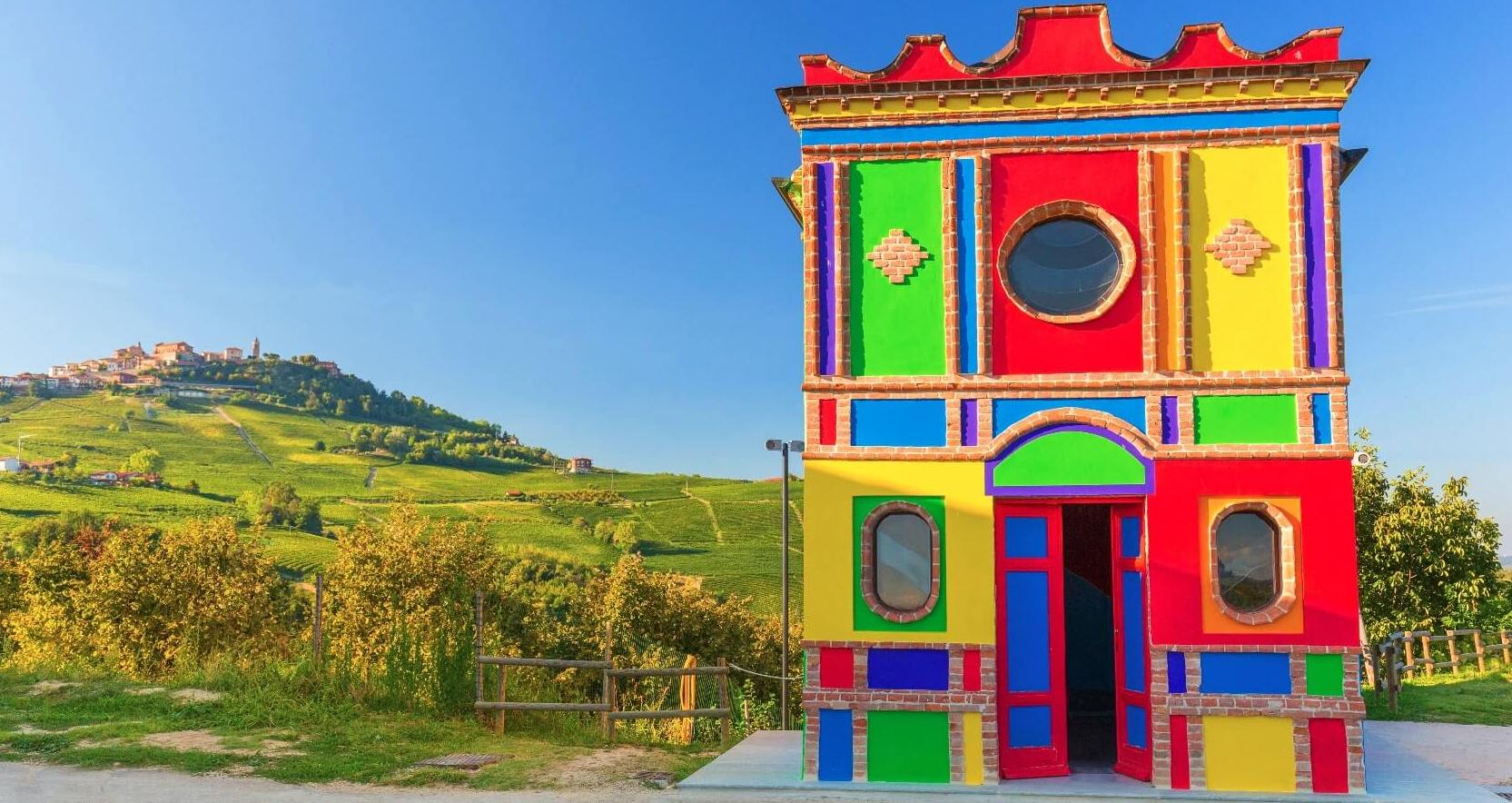

Nestled amidst the rolling hills of La Morra, the Barolo Chapel—or the Chapel of SS. Madonna delle Grazie—stands out as a vibrant jewel in the heart of the Langhe region. This striking little structure is a feast for the eyes, boasting a kaleidoscope of colors that reflects both the natural beauty of its surroundings and the rich cultural tapestry of the area.
### History and Origins
Constructed in 1914, the Barolo Chapel was originally intended as a refuge for vineyard workers seeking shelter from sudden storms. Its inception is attributed to the Ceretto family, who have played a significant role in the region’s viticulture. The chapel has never been consecrated, which adds to its charm, allowing visitors to appreciate its artistic and historical significance without the trappings of sacred ritual. Over the years, it has become a symbol of the local community, embodying the resilience and dedication of those who work the land.
### Art and Architecture
The Barolo Chapel is a unique example of Futurist architecture, a style that emerged in the early 20th century, characterized by dynamic lines and vibrant colors. The chapel’s exterior is adorned with mosaics featuring a brilliant array of reds, yellows, and blues, designed by the renowned Italian artist Sandro Dall’Aglio. Each tile tells a story, from depictions of grapevines and wine to religious symbols, invoking both the spiritual and the agricultural heritage of the region.
Inside, the chapel is equally captivating. The walls are painted with scenes that celebrate the Langhe’s winemaking traditions, creating a visual narrative that intertwines faith and the land’s bounty. This artistic expression is not just about aesthetics; it is a statement of identity for the community, reflecting their pride in local customs and products.
### Local Culture and Traditions
In La Morra, tradition runs deep, especially when it comes to winemaking. The Barolo Chapel serves as a cultural landmark during various local festivals. The Festa del Barolo, celebrated every October, pays homage to the region’s famous wine, drawing visitors from across the globe. During this time, the chapel becomes a focal point for wine tastings, musical performances, and communal gatherings, fostering a sense of unity among locals and tourists alike.
Additionally, the chapel is often used as a backdrop for intimate ceremonies and gatherings, reinforcing its status as a cherished part of the community's cultural fabric. The locals take pride in inviting visitors to share in their traditions, making it a living testament to the spirit of La Morra.
### Gastronomy
No visit to La Morra would be complete without indulging in its culinary delights. The region is famed for producing some of the best Barolo wines, which pair beautifully with local dishes. A typical meal might include tajarin, thin egg noodles served with a rich ragù, or plin, a type of stuffed pasta that reflects the artisanal cooking techniques passed down through generations.
For dessert, don’t miss out on baci di dama, almond cookies that are a perfect accompaniment to a glass of Barolo. The wine itself is often referred to as the "king of wines," and sampling it in the very vineyards where it’s produced adds an undeniable layer of authenticity to the experience.
### Lesser-Known Curiosities
While the Barolo Chapel is a well-known attraction, there are hidden details that many visitors overlook. One such curiosity is the chapel’s strategic placement, which offers stunning panoramic views of the Langhe landscape, particularly during sunset when the colors of the sky mirror those of the chapel itself.
Moreover, the chapel is often referred to as a “canvas” for various artists, who come to paint its vibrant façade, creating an evolving tapestry of artistic expression over the years. The whimsical nature of the chapel has inspired numerous artists and photographers, contributing to its status as a cultural icon.
### Practical Visitor Information
The best time to visit the Barolo Chapel is during the spring and autumn months when the vineyards are either bursting with life or adorned in hues of gold and crimson. The chapel is open year-round, but visiting during local festivals enhances the experience, allowing guests to immerse themselves in the community's traditions.
When planning your visit, consider taking a leisurely stroll through the surrounding vineyards, where you can witness the winemaking process firsthand. Be sure to bring your camera to capture the chapel's vivid colors against the backdrop of the picturesque Langhe hills.
### Conclusion
The Barolo Chapel is more than just a vibrant landmark; it is a reflection of the history, art, and culture that define La Morra. Its unique architecture and deep-rooted significance make it a must-see for those exploring the area. As you plan your journey, consider using the Secret World app to create a personalized itinerary that will help you uncover the hidden gems of this enchanting region.
