
← Back

Church of San Giovanni a Mare

Via Bausan, 26, 04024 Gaeta LT, Italia ★★★★☆ 128 views
Monica Rossi
Gaeta
🏆 AI Trip Planner 2026

Get the free app

Discover the best of Gaeta with Secret World — the AI trip planner with 1M+ destinations. Get personalized itineraries, hidden gems and local tips. Free on iOS & Android.

🧠 AI Itineraries 🎒 Trip Toolkit 🎮 KnowWhere Game 🎧 Audio Guides 📹 Videos
Download on the App Store Get it on Google Play
Scan to download Scan to download

Religious places · Gaeta

Church of San Giovanni a Mare - Gaeta | Secret World Trip Planner

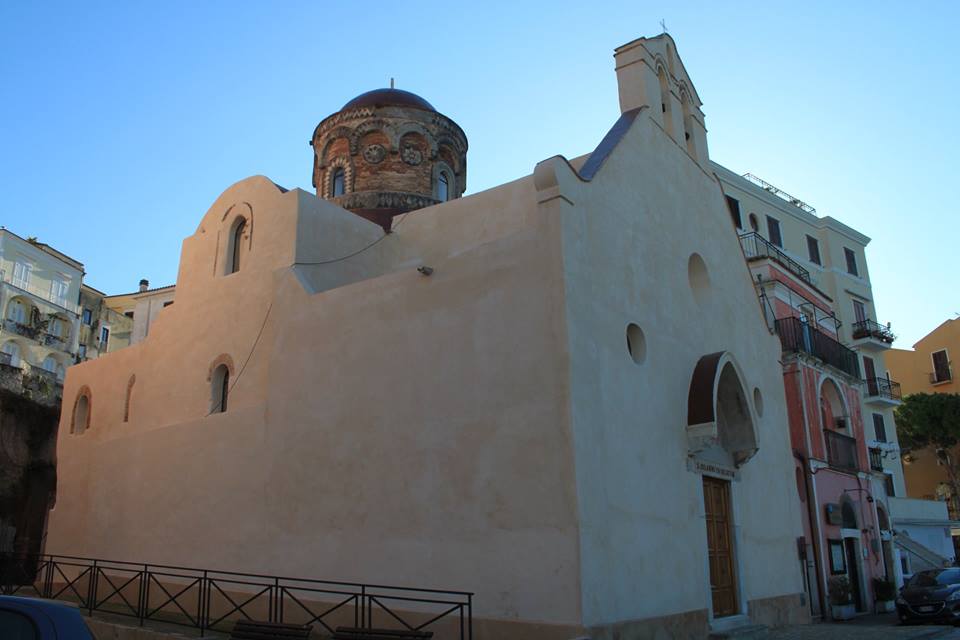
Another stop to make, always in the central area of the city, is the Church of San Giovanni a Mare, also known as the Church of San Giuseppe. This is an authentic jewel hidden in the heart of Gaeta. Built on an ancient sacred Christian place destroyed by the earthquake of 1213, the church was built using some bare elements, such as columns, all unequal to each other, while between the fifteenth and seventeenth century was enriched with frescoes and baroque decorations removed after the restoration of 1928. The place of worship consists of 3 naves supported by Roman and medieval stone material. The church, in Byzantine style with a Latin cross plan, has a dome in the centre decorated from the outside with arabesque motifs datable to the XI century. The altar appears to be considerably raised compared to the floor of the assembly and the floor is particularly inclined to ensure a greater perspective to the place of worship: for this reason it is suggestive to remember the popular tradition that saw the sea water entering the church and easily flowing out thanks to the inclined floor: we must consider, however, that since the sixteenth century a few meters in front of the facade of the church ran the ramparts that surrounded the whole town.

Church of San Giovanni a Mare - Gaeta | Secret World Trip Planner

The restorations of 1928, promoted by the Minister Pietro Fedele and carried out under the direction of Gino Chierici, led to the removal of the medieval furnishings, bringing to light the remains of frescoes from the early fourteenth century, attributed to the school of Cavallini (paintings partly detached and now exhibited in the Diocesan Museum, Visitation, St. Agatha, Madonna and Child Enthroned and St. Lawrence). In the baroque age in the church there were several altars, mostly in stucco, dedicated to St. Sebastian and St. Rocco, St. Cosmas and Damian, St. Rosary, St. Gaetano, St. Joseph. This last altar was the patronage of the Brotherhood of Carpenters (1628), hence the second name of the church. At the beginning of the eighteenth century the facade was given its present appearance, with simple side volutes and a bell gable. At the end of the nineteenth century the church was equipped with a small organ of the Neapolitan school, which remained in situ at least until the sixties of the last century.

During the restorations of 1928 the high altar was transferred to the church of S. Maria della Catena and replaced by the present one, made by reusing a slab of Roman sarcophagus with hippogriffs already reworked in the fifteenth century. During the works some medieval decorative fragments and a cinerary urn were found, today walled in the side walls. Traces of the original marble floor of the church remain in one of the steps in front of the altar.

Church of San Giovanni a Mare - Gaeta | Secret World Trip Planner
🗺 AI Trip Planner

Plan your visit to Gaeta

Suggested itinerary near Church of San Giovanni a Mare

MAJ+
500.000+ travelers worldwide
  1. 🌅
    Morning
    Church of San Giovanni a Mare
    📍 Gaeta
  2. ☀️
    Afternoon
    Cathedral Basilica of Gaeta
    📍 0.1 km · Gaeta
  3. 🌆
    Evening
    Gaeta | Angevin-Aragonese Castle
    📍 0.3 km · Gaeta

Buy Unique Travel Experiences

Powered by Viator

See more on Viator.com

Explore nearby · Gaeta

Frequently Asked Questions

The Church of San Giovanni a Mare was built on an ancient sacred Christian site that was destroyed by an earthquake in 1213. Constructed using unequal Roman and medieval stone columns from the original site, the church was enriched with frescoes and baroque decorations between the fifteenth and seventeenth centuries, though these were removed during a restoration in 1928.
The church features a Byzantine style with a Latin cross plan and is supported by three naves made of Roman and medieval stone material. It is crowned with a dome at its center, decorated on the outside with arabesque motifs that date back to the XI century, making it a unique blend of architectural periods.
The church contains remains of frescoes from the early fourteenth century attributed to the school of Cavallini, including paintings of the Visitation, St. Agatha, Madonna and Child Enthroned, and St. Lawrence. However, some of these detached paintings are now exhibited in the Diocesan Museum rather than in the church itself.
The floor is intentionally inclined to provide greater perspective to the interior of the church. Popular tradition claims this slope allowed sea water to easily flow out when it entered the church, though historically the church has been protected by town ramparts since the sixteenth century.
During the baroque period, the church housed multiple stucco altars dedicated to various saints including St. Sebastian, St. Rocco, St. Cosmas and Damian, St. Rosary, St. Gaetano, and St. Joseph. The altar of St. Joseph was patronized by the Brotherhood of Carpenters (established in 1628), which is why the church is also known as the Church of San Giuseppe.
