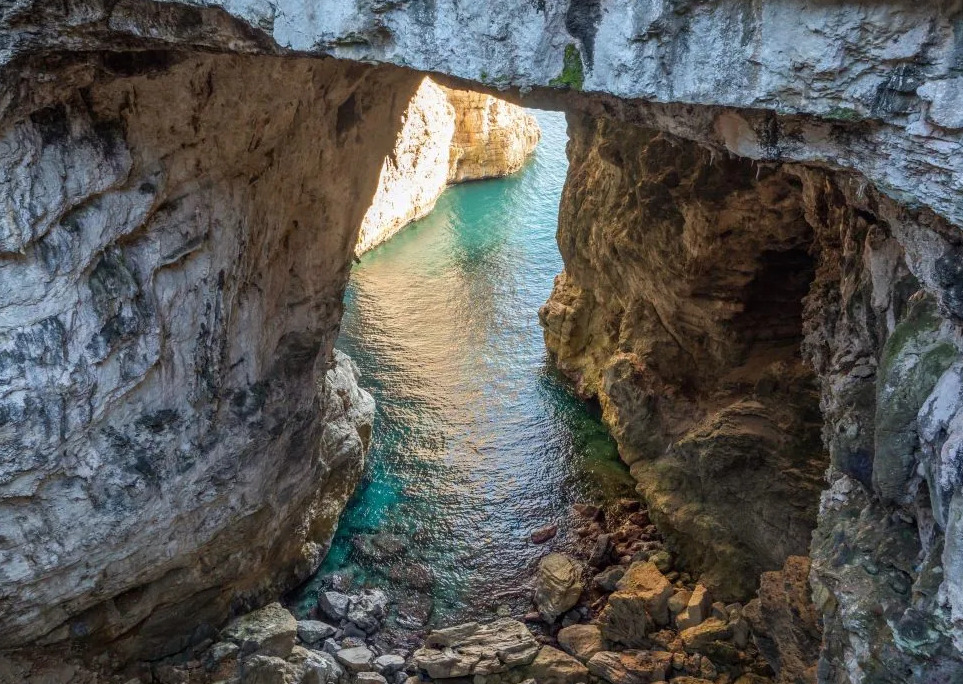

Nestled along the stunning Pontine coast of Italy, the Grotta del Turco in Gaeta is a site steeped in mystery and natural beauty. This striking cave, accessed by a daunting climb of 300 steps, offers more than just a physical challenge; it invites visitors to delve into a rich tapestry of history and myth that has captivated locals and travelers alike for centuries.
### History and Origins
The story of the Grotta del Turco is intertwined with the history of Gaeta, a town that has served as a strategic naval outpost since antiquity. Its origins date back to the Roman Empire, with archaeological findings suggesting that the area was inhabited long before. The cave itself is believed to have been formed through centuries of erosion and seismic activity, creating the dramatic fissures that characterize the Split Mountain.
According to Christian tradition, the cave's significance deepened following the crucifixion of Jesus Christ. It is said that the fissures in the mountain appeared as a divine sign, marking the landscape in a way that reflected the tumultuous events of that era. The 'Hand of the Turk', an imprint resembling a hand with five fingers, is a particularly intriguing aspect of this lore. Legend has it that a Turkish sailor, skeptical of the divine nature of the cave, pressed his hand against the rock, and it softened under his touch—forever leaving a mark that would become a focal point for pilgrims and visitors.
### Art and Architecture
The Grotta del Turco may not boast the intricate architectural details of a grand cathedral, but its natural artistry is unparalleled. The cave's interior, shaped by the elements, reveals stunning formations of stalactites and stalagmites, illuminated by shafts of light that create an ethereal atmosphere.
The surrounding Split Mountain, with its dramatic cliffs and craggy textures, has inspired numerous artists, including the famed landscape painter Francesco Guardi in the 18th century. His works captured the enchanting allure of Gaeta, drawing attention to the interplay of sea and rock that defines the area.
### Local Culture and Traditions
The culture of Gaeta is a vibrant mosaic of historical influences, thanks to its strategic position along trade routes. The annual Festival of San Francesco, held each October, celebrates the town's patron saint and showcases the rich traditions of the locals, including religious processions, music, and traditional dances.
In addition to its festivals, Gaeta is known for its unique customs, such as the 'Vigilia di Natale' (Christmas Eve), where families gather for a feast of seven fish dishes, honoring the Italian custom of observing a meatless meal on this sacred night. Such traditions are deeply rooted in the region's religious and cultural fabric, making every visit a chance to engage with the local community.
### Gastronomy
No visit to Gaeta is complete without indulging in its culinary delights. The town is famous for its 'Torta di Gaeta,' a sweet pastry filled with a mixture of dried fruit and nuts, often enjoyed during festive occasions. Moreover, the fresh seafood available along the coast allows for a delectable array of dishes, from grilled spaghetti alle vongole (spaghetti with clams) to frittura di pesce (fried fish).
Pair your meals with a glass of Falerno del Massico, a local wine that has been produced in the region since Roman times. Its rich flavor complements the fresh, vibrant tastes of Gaeta's seafood.
### Lesser-Known Curiosities
While many visitors flock to the Grotta del Turco for its majestic views and historical significance, few may know that the cave has also inspired local folklore and ghost stories. Tales of apparitions and mysterious sounds echoing through the cave add an air of intrigue, making it a hotspot for those interested in the supernatural.
Moreover, the cave’s acoustics are said to be fascinating. Some locals claim that singing or speaking in the cave produces a unique reverberation, enhancing the experience of those who dare to try it.
### Practical Visitor Information
The best time to visit the Grotta del Turco is during the shoulder seasons of spring (April to June) and autumn (September to October). These months offer mild weather and fewer tourists, allowing for a more intimate experience with the surroundings.
When planning your visit, it’s essential to wear comfortable footwear, as the 300 steps can be a workout. While descending to the cave’s entrance is allowed, accessing the bottom of the cave is currently restricted for safety reasons. Nonetheless, the view from the top is breathtaking, with panoramic vistas of the Tyrrhenian Sea and the rugged coastline below.
As you explore the area, keep an eye out for the unique geological formations and local wildlife that call this stunning landscape home.
Incorporating the Secret World app into your travel plans can help you create a personalized itinerary to make the most of your visit to Gaeta.