
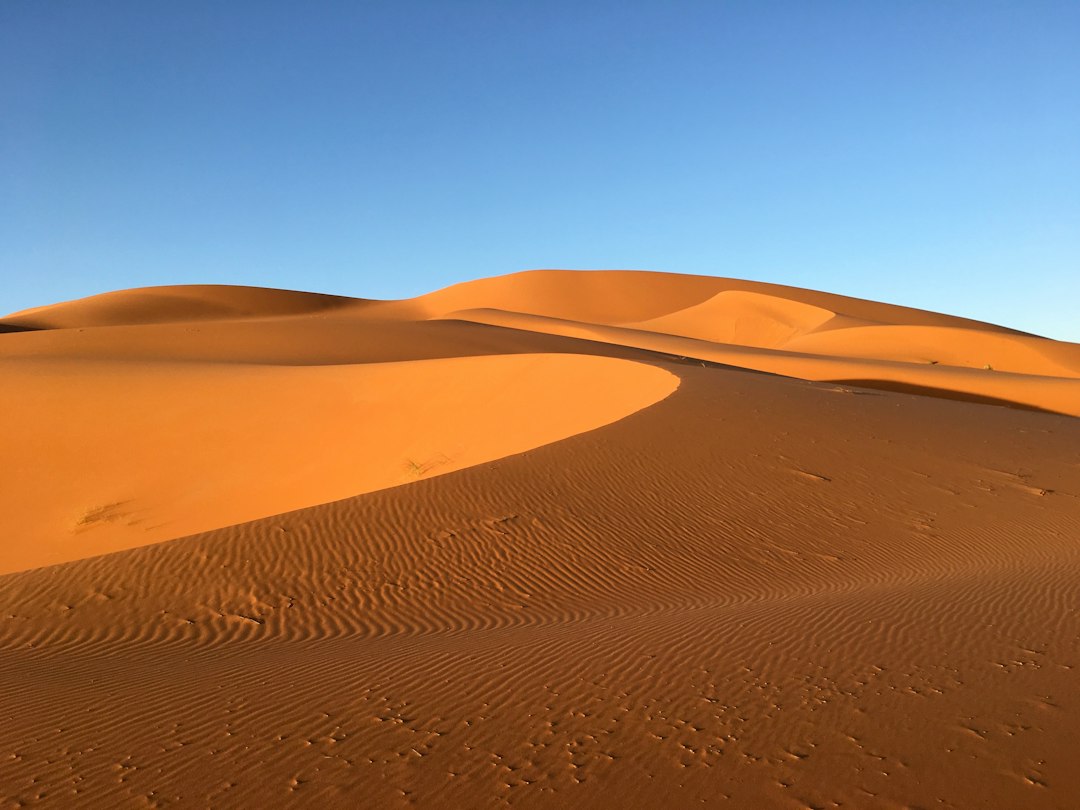

The wind makes no noise here. It leaves only oblique footprints on the orange sand, traces that disappear before you can follow them. Erg Chebbi, in the southeast of Morocco, is one of the great sandy ergs of the Sahara accessible from Europe, and its dunes reach heights of up to 150 meters, among the highest in the country. The village of Merzouga, the nearest inhabited center, is located about 50 kilometers from Rissani and represents the starting point for anyone wanting to approach this breathtaking landscape not for its vastness, but for its geometric precision: every crest is sharp as a blade, every slope is smooth as silk.
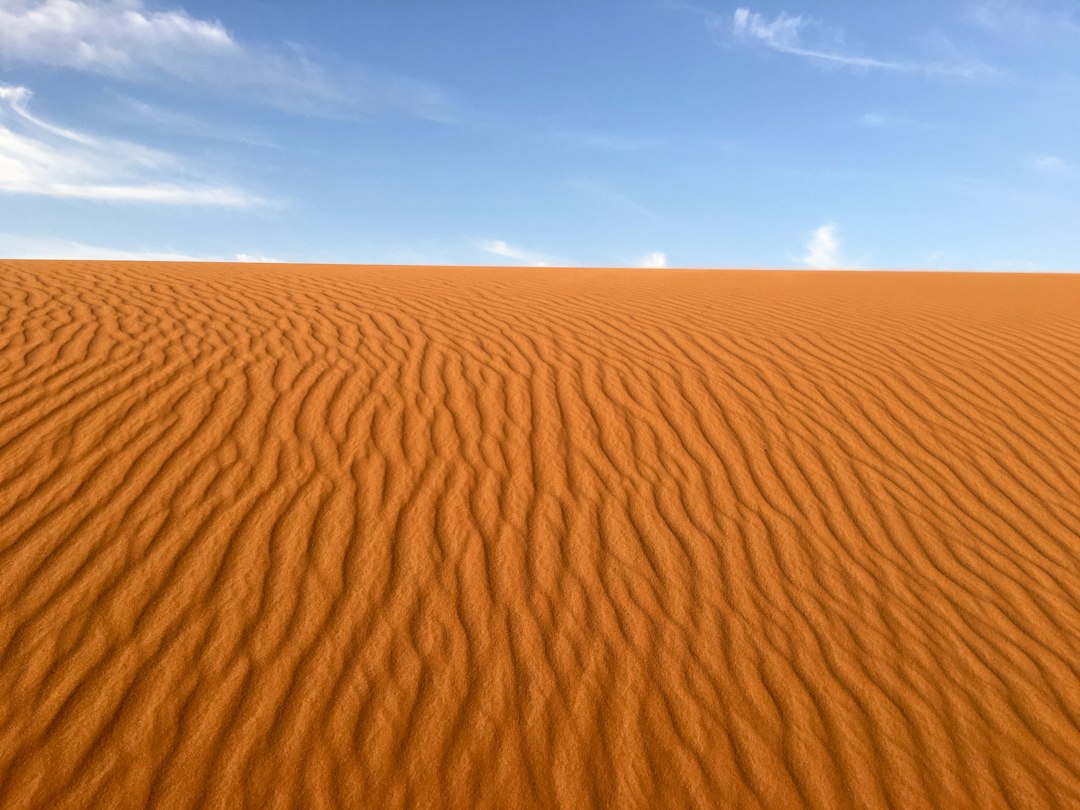
Erg Chebbi extends for about 22 kilometers in length and 5-7 kilometers in width, an island of sand amidst a landscape of gravel and rock. It is not the infinite Sahara of collective imagination, but it is precisely this contained measure that makes it extraordinarily accessible and at the same time capable of making the visitor feel completely alone, surrounded by nothing but sand and sky.
The dawn on the dunes: the moment that changes everything
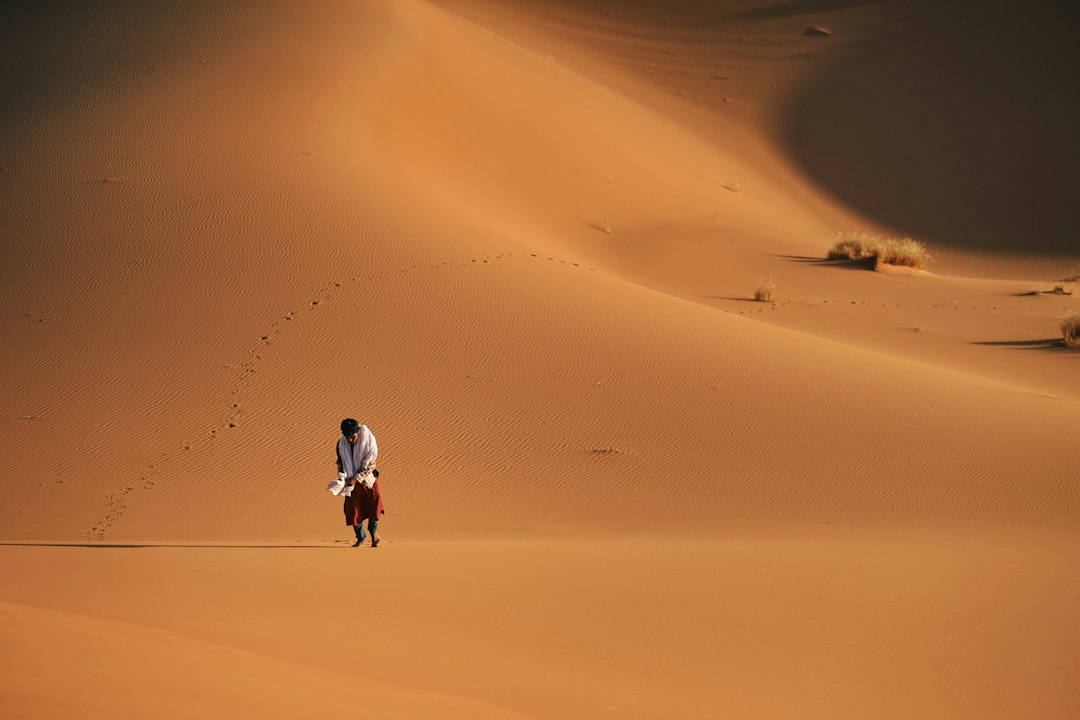
Those who arrive in Merzouga and decide to sleep in one of the numerous Berber camps on the edge of the erg quickly understand that timing matters more than anything else. The dawn is the best time to climb the dunes: the slanting light colors the sand in shades ranging from pale gold to burnt orange, and the shadows outline the crests with an almost unreal sharpness. The heat is not yet unbearable, and the silence is total — no wind, no mechanical sounds, just the muffled noise of one's own footsteps sinking into the sand.
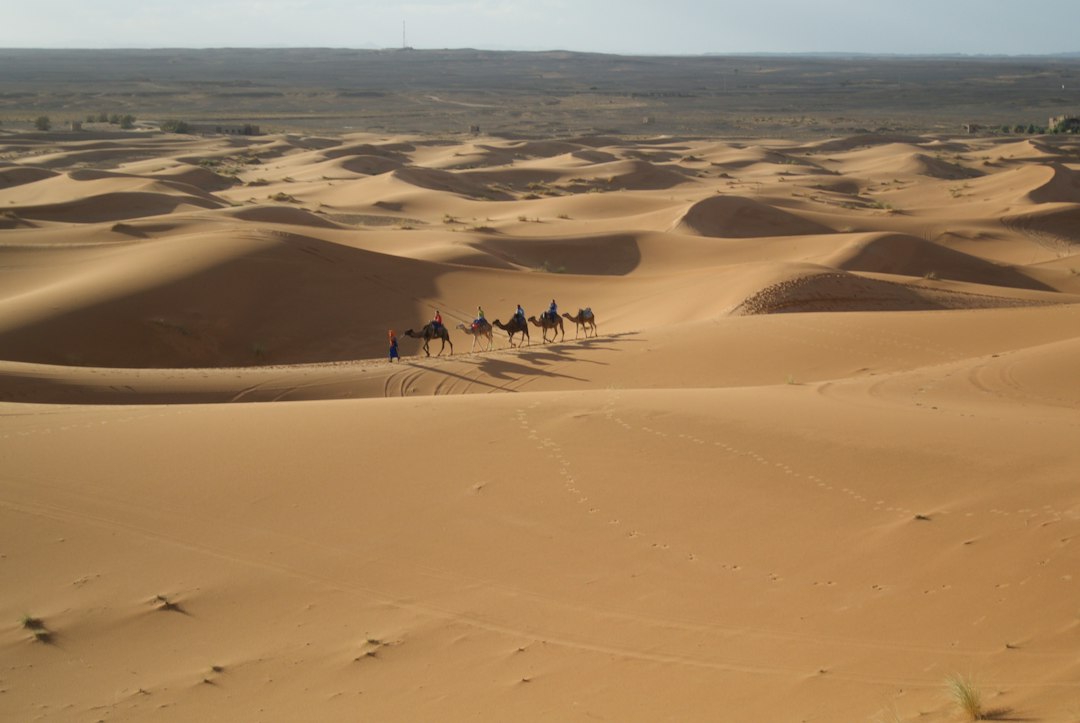
The most traditional way to reach the inner dunes is by camel trekking, organized by the local camps. The Berber dromedaries — technically dromedaries, not two-humped camels — move with a rhythmic slowness that forces the traveler to slow down and look around. A standard session at dawn lasts between one hour and one and a half hours, enough to reach a crest high enough to have an unobstructed view of the erg without encountering other groups. The cost varies but is generally included in the overnight packages of the camps.
The Berber Camps and the Night Sky
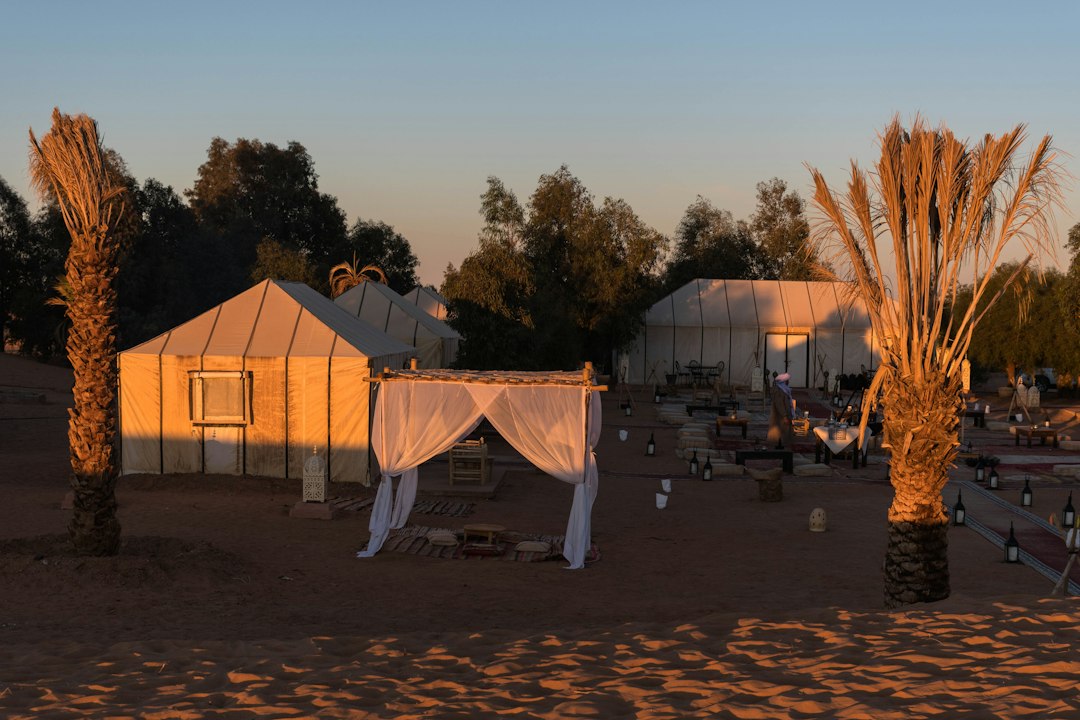
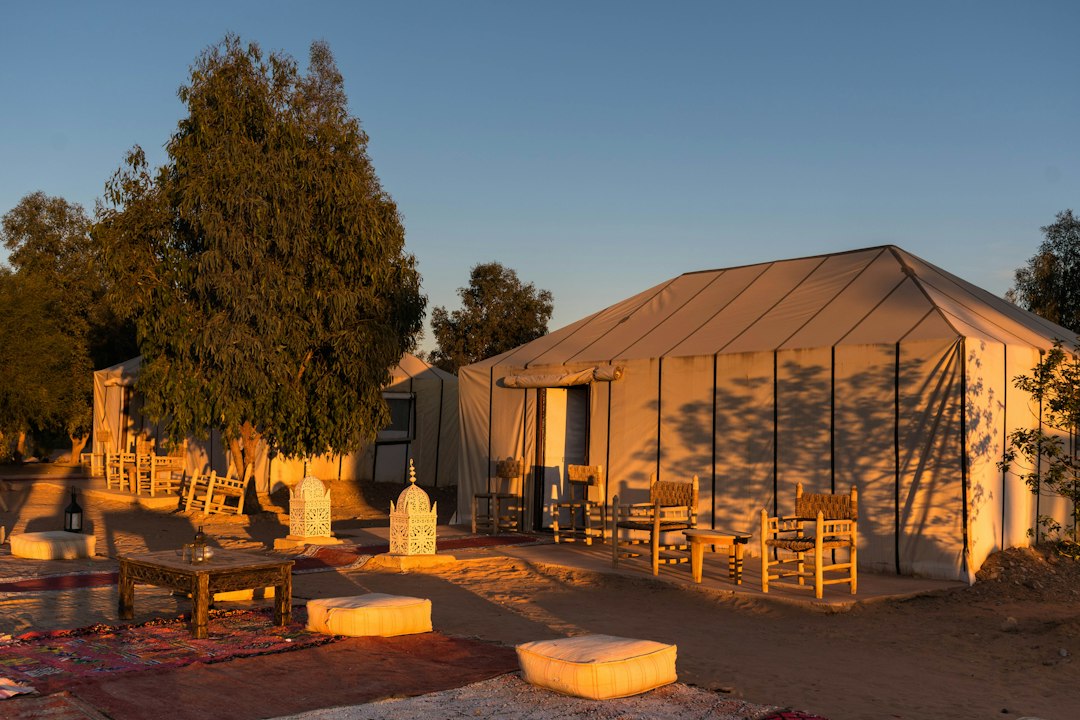
The camps that dot the edge of Erg Chebbi range from very simple structures to organized tent cities with nomad-style decorated tents, carpets, lanterns, and gnawa music in the evening. The most important difference, however, is not the comfort of the tents: it is the sky. Merzouga is located far from any significant urban center, and light pollution is virtually absent. On moonless nights, the Milky Way is visible to the naked eye with a clarity that many visitors describe as the most intense of their lives.
The nighttime temperature in the desert can drop drastically even in the warmest seasons. In winter, between December and February, nights can approach freezing. The camps provide heavy blankets, but it is advisable to bring an additional thermal layer. Summer, on the other hand, brings daytime temperatures that easily exceed 40 degrees Celsius, making the period between June and August not recommended for those not accustomed to extreme heat.
How to get there and when to go
The best season to visit Erg Chebbi is between October and April, when temperatures are bearable both during the day and at night. To reach Merzouga, the most common option is to depart from Marrakech or Fes by bus or shared taxi to Rissani, and then continue with a local taxi to the village. The journey from Marrakech takes about 9-10 hours. Alternatively, many travelers choose an organized three-day tour that includes transfer, camping, and camel trekking.
A fundamental practical tip: avoid the central hours of the day on the dunes, even in spring. The sand absorbs heat and the reflection of light can quickly cause dehydration and fatigue. Always bring plenty of water, high UV protection sunglasses, and a light scarf to protect yourself from the sandy wind. Shoes are almost useless on the soft sand of the dunes — many visitors prefer to walk barefoot, but it's good to keep them handy for the rockier stretches near the village.
The silence as an experience
There is a moment, at the top of a high dune of Erg Chebbi, where the landscape stops being scenic and becomes something harder to name. The sand flows in all directions, the sky is white with light, and there are no visible human references. The silence is not the absence of sound: it is a physical presence, something that presses on the ears and slows down thought.
It is this quality of silence, more than the dunes themselves, that visitors remember after returning. Erg Chebbi does not require historical explanations or specialized guides to be understood — it only requires time, slowness, and the willingness to stay still long enough to feel the desert breathe.


