

The silence arrives before dawn, when the sand is still cold underfoot and the sky above Merzouga begins to lighten in the east. The Erg Chebbi does not announce itself gradually: it appears suddenly beyond the edge of the village, an ocean of reddish dunes rising up to 150 meters high, stretching towards the Algerian border in a landscape that takes your breath away not only for its vastness but for its total indifference to human time.
This field of dunes, located in the Drâa-Tafilalet region in the southeast of Morocco, is one of the few true ergs accessible in the country. Unlike many Moroccan desert areas where the sand is mixed with rock and gravel, Erg Chebbi is composed almost entirely of fine, compact sand, shaped by the wind into sharp crests that change shape from week to week. It is this continuous mutability that makes every visit unique.
The light of dawn on the dunes
Those who arrive in Merzouga with the intention of sleeping in late miss the essential part of the experience. The hours leading up to sunrise are the moment when Erg Chebbi shows its most intense color range: the sand shifts from gray-purple of the last night darkness to antique pink, then to deep amber, finally to full gold when the first rays hit the crests of the dunes. This transition lasts less than twenty minutes and does not repeat the same two consecutive days.
Climbing on foot to the main dune takes about 45-60 minutes of walking from the base of the nearest camps, sinking into the sand with every step. The effort is real, but the summit offers a 360-degree view of the erg: on one side the desert stretches towards Algeria, on the other the lights of Merzouga can be seen and, on clear days, the distant profiles of the Anti-Atlas mountains. The wind at altitude, even in summer, can be surprisingly sharp.
The Nights in the Desert
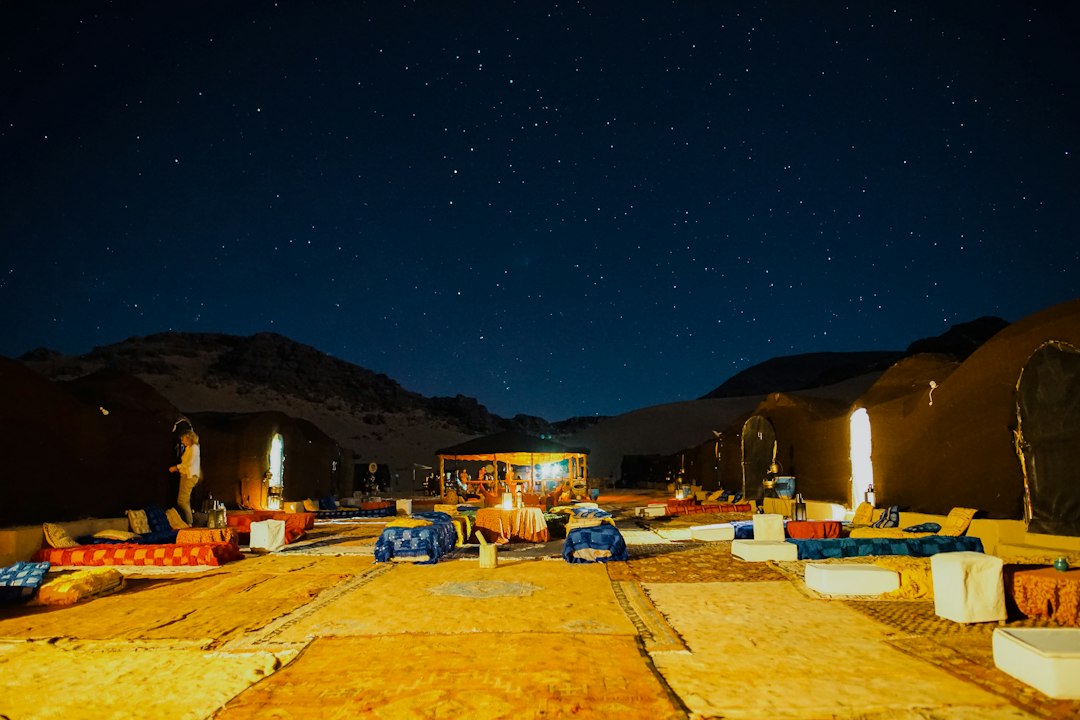
The darkness in the desert is of a kind that many European travelers have never experienced. Far from any significant populated center, Erg Chebbi offers night skies of rare quality: the Milky Way appears as a solid and dense band, not as a vague hue. Temperatures drop drastically after sunset — even in the height of summer they can fall by 15-20 degrees Celsius compared to the afternoon peak — and in winter, nights can approach freezing.
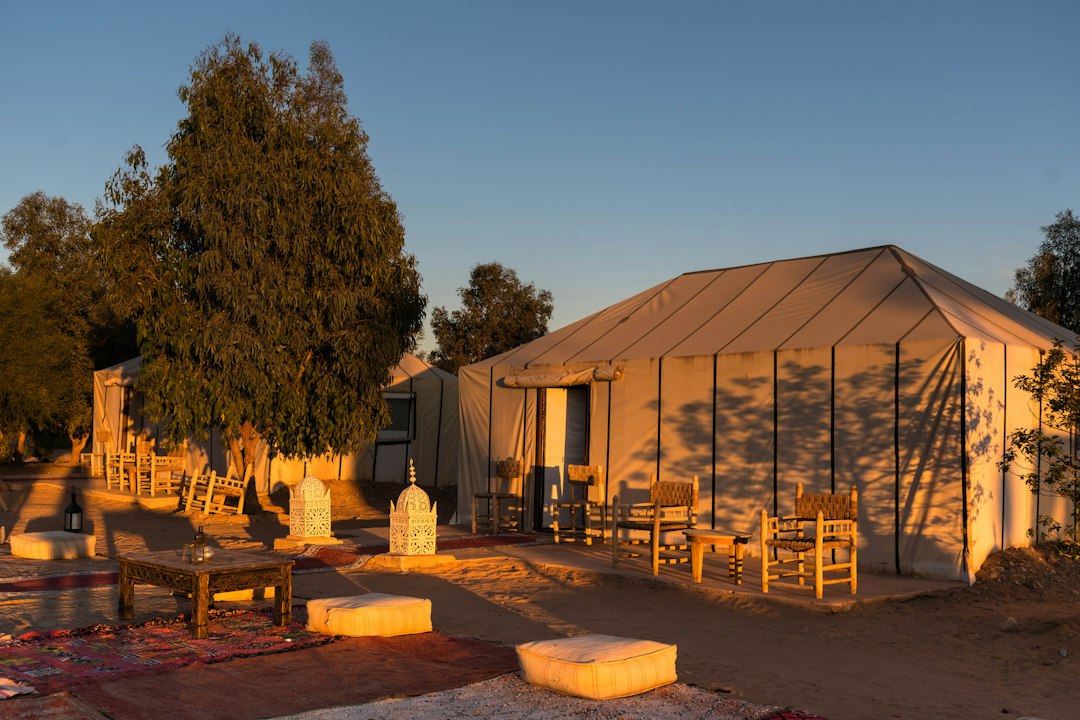
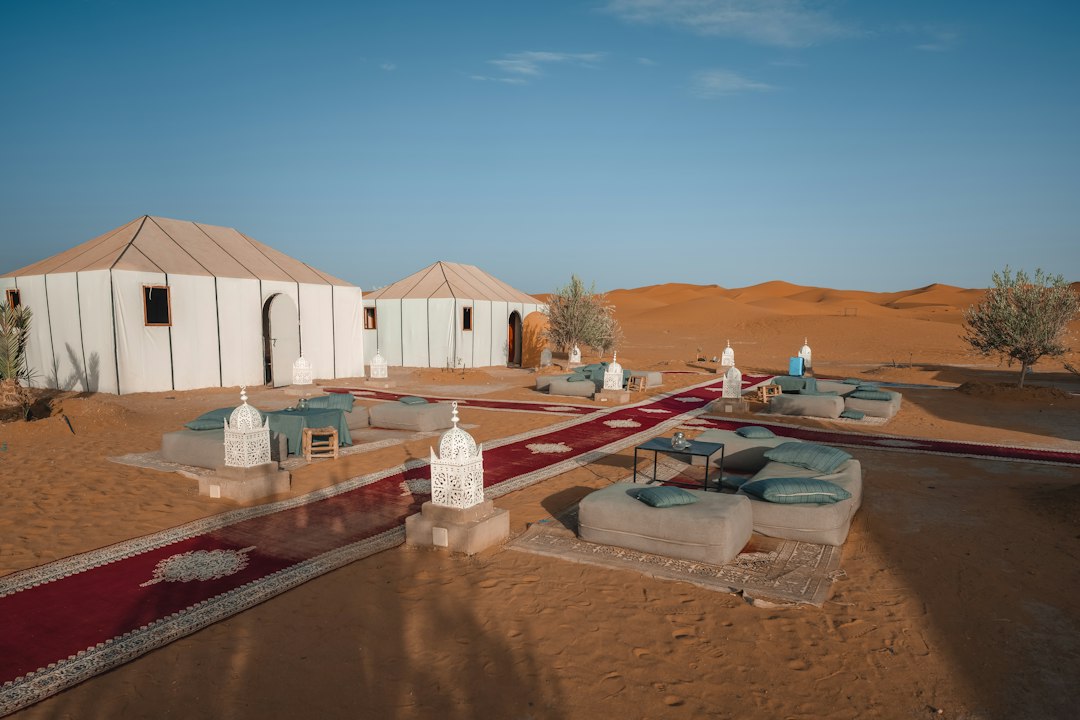
The traditional camps set at the foot of the dunes offer Berber tents with heavy rugs and blankets. The nighttime silence is almost absolute: no traffic, no mechanical noise, just the wind moving the sand on the surface with a sound similar to a continuous whisper. It is during these hours that the desert stops being a backdrop and becomes something more difficult to name.
How to get there and practical information
The main access point is the village of Merzouga, reachable by bus from Errachidia (about 2 hours) or from Rissani. The road is paved up to the entrance of the village. From Marrakech, the most common route crosses the Tizi n'Tichka pass and then descends towards the desert through Ouarzazate and Erfoud: in total about 8-10 hours of driving on good roads.
The best time to visit Erg Chebbi is from October to April, when daytime temperatures remain between 20 and 30 degrees. The summer months (July and August) can bring temperatures exceeding 45 degrees Celsius during the peak hours, making any outdoor activity potentially dangerous. It is advisable to always carry more water than you think you will need, high SPF sunscreen, and a head covering. Lightweight hiking shoes are preferable to sandals for climbing the dunes without injuring yourself on the hot sand.
What to observe on site
Walking along the base of the dunes in the early hours of the morning, it is possible to observe the tracks left in the sand during the night by small reptiles and insects: the desert gecko and various nocturnal beetles leave precise and geometric trails that the wind erases within a few hours. On the highest crests, the sand forms structures with very thin, almost transparent lamellae that break at the slightest contact. These formations, called yardang in lesser form, show the prevailing direction of the seasonal wind.
The Erg Chebbi is not a place that is understood quickly. It requires at least two nights to begin to grasp the rhythm it imposes: waking up before dawn, resting during the central hours of the day, slowly resuming at sunset. Those who accept this rhythm return with something difficult to explain, but recognizable to anyone who has slept once under those stars.


