


A bronze bell over three meters tall dominates one of the halls of the Gyeongju National Museum, and its sound — according to legend — evokes the cry of a child sacrificed during its casting. The Emille Bell, also known as the Bell of King Seongdeok, was cast in the year 771 AD during the Silla dynasty and is considered one of the greatest masterpieces of medieval Korean metallurgy. Weighing approximately 18.9 tons, it is displayed outdoors in the dedicated pavilion, where visitors can closely observe the finely carved bas-reliefs depicting celestial figures in flight.

The museum is located in the heart of Gyeongju, the ancient capital of the Silla kingdom that ruled the Korean peninsula for nearly a thousand years, from 57 BC to 935 AD. The institution houses over 30,000 artifacts from the excavations of royal burial mounds scattered throughout the city and its surroundings, making this museum an essential tool for understanding what one sees while walking among the grassy hills of Daereungwon and other archaeological sites in the region.
The gold crowns and treasures of the royal tombs

Among the most extraordinary collections of the museum stand out the Silla gold crowns, recovered from the excavations of tumuli such as the Cheonmachong Tomb and the Hwangnamdaechong Tomb. These crowns, made of gold leaf and decorated with comma-shaped pendants — the so-called gogok — and vibrant gold leaves, were probably not intended for everyday use but for burial. Observing them closely through the illuminated display cases, one notices the extraordinary craftsmanship: each element is connected with very thin wires that allowed the pendants to sway with the slightest movement.
Next to the crowns are displayed gold belts, funerary shoes made of gilded bronze, bracelets, and necklaces with glass beads imported from Central Asia, concrete evidence of the trade contacts that the Silla kingdom maintained along the Silk Road routes. These objects are not reproductions: they are the originals extracted from the earth of Gyeongju during the twentieth century.

The Wolji Pavilion and the Artifacts of the Royal Palace
A separate section of the museum is dedicated to the artifacts found in the Wolji artificial pond (also known as Anapji), built in 674 AD at the behest of King Munmu. When the pond was partially drained in the 1970s, an extraordinary amount of wooden, ceramic, and metal objects perfectly preserved by anaerobic mud emerged. Among these are wooden tablets with inscriptions documenting the administrative life of the palace and toys that provide an unexpectedly everyday image of the Silla court.

These artifacts are displayed in a room with reduced lighting to protect the organic materials, and the intimate atmosphere invites visitors to linger on the details: the signs of wear on the tablets, the geometric decorations on the ceramics, the ergonomic shape of some utensils. It is one of the least crowded sections of the museum, often overlooked by visitors who focus on the gold crowns, but among the most evocative.
Practical Information for the Visit
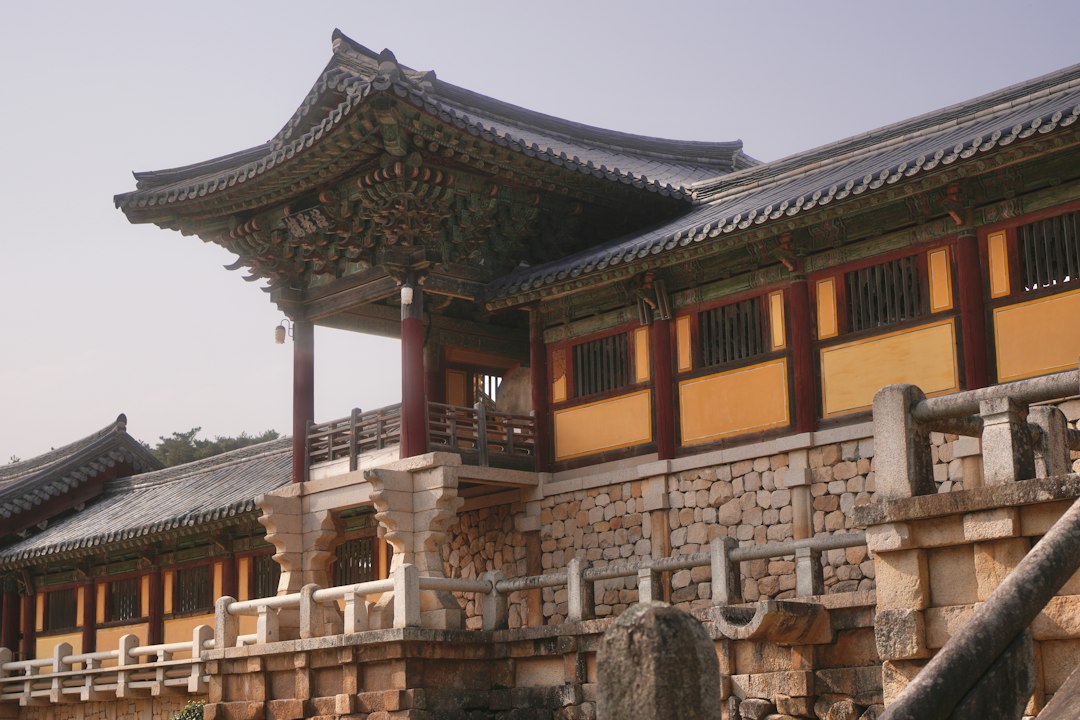
The Gyeongju National Museum is located a short distance from the city center and can be reached on foot or by bicycle from the Gyeongju bus station. Admission is free for the permanent collections, making it an accessible stop for any type of traveler. The museum is open every day except Monday, with hours that vary slightly between summer and winter: it is advisable to check the official website before visiting.
The best time to visit is in the morning on weekdays when Korean school groups are less present. Allow at least two and a half hours to carefully see the main collections, three hours if you want to include the outdoor garden where the Emille Bell and some original stone lanterns are located. Wear comfortable shoes: the path between the indoor and outdoor pavilions requires some walking. A visit to the museum before exploring the Daereungwon tombs and the Bulguksa site helps to contextualize what you will see outside, transforming simple grassy hills and stones into places loaded with precise meaning.


