
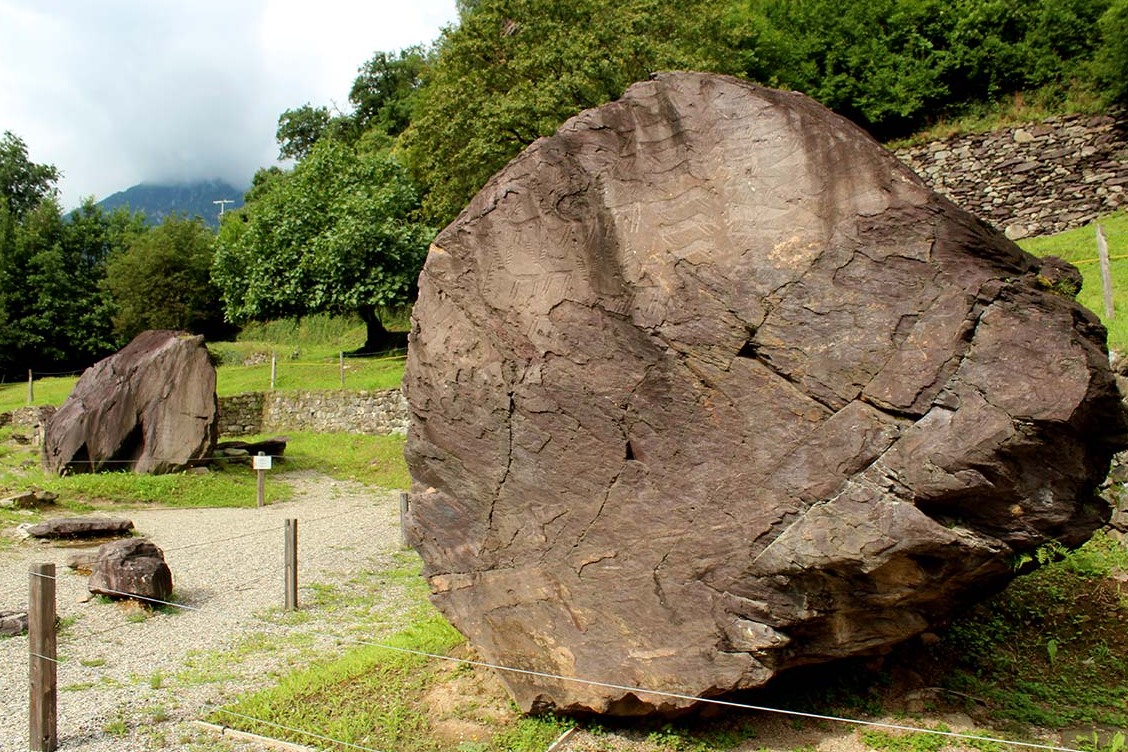

Nestled in a stunning glacial valley at the foot of a dramatic rock face, the Massi di Cemmo National Archaeological Park is a treasure trove of ancient history and art. This captivating site, located in the Camuna Valley of Lombardy, Italy, invites visitors to step back in time to the Copper Age, where the echoes of ancient rituals and the artistry of prehistoric peoples come alive.
The history of Massi di Cemmo is as rich as the landscape that surrounds it. The site gained recognition in 1909, thanks to geographer Gualtiero Laeng, who discovered two remarkable painted boulders dating back to the third millennium BC. These boulders are adorned with intricate depictions of animals, weapons, and anthropomorphic figures, alongside scenes of ploughing and transport on a four-wheeled cart. This early evidence of human creativity provides invaluable insights into the lives and beliefs of the region's ancient inhabitants.
Further archaeological excavations, initiated during the park's preparation and ongoing, have unveiled a megalithic sanctuary adjacent to the boulders. This sacred space, encircled by a walled enclosure, features elaborate stele that reflect the site's significance as a center of worship over the millennia. The sanctuary's origins trace back to the Copper Age and show continuity of use from the Mesolithic and Neolithic periods up until the late Roman age. Notably, the transition to Christianity saw the deactivation of this pagan site, leading to the construction of the Pieve di San Siro, a church that now stands nearby.
Art and architecture are at the heart of the Massi di Cemmo experience. The intricate carvings on the boulders not only illustrate the artistic skill of their creators but also serve as a window into the spiritual and daily lives of ancient communities. The stele surrounding the sanctuary, often intricately carved, are significant in their own right, showcasing the evolution of artistic expression from the third millennium BC to the first millennium AD. This melding of function and artistry in a sacred context underscores the importance of the site as a hub of cultural and religious activity.
Local culture thrives on the legacy of this ancient site. The Camuna Valley has a rich tapestry of traditions, many of which are rooted in the area's prehistoric past. Festivals celebrating local heritage often incorporate elements of this ancient art, drawing connections between the past and present. One such event is the Festa della Preistoria, held annually to honor the region's rich historical narrative, allowing locals and visitors alike to engage with the stories of their ancestors through music, dance, and art.
Gastronomy in the region is a delightful blend of tradition and innovation, with local dishes reflecting the agricultural heritage of the Camuna Valley. Polenta, a staple made from cornmeal, is often served alongside hearty stews, while formaggio (cheese) from the nearby mountains is a must-try. The area is also known for its salumi (cured meats), which pair beautifully with local wines such as Valtellina Superiore. Sharing a meal that incorporates these traditional ingredients offers a taste of the region’s history and its connection to the land.
Beyond the well-trodden paths, lesser-known curiosities abound at Massi di Cemmo. Few visitors may realize that the stele are not only artistic expressions but also serve as an ancient form of storytelling, documenting the lives, beliefs, and rituals of the people who once thrived here. Additionally, the boulders are thought to align with celestial events, hinting at a sophisticated understanding of astronomy among the ancient inhabitants. Such details add layers of intrigue to an already fascinating site.
For those looking to visit, the best time to experience Massi di Cemmo is during the spring and early autumn months when the weather is mild, and the surrounding landscape is vibrant with wildflowers. A leisurely stroll through the park allows visitors to fully appreciate the stunning natural beauty and historical significance of the area. When exploring, be sure to look for the interpretative signs throughout the park that provide context and insight into the various features.
With its breathtaking scenery, profound history, and vibrant local culture, the Massi di Cemmo National Archaeological Park is a captivating destination that invites exploration and reflection. Whether you are an avid history enthusiast or a casual traveler seeking beauty, this remarkable site offers an unforgettable glimpse into the ancient past.
To make the most of your journey and uncover personalized experiences, consider using the Secret World app to plan your itinerary.


