
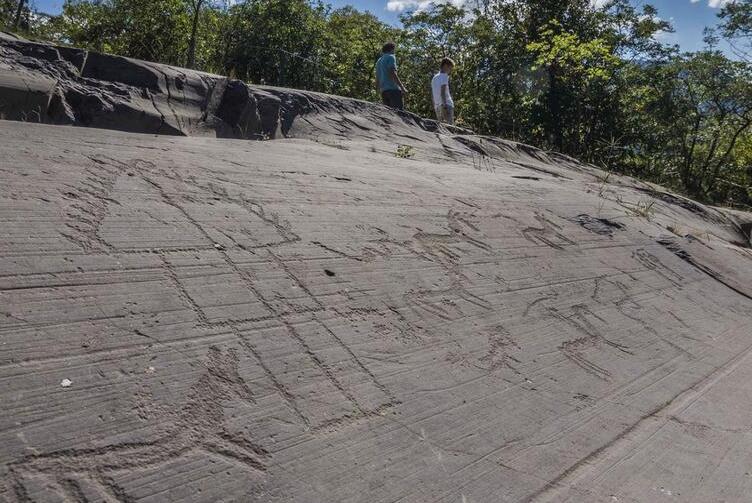

Nestled in the breathtaking Camonica Valley, the Rock Carvings National Park in Capo di Ponte is a treasure trove of prehistoric artistry that transports visitors back to a time when ancient societies carved their stories into stone. Established in 1955, this UNESCO World Heritage Site is not only Italy's first archaeological park but also a significant chapter in the narrative of human creativity, representing one of the most profound rock art complexes known to exist.
The origins of the rock carvings date back to the Upper Palaeolithic, approximately 13,000 to 10,000 years ago, with the artistic expressions continuing through various ages, including the Neolithic, Bronze, and Iron Ages. The park encompasses an area of 143,935 square meters, where visitors can explore 104 engraved rocks, each showcasing intricate designs depicting hunting scenes, ritualistic symbols, and daily life. Recognized by UNESCO in 1979, the carvings are a testament to the cultural and spiritual lives of the valley's ancient inhabitants, offering insights into their beliefs and practices.
Architecturally, the park is an extension of its natural environment. The rocks are primarily composed of sandstone, polished by glacial action, which served as the perfect canvas for the ancient artists. Each panel tells a story, with some carvings illustrating figures engaged in dynamic activities, such as dancing or hunting, while others portray animals, symbols, and geometric patterns. The artistic significance of these engravings lies in their ability to convey complex narratives and social structures, providing a window into the minds of our ancestors.
The cultural landscape surrounding Capo di Ponte is vibrant, with local traditions deeply rooted in the valley's history. The Festa della Madonna di Campiglio, celebrated every September, is a lively event where locals and visitors gather to honor their patroness with processions, music, and traditional dances. This festival exemplifies the community's strong connection to its heritage, as it combines religious devotion with the celebration of local customs.
Culinary delights in this region are as rich as its history. The local gastronomy reflects a blend of ancient agricultural practices and modern influences. One must try polenta, a staple dish made from cornmeal, typically served alongside hearty stews or melted cheese. Another local specialty is formaggio di Capra, goat cheese that complements the region's robust wines. Don't miss out on torta di grano, a traditional sweet made from wheat flour and filled with seasonal fruits, which captures the essence of local flavors in every bite.
While exploring the park, many visitors overlook the lesser-known stories that add depth to the experience. For instance, the Naquane site features carvings that represent not just daily life but also ritualistic and spiritual practices, hinting at a profound connection with nature. Additionally, some of the carvings are believed to align with celestial events, showcasing the ancient inhabitants' understanding of astronomy. These intriguing aspects often go unnoticed, but they reveal a sophisticated cultural framework that shaped the valley's history.
The best time to visit the Rock Carvings National Park is during the spring and early autumn months, when the weather is mild and the surrounding landscapes are in full bloom. It’s advisable to wear comfortable walking shoes, as the park's trails can be uneven. Take your time to study the rock engravings; guided tours are available and provide invaluable insights into the significance of the artworks.
For those looking to fully immerse themselves in the cultural and historical richness of Capo di Ponte, consider planning your visit with the Secret World app, which can help customize your itinerary for an unforgettable experience.


