
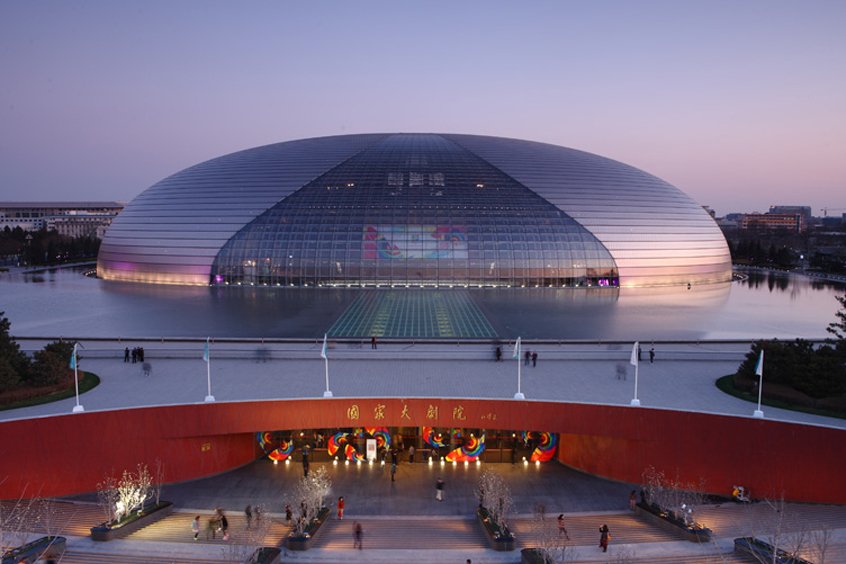

Nestled in the heart of Beijing, the National Center for the Performing Arts, affectionately dubbed “The Giant Egg,” is a breathtaking architectural marvel that symbolizes a new era in Chinese culture. Its shimmering titanium and glass façade rises majestically from an artificial lake, contrasting beautifully with the ancient grandeur of the nearby Forbidden City. This iconic structure is not just a feast for the eyes; it is a celebration of modern artistry and the performing arts.
The history of the National Center for the Performing Arts is as captivating as its exterior. The journey began in 1957, when the need for a dedicated venue for performing arts became apparent. However, it wasn’t until 2001 that the project truly took shape, following years of meticulous planning and design. The French architect Paul Andreu was commissioned to create a space that would reflect the dynamism of contemporary China while honoring its rich cultural heritage. The center officially opened its doors on December 31, 2007, and has since become a cornerstone of Beijing's cultural landscape.
Architecturally, The Giant Egg is a masterpiece of modern design. The building's elliptical shape and transparent materials create a sense of openness and lightness, inviting visitors to explore its interior. The structure is surrounded by a tranquil lake, which reflects the building's stunning exterior and enhances its ethereal quality. Inside, the center houses three main performance venues: the Opera House, the Concert Hall, and the Theater, all equipped with state-of-the-art acoustics and technology. This innovative design not only serves aesthetic purposes but also represents a shift towards modernity in Chinese architecture.
The artistic significance of the National Center for the Performing Arts extends beyond its architectural brilliance. The center hosts a diverse range of performances, from traditional Chinese opera to contemporary ballet, symphonies, and theatrical productions. It has become a cultural hub for both local and international artists, fostering a vibrant exchange of artistic ideas. Events such as the Beijing Music Festival and various seasonal performances attract audiences from around the globe, celebrating the rich tapestry of global culture.
In the context of local culture and traditions, the National Center for the Performing Arts plays a vital role in Beijing's cultural ecosystem. The city is known for its deep-rooted customs, many of which are showcased through performances at the center. Festivals such as the Chinese New Year and the Mid-Autumn Festival often feature specially curated events, highlighting traditional music, dance, and theatrical performances. The center serves as a bridge between the past and the present, embodying the spirit of innovation while honoring age-old traditions.
No visit to The Giant Egg would be complete without indulging in the local gastronomy. Beijing is famous for its culinary delights, and the area surrounding the National Center for the Performing Arts offers an array of gastronomic experiences. Be sure to try the iconic Peking Duck, a dish renowned for its crispy skin and succulent meat, often served with thin pancakes and sweet bean sauce. For a lighter option, enjoy jiaozi (dumplings), which are a staple in Chinese cuisine and often served during festive occasions. Pair your meal with a cup of Chinese tea to fully immerse yourself in the local dining culture.
Beyond its impressive exterior and cultural offerings, The Giant Egg holds lesser-known curiosities that add to its charm. One intriguing fact is that the building's reflective surface creates a visual illusion, making it appear to change shape depending on the viewer's perspective. Additionally, the artificial lake surrounding the center is not merely decorative; it serves as a crucial part of the building's climate control system, helping to regulate temperature within the performance spaces. Many visitors overlook these subtle details, which enhance the overall experience of the site.
For those planning a visit, the best time to experience the National Center for the Performing Arts is during one of its many performances, which typically run year-round. It's advisable to check the schedule in advance and book tickets early, as popular shows can sell out quickly. When visiting, take a moment to wander around the lake and appreciate the building from different angles, allowing its architectural beauty to leave a lasting impression.
Lastly, as you explore the vibrant cultural scene in Beijing, consider using the Secret World app to craft a personalized itinerary that includes a visit to The Giant Egg and other hidden gems in the city.


